
For larger image, click here.

For larger image, click here.

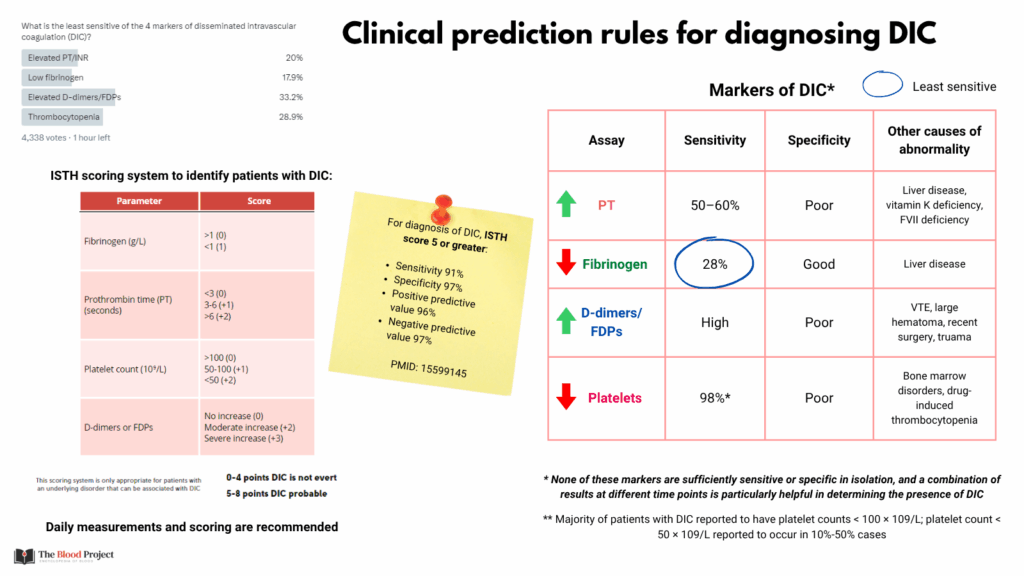
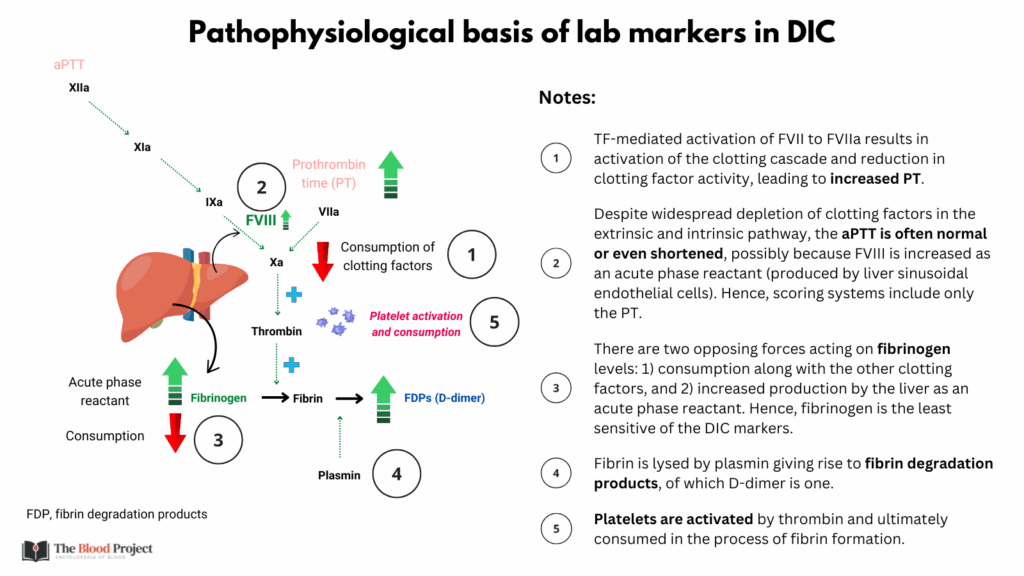
No one laboratory test is specific for DIC. Clinical prediction rules help diagnose DIC using clinical information and results from a panel of widely available blood tests. Scores are used to both diagnose DIC and evaluate its prognosis. Higher scores are associated with a higher risk of mortality.
The International Society on Thrombosis and Haemostasis (ISTH) scoring system is a validated diagnostic tool for overt disseminated intravascular coagulation (DIC) that uses routine laboratory parameters to assign a numerical score reflecting the likelihood of DIC. The ISTH system incorporates four components:
- Low platelet count
- Elevated fibrin-related markers (such as D-dimer or fibrin degradation products)
- Prolongation of prothrombin time (PT)
- Low fibrinogen level.
Each parameter is assigned points based on the degree of abnormality, and the total score ranges from 0 to 8. A score of ≥5 is considered compatible with overt DIC, while a score <5 suggests non-overt or no DIC.
The ISTH scoring system is widely used in both adult and pediatric populations and has been shown to have high specificity and sensitivity for the diagnosis of DIC in critically ill patients, particularly in the context of sepsis and other severe illnesses. The score also correlates with disease severity and mortality risk in sepsis and other critical illnesses.
The ISTH scoring system is not recommended for use in pregnancy due to poor sensitivity in that population. In resource-limited settings or when certain assays are unavailable, modified versions of the score have been evaluated, but the original ISTH system remains the international standard.
References
Bakhtiari K et al. Prospective validation of the International Society of Thrombosis and Haemostasis scoring system for disseminated intravascular coagulation. Crit Care Med. 2004 Dec;32(12):2416-21
Towards definition, clinical and laboratory criteria, and a scoring system for disseminated intravascular coagulation. Thromb Haemost. 2001 Nov;86(5):1327-30.