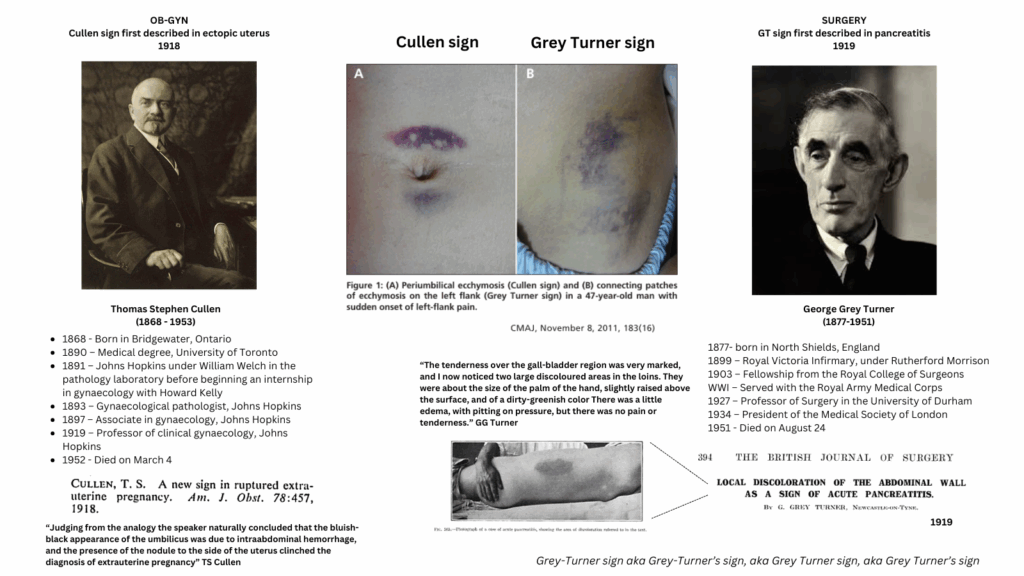
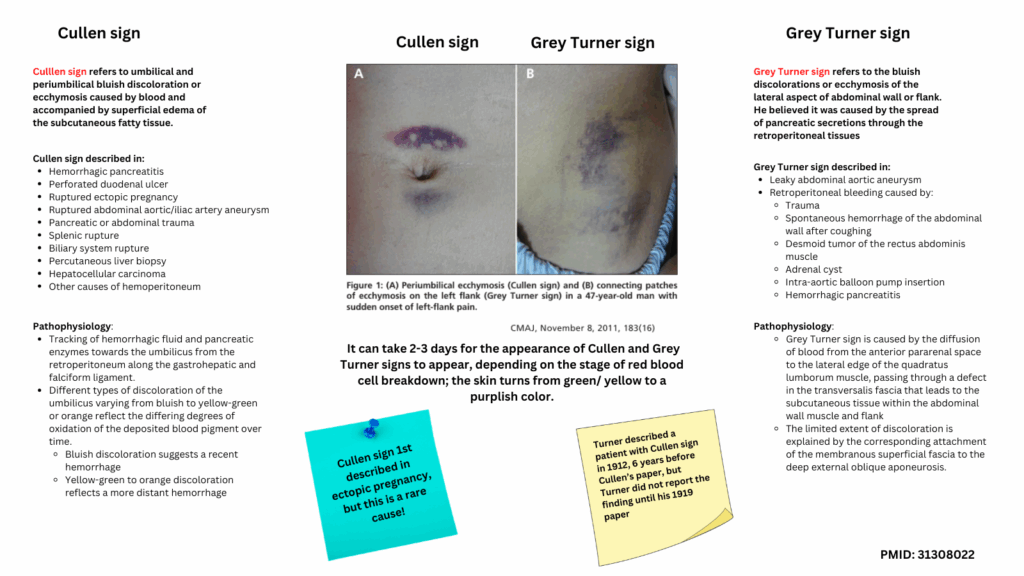
Cullen’s sign is a physical finding characterized by ecchymosis (bruising) around the umbilicus, and is a clinical marker of intra-abdominal or retroperitoneal bleeding. It is named after Dr. Thomas Stephen Cullen (1868–1953), a Canadian gynecologist and pathologist.
- Clinical significance:
- Periumbilical discoloration due to tracking of blood from retroperitoneal or intraperitoneal sources along the falciform ligament to subcutaneous tissues around the umbilicus.
- Appears 24–48 hours after the onset of hemorrhage.
- Associated conditions:1
- Acute hemorrhagic pancreatitis (< 3% of patients with acute pancreatitis)
- Ruptured ectopic pregnancy
- Ruptured abdominal aortic aneurysm (AAA)
- Trauma
- Peritoneal bleeding (e.g., from anticoagulation)
- Cullen’s sign is rare, present in only 1–3% of patients with acute pancreatitis, but its appearance is often associated with severe disease and a poor prognosis (e.g., mortality in pancreatitis rising from 8–10% to 40% when present).
- Cullen’s sign is often mentioned alongside Grey Turner’s sign, which refers to flank ecchymosis—both signs may co-exist in severe hemorrhagic conditions like acute pancreatitis.
- Eponym Origin: Dr. Thomas Cullen (1868-1953):
- Described the sign in 1916 in a woman with a ruptured ectopic pregnancy.
- He was a pioneer in gynecologic pathology and worked at Johns Hopkins Hospital under Dr. William Osler and Dr. Howard Kelly.


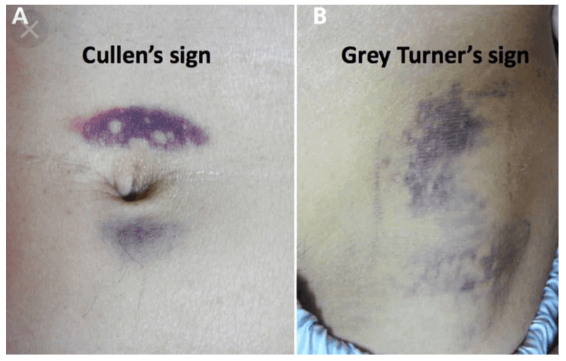
A comparison between Cullen’s sign and Grey Turner’s sign: