For larger image, click here.

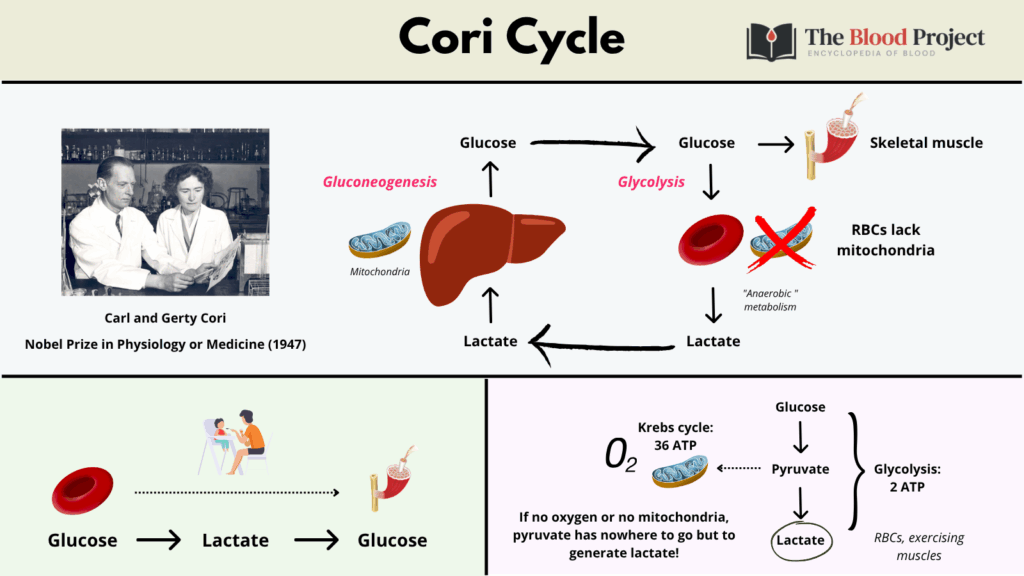
The Cori cycle is a metabolic pathway in which lactate produced by anaerobic glycolysis in peripheral tissues (primarily skeletal muscle) is transported via the bloodstream to the liver, where it is converted back into glucose through gluconeogenesis. This glucose is then released into the circulation and can be taken up again by muscle and other tissues for energy production. The cycle is especially important during periods of increased anaerobic metabolism, such as intense exercise or critical illness, and serves to recycle lactate and maintain glucose homeostasis under conditions where oxygen supply is limited or glycolytic flux is high.
What Is the Cori Cycle?
- It is a recycling loop in which:
- Muscle converts glucose → lactate via anaerobic glycolysis (due to low oxygen).
- Lactate is transported through the blood to the liver.
- The liver converts lactate back → glucose via gluconeogenesis.
- This new glucose returns to the muscle for continued energy production.
- The cycle costs energy: the liver expends 6 ATP to regenerate 1 glucose molecule.
- Named after Carl and Gerty Cori, Nobel laureates
Step-by-Step
| Tissue | Process | Substrate → Product |
|---|---|---|
| Muscle/Red blood cells | Anaerobic glycolysis | Glucose → Pyruvate → Lactate |
| Blood | Transport | Lactate moves to liver |
| Liver | Gluconeogenesis | Lactate → Pyruvate → Glucose |
| Blood | Transport | Glucose returns to muscle |
Purpose
- Provides energy to muscles when oxygen is scarce
- Prevents lactic acidosis by clearing lactate
- Allows temporary anaerobic metabolism
Role of Red Blood Cells
- RBCs lack mitochondria, so they cannot perform oxidative phosphorylation.
- Therefore, RBCs rely entirely on anaerobic glycolysis for ATP production.
- The end product of glycolysis in the absence of mitochondrial metabolism is lactate.
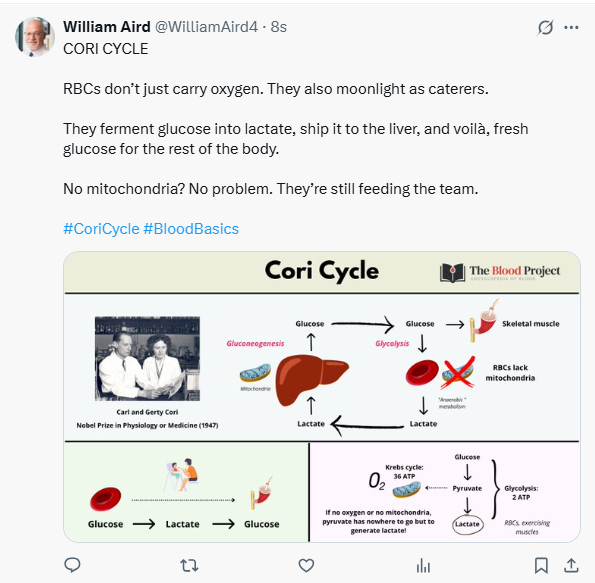
- Lactate is exported into the bloodstream and taken up by the liver, where it is metabolized to glucose, which is then transported in the blood to RBCs (glucose → lactate → glucose)
- RBCs are a steady source of circulating lactate, even under normal conditions.
- Lactate production is essential to maintain red cell NAD⁺ levels (via LDH), which keeps glycolysis running.
Bottom line
Lactate produced by red blood cells (RBCs) can be taken up by the liver, converted into glucose, and that glucose can then feed other tissues — including muscle, brain, and even RBCs themselves.