
Introduction
Thomas Benton Cooley was an American pediatrician from Michigan who, through meticulous clinical observation of immigrant children in Detroit, first described what we now know as β-thalassemia major. His name endures in “Cooley’s anemia,” one of the classic pediatric hematologic syndromes.
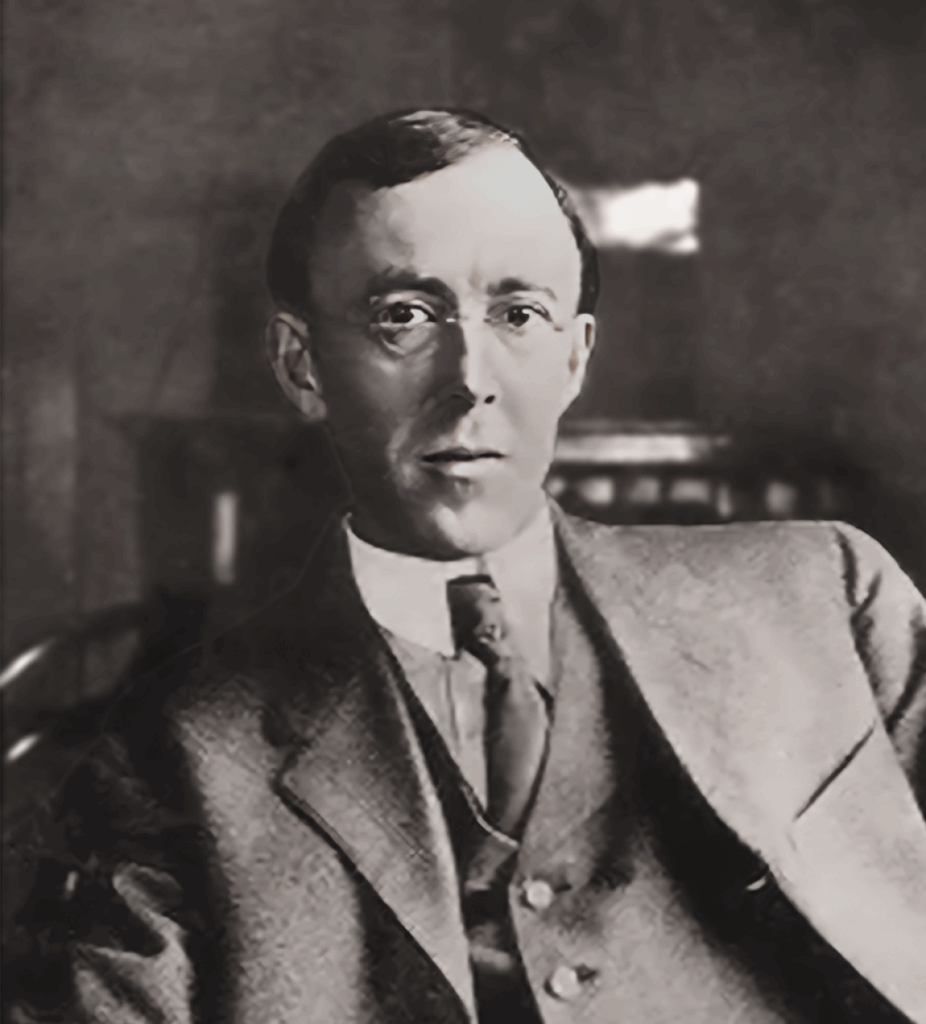
Dr. Thomas Benton Cooley 1871-19451
Early Life and Background
Thomas Benton Cooley was born on June 23, 1871, in Ann Arbor, Michigan. Growing up in a university town where his father was a physician, Cooley was immersed early in the culture of medicine and academic life. This environment set the stage for his eventual decision to pursue pediatrics at a time when the field was still emerging as a distinct specialty in the United States.
Education and Training
Cooley earned his undergraduate degree (B.A.) in 1891 and his medical degree in 1895 from the University of Michigan Medical School. He then completed an internship at Boston City Hospital, followed by advanced pediatric training in Europe, particularly in Vienna and Breslau, where he specialized in hygiene and contagious diseases. These experiences gave him a broad foundation and introduced him to the scientific rigor and clinical observation that would later define his career.
Professional Career and Leadership
Upon returning to the United States in 1905, Cooley became one of the first dedicated pediatricians in Detroit, eventually serving as chief of pediatrics at Harper Hospital and later at the newly established Children’s Hospital of Michigan. He was also active in teaching, holding faculty positions at the University of Michigan and later at Wayne University College of Medicine. He served as a professor at the University of Michigan and Wayne State University. He co-founded the American Academy of Pediatrics in 1930 and served as a professor at Wayne University College of Medicine starting in 1936. Cooley died in October 13, 1945. His career blended clinical care, teaching, and research, and he earned an international reputation not only for his description of what became known as Cooley’s anemia, but also for his work in public health, infectious diseases, and childhood nutrition.
Recognition of a New Childhood Anemia
In 1925, while practicing pediatrics in Detroit, Cooley encountered several children of Italian and Greek immigrant families who presented with a puzzling constellation of findings: severe anemia, enlarged spleens and livers, and distinctive bone deformities of the skull and face.2 These cases did not fit the common nutritional anemias of the day.
Through careful observation and documentation, Cooley proposed that the syndrome represented a unique hereditary form of anemia, which he termed erythroblastic anemia. His initial description was published in the Transactions of the American Pediatric Society in 1925, followed by expanded reports in the American Journal of Diseases of Children in 1927.3
Although the molecular basis was not understood until decades later, Cooley’s clinical recognition of the disorder laid the foundation for the modern concept of β-thalassemia major. His meticulous case descriptions brought international attention to a condition that was previously unrecognized in pediatrics, and his name has since been permanently attached to the disease as Cooley’s anemia.
Historical Impact
Cooley’s recognition established thalassemia as a distinct clinical entity and inspired ongoing research into its genetic and molecular basis. The name “thalassemia” was coined later in 1932 by George Whipple and William Bradford. The term was derived from the Greek word thalassa (meaning “sea”), to reflect the disorder’s prevalence among people of Mediterranean origin.