
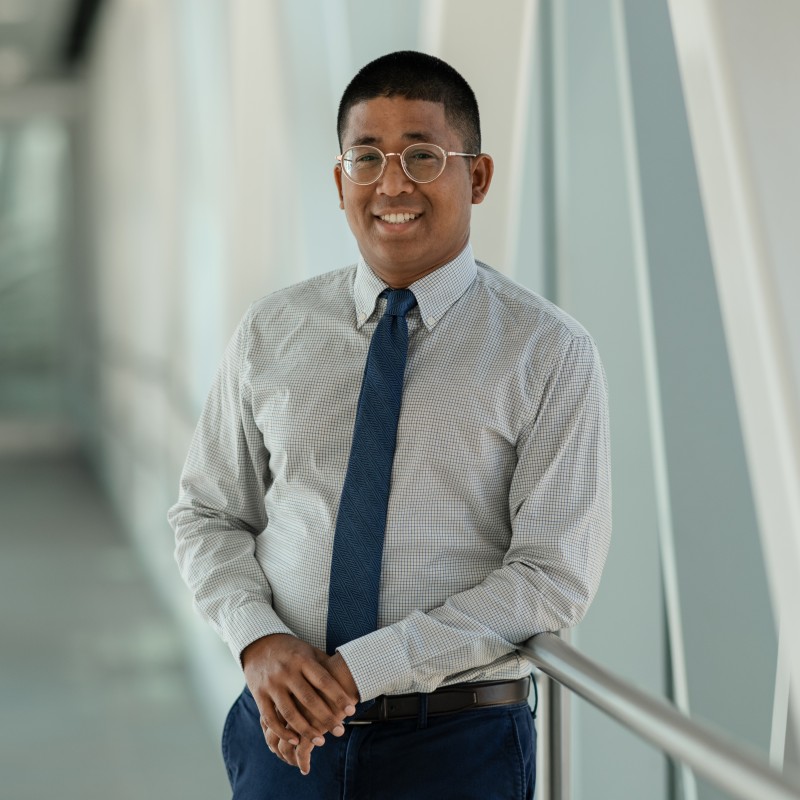
Pratna Kem is a higher education professional from just outside Boston, MA. He was diagnosed with thalassemia when he was less than a year old. His pediatrician noticed he had delayed growth and a jaundice complexion and referred him to see a hematologist at Boston’s Children Hospital, which confirmed the eventual diagnosis of beta thalassemia major. The challenges of piecing together an effective care plan was ever present. Between the long days in a hospital bed receiving monthly blood transfusions and the long nights at home self-administering infusions of iron chelators, Pratna’s journey towards a normal, healthy life was made possible due to the unconditional love of his parents and the continuous care of his healthcare team at Boston’s Children Hospital. He is grateful that BCH continues to check in on him since he transitioned to his current care team at the Brigham and Women’s Hospital in Boston.
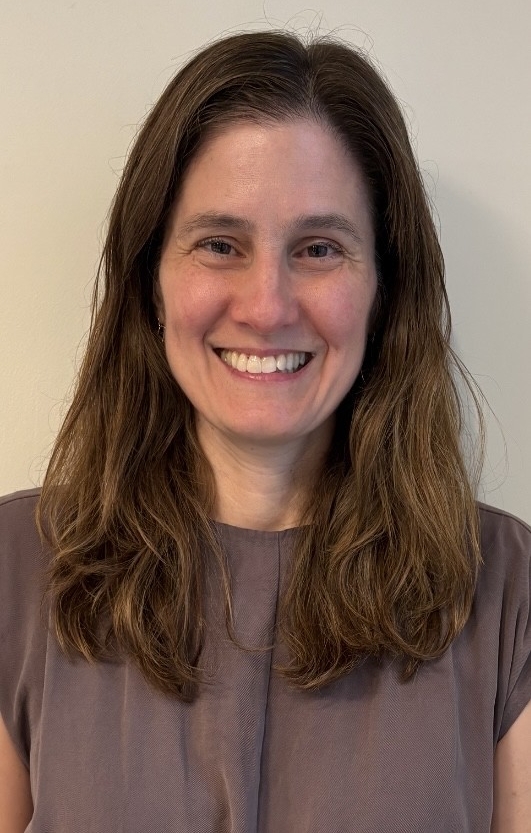
Dr. Erica Esrick is a pediatric hematologist at Dana-Farber/Boston Children’s Cancer and Blood Disorders Center and Assistant Professor of Pediatrics at Harvard Medical School. Her area of focus is clinical care and clinical research for patients with thalassemia and sickle cell disease.
In this podcast, Pratna Kem and Dr. Erica Esrick talk with Helen Osborne about:
- What thalassemia is, how it is inherited, and the challenges of managing a lifelong blood disorder through regular transfusions and iron chelation therapy.
- Pratna’s experience growing up with thalassemia, including the role of his Cambodian refugee parents and the family, cultural, and personal dimensions of navigating his care.
- Advances in thalassemia treatment, including gene therapy, and how Pratna’s decision to pursue this option reflects the importance of community support and shared decision-making.
Producer and audio editor: Adam Weiss, Relativistic Media
Transcript:
HELEN: Welcome to Talking About Blood. I’m Helen Osborne, host of this podcast series and a member of the advisory board for The Blood Project. I also produce and host my own podcast series about health communication and that’s called Health Literacy Out Loud. Today’s focus is about an inherited blood disorder called thalassemia. I’m talking with a hematologist and a patient who share their experiences of diagnosing, treating, and living with this disorder. Dr. Erica Esrick is a pediatric hematologist at Dana-Farber, Boston Children’s Cancer and Blood Disorders Center, and also assistant professor of pediatrics at Harvard Medical School. Her area of focus is clinical care and clinical research for patients with thalassemia and sickle cell disease.
Pratna Kem is a higher education professional in the Boston area. Pratna was less than a year old when his pediatrician noticed that he had delayed growth and a jaundiced complexion. The pediatrician then referred him to a hematologist at Boston Children’s Hospital, who diagnosed him with beta-thalassemia major. As Pratna describes, the challenges of piecing together an effective care plan was ever present between long days in the hospital receiving monthly blood transfusions, and long nights at home self-administering infusions of iron chelators. This journey towards a normal, healthy life was made possible to the unconditional love of my parents and the continuing care of the team at Boston Children’s Hospital. Pratna shared that he has since transitioned to a care team at the Brigham and Women’s Hospital in Boston.
Welcome to you both. I look forward to this conversation about thalassemia, but let’s take it from the beginning. What is thalassemia?
ERICA: Thank you so much for having us. It’s a pleasure to be here to talk about thalassemia. Thalassemia is an inherited blood disorder. In our red blood cells, we have hemoglobin. And if the hemoglobin is low, that’s called anemia. And one of the most common causes of anemia in the world is if one of the proteins that makes up hemoglobin is produced in a lower or even absent amount. So there are two proteins that make up hemoglobin, alpha globin and beta-globin. And so if somebody has a either mutated version of either of those or deleted version of either of those, then the total hemoglobin is lower and the patient has thalassemia.
HELEN: What I was reading and learning about it’s an inherited blood disorder. So put together the genetic or the family part of that, please.
ERICA: Yes, it’s an inherited blood disorder because we inherit the genes for both alpha globin and beta-globin from our parents, our biological parents. And so in the normal situation, we inherit one beta-globin gene from your mom and one from your dad. And since we’re talking about beta-thalassemia here today, we can use that as the example. Either your mother or your father is what’s called a carrier of thalassemia, where they have one copy of the beta-globin gene that is either abnormal or absent, they could pass that down to the child. If you inherit from both parents the absent or mutated version of beta globin, then you have inherited the more severe type of thalassemia.
HELEN: Pratna, is this your understanding of it too? You’re the one who has this disease. Talk about how you understand the inherited aspect of it, please.
PRATNA: Yes, thank you for having us, Helen. I do know that I believe my father is the one who has that thalassemia gene and then my mom has that anemic gene and you know they were obviously both very unaware of this because you kind of experience life normally with, you know, these these abnormal genes, but the symptoms kind of present themselves or manifest once you’re someone who gets to inherit both of these recessive genes. And so that’s exactly how I understand it as well.
HELEN: So you were sicker than either of your parents?
PRATNA: Yes, my parents are generally very healthy and you wouldn’t even know, honestly. So yeah, I get to experience life in all its fullness through this.
HELEN: I can see you smiling. I can hear you laughing about this, but this is a serious, serious disease. Erica, is this happening worldwide? Is this common? Is this rare? Does this of disproportionately affect some people more than others? Put it into a greater sociologic context, please.
ERICA: Yes. So different types of thalassemia mutations or deletions are more common in different parts of the world. And so in general, thalassemia is most common in people whose ancestors hail from either the Mediterranean region, areas of Southeast Asia, areas of Africa, or the Middle East. But of course, with people having ancestors from all around the world or a mixture of places. You can never be entirely sure where the thalassemia gene originated, but in general there are some very clear patterns of inheritance that come from those parts of the world.
HELEN: Hmm. And that was your experience too, Pratna, correct?
PRATNA: Yeah, I did have some understanding of obviously there are, you know, patterns of these sort of genetic mutations in throughout various communities. But just wanted to also take a moment to recognize this podcast because in preparing for our conversation today, I listened to a couple episodes and just wanted to share that the episode you had about the sickle cell and how the patterns are affected in the black community and how there has generally been very little voice given to that community of folks. It really sort of touched me because in my own experience having thalassemia it’s something that I can get by and you know, I don’t have like these physical markers of being different from anyone else in terms of my able-bodiedness. But it’s something I do experience. And, you know, just hearing that conversation you had about sickle cell from previous episodes, it was really eye opening for me and for my life I felt like you know, having to deal with sort of this experience of my parents being refugees from Cambodia and my own self being a young person of color growing up in America. It would have allowed me to see myself in a so much more holistic way if I had a podcast like this to listen to when I was young. But you know growing up, I almost felt like there was a part of me I had to ignore a bit because you kind of choose these various identities of marginalization.
HELEN: And if I can just be clear about that, what you’re talking about are your different identities, it’s someone who’s been ill and has a disease since birth, I assume you’re a little guy when it got diagnosed.
PRATNA: Mm-hmm. Yeah.
HELEN: And also being from Southeast Asia and as you said, a you know, a person of color, so you’re bringing both of those identities together? How did that affect and also Erica, I welcome your opinion. In your perspective as someone treating patients, is that something that you see in people that they’re not just someone who has this blood problem, but there are greater issues there?
PRATNA: Yeah, I think just sort of the technical explanation that Dr. Esrick gave a little earlier in our conversation, I think it’s pretty complicated. It’s hard to understand even with someone who lives through it and doesn’t have that background in the science and the medical kind of jargon and terminology. But, you know, I think for me, watching my parents experience it, you know, imagine explaining that to them and they barely have a grasp of the language. I think it’s a very scary experience for two refugees coming from Cambodia who were forcibly displaced from Cambodia in the aftermath of you know major conflicts and wars in Southeast Asia.
HELEN: Oh my goodness.
PRATNA: And you know, and there’s this kind of renewed hope when you come to a place like America and then you have your first child and then you know, and then all of a sudden they’re like, you have to go through all these tests and we have to evaluate you and diagnose you with something this complicated to explain, right? And so that’s kind of for me the kind of real life lived experience of thalassemia and what what that’s meant for my kind of family’s experience as well.
HELEN: Oh, I appreciate your candor in this. You also were talking and you wanted me to share about your background and it sounds as though you had a lot of treatments you had to do. And you were an infant, you were a baby when this got started. Like maybe you’re taking on that role ’cause you’re an adult now. But your parents came over, barely spoke English, and have a very sick child. They never expected that. From a doctor’s perspective, what’s it like treating somebody, treating a child you work with children, when you have these many factors of language and culture and serious illness?
ERICA: Yeah, so many of the points that Pratna brought up are ones that we work with families on all the time. Having suddenly to face the understanding of a diagnosis and the treatments that are necessary has to be done in the context of what’s going on in that family’s life. Sometimes there are language barriers. Sometimes there are cultural barriers if somebody is new to our community, for example. The treatments usually needed in somebody with the most severe types of thalassemia are blood transfusions. Blood transfusions in the most severe types of thalassemia, or transfusion-dependent thalassemia, often start in infancy. Sometimes they may start at a slightly older age, depending on the patient’s genotype and which exact mutations they have. But once transfusions start, they happen every three or four weeks for a lifetime.
HELEN: Oh, my goodness!
ERICA: Yeah. Obviously that’s very impactful on a family’s life. Just adding that to a family’s routine, the transfusions themselves take the better part of a day, or two trips to the hospital to do a blood sample first and then come back for the transfusion. The transfusions add iron to the body, which can be damaging to various organs. A huge part of the management of thalassemia is getting rid of the excess iron that builds up in the body through iron chelation. That’s something that we need to prescribe medicines for and that families need to become familiar with, including the medicines themselves and the side effects to look out for, and help a child take every day for their life during the time that they’re getting these transfusions. You know it’s a major commitment to face when a young child is diagnosed.
HELEN: Wow. Yeah, it just affecting every sphere. I’m thinking as a child, I mean, getting IVs all the time. I mean, little kids hate shots, hate blood draws. I can’t imagine you’re any different, Pratna, when you were a little guy. You probably hated that part, right? Or were you okay with it?
PRATNA: Yeah.
HELEN: Or are you so exceptional? There’s like, okay take my blood or give me blood.
PRATNA: No, I mean I did always hate it, but I you know, I always knew that it was something I had to go through and so I complained very little. I think a lot of that had to do with like I said, you know, seeing my parents struggle with so many other things and one of the things is as a kid, you watch your parents go through that and whatever you can control to not make them have to struggle with one other thing, you know, you try to do that for them. You know, and I was always the patient at the CAT/CR where I received my blood transfusions for almost thirty years, I was always the kid that was like, you know, I don’t really need much. I never cried during my IVs or anything like that
HELEN: Wow.
PRATNA: It’s not a walk in the park either, you know. It’s tiring, you get sick of it and it’s a lot, you know. But my father always said that we’re going to take care of you for as long as we can, but at some point it becomes up to you and it’s it’s a lot of sacrifice. They sacrificed a lot of weekends. There was a point when I was very young and my dad was working about three jobs and things like that. So, it became a whole family kind of endeavor really. I never felt alone through the process. So, I think that also made me sort of able to get through it in the way that I did. But yeah, it was it was it was a lot to process as a kid and some of it you don’t really process, it’s just always what you’ve known too. The transfusions have always been that for me. The home infusions, that was a huge sort of step in my treatment. The iron chelators that helped take the iron out of my body. Those were nightly infusions, six nights a week.
HELEN: Oh my goodness.
PRATNA: Yeah, at first. You know, and my parents had to learn how to do this because I wasn’t doing it myself.
HELEN: And they barely spoke English.
PRATNA: Right, yeah you know like all of its demonstrations. They speak English pretty well, but it’s hard. They you know, they’re always second guessing themselves too. You know, they’re like, did we understand it correctly? Did we do it wrong? My dad told me that he used to wait till I was asleep to do the chelation because he like couldn’t watch me get the injections and stuff like that. He was like heartbroken to do that. So he would wait till I would sleep before he did it. Yeah, and but we always did it together and I was lucky for that. Very fortunate for it.
ERICA: I was just going to add a little bit of context about the different iron chelators that Pratna’s mentioning so the one that he’s referring to when he was younger is called deferoxamine or with the brand name Desferal. That is the iron chelator that was first available. It’s a wonderful iron chelator in that it does a great job getting the extra iron out of your body, but the downside of it is that it has a very short half life. So the only way to administer it is through an infusion. And typically that’s a subcutaneous infusion, so like a tiny needle under the skin, but running like Pratna said, for example, overnight for say ten hours or twelve hours for multiple days every single week. And so you know, you can imagine, as Pratna pointed out, in a child, how challenging that is. And even more so as a child becomes a teenager and a young adult who’s having to do more of it on their own and maybe more resistant to this I this type of treatment. Like in many patients with chronic illnesses, the teenage years are, you know, bring a whole host of normal teenage challenges. Fortunately we now have iron chelator medications that do not require infusion and that are oral. So that was an enormous advancement in thalassemia patients and the community because they are so much easier to tolerate because now it’s possible for many people, most people, to take a pill for the iron chelator instead of needing to receive the infusions, but some people for various reasons still do need to receive the infusions.
HELEN: So in the course of Pratna’s care, you talk Pratna, you made reference to about 30 years ago. So in these 30 years a lot has changed. A lot seems like it has changed for the home care. part of it. Is that where we’re at now? Or where else are treatments going for this? Is i are there continue advancements or this is the way it is now?
PRATNA: Yeah, there are continued advancements. I’ve been not needing home infusions for quite a few years now, so that’s been great. You know, I’m just taking the oral medications. I’m on two different chelators currently. I’m still getting transfusions every three weeks at the Brigham and Women’s and the Dana-Farber. But the biggest sort of like advancement in recent years and one that I’m going to undertake soon is gene therapy.
HELEN: Oh, tell us more. Both of you, I want to hear about this from both perspectives, about gene therapy.
PRATNA: Yeah. Dr. Esrick, I don’t know if you want to go into the technical parts of gene therapy.
ERICA: Sure.
ERICA: So, in an overview, for quite a long time actually, a curative treatment available for thalassemia is a bone marrow transplant. That’s where a patient with thalassemia receives bone marrow cells from another person, a donor. Oftentimes the best type of donor is a sibling who happens to be a match for them. But most people do not happen to have a sibling who, a) doesn’t have thalassemia, and b) happens to be a match. Most people don’t have such a sibling or donor available. There are bone marrow transplants of other types, for, for example, unrelated donors or half match or haplo-identical donors, but those have not been available for nearly as long, and the outcomes still aren’t quite as good as a matched sibling donor. So, researchers looked to sort out if there was any way that people could receive another curative or transformative therapy using his or her own bone marrow cells and that is called gene therapy. So basically blood stem cells is just what we call the hematopoietic stem cells that are made in the bone marrow and eventually become red blood cells, those cells are collected from a person with thalassemia and then fixed in one way or another, which I can describe, but depends on which exact type of gene therapy they are receiving, and then infused back into the patient where they can take up residence in the bone marrow and grow and produce red blood cells that make healthy hemoglobin that the person was previously lacking. So this has been a major new development for people with beta hemoglobinopathies, both sickle cell and thalassemia actually. And there are now two FDA-approved gene therapies for transfusion dependent beta-thalassemia.
HELEN: Wow, this huge advancement. Pratna, you’re you said that you’re about to do this?
PRATNA: Yeah, Dr. Esrick let me know about this treatment when it was in its trial phase actually. So I’ve known about it since I was at the Children’s and like you mentioned, I’ve transitioned my care over to adult hematology care and the team at the Brigham has been great as well. But, you know, it’s something that has been sort of in the back of my mind for a long time, thinking about how the risks outweigh the rewards and you know, it’s a huge undertaking. It’s it’s a long process from what I understand. You know it involves, a cup a couple of days to a few days of bone marrow collection. You have to collect it in large numbers, right? So there’s this whole part of the process where we have to collect more than we probably need because some of the stem cells don’t make it past the gene therapy phase. And then when you’re ready to put the bone marrow back into your body, you know, you need to completely suppress your immune system so chemotherapy gets involved. You know, it’s a month long hospital inpatient experience and then you have to be home on bed rest for another month. And so it’s a it’s about a year long timeline. It’s a lot to think about. It’s a lot to kind of, is there a right time to do this? Or a better time or a perfect time? And it’s just the more I thought about it, it’s just like there’s no such thing as a perfect time to. at the same time it’s always a perfect time to put your health first. But you know, just like I think things do come full circle and I just felt so confident in the community around me at this point in my life that there were so many things that worked in my favor and so many people supporting me outside of my parents now, right? A lot of people know about my experience. And so it just felt like it was a time to do it. So I was thinking about it a lot and I finally made the decision a couple of months ago to go through with the gene therapy. But it has been a lot of conversations with a lot of different folks and a lot of reassurance and, you know, just very thankful for that community that I have that helped me make that decision.
HELEN: I’m so thankful for both of you sharing this and sharing it so candidly. I knew we were going to talk about the disease and living with it and kind of the basic parts of it. I just feel enveloped by what both of you are going through as a patient, as a physician, as a researcher, as a family member. And now this greater community dealing with a serious inherited blood disorder and also the progress that is happening in science. I don’t have words to acknowledge how much I appreciate this conversation. Well, as we’re wrapping up here, our listeners to Talking About Blood might be seasoned physicians who’ve been working in hematology for a long time or some other medical field. They may be advanced scientists. They might be somebody newer in the sciences or medicine, and listeners also include people like me, lay people, just interested and curious about all things having to do with blood, what message would you like to share with all these audiences?
ERICA: Thank you for those kind words. It’s it’s an honor to be here with Pratna, who’s speaking so beautifully about his own experience. Thank you for giving us the chance. So I think that I would say that thalassemia has been or is a really excellent example of what can happen when science and clinical physicians and providers and a very dedicated patient community kind of come together to tackle a disease. Because the research in the lab that allowed the advances such as newer chelation and developments like gene therapy that never could have been imagined not long ago, could never have happened without the work of the lab researchers and I would add the funding of those lab researchers. And then the multidisciplinary clinical teams that are involved. So, you know, you’ve mentioned the doctors, but I think Pratna would probably agree that an enormous, enormous part of the support for the transfusion care over the years is the nurses who administer the transfusions, the social workers who work in our group, because it really takes a multidisciplinary team to help families through such a major endeavor. And then of course, most importantly, the patients and their families who put in the effort required to help their children, you know, through such a daunting disease. And also to take on the opportunity and associated risks with these new therapies that hold such promise.
HELEN: Thank you. Pratna, you get the last words.
PRATNA: I’m not sure what to say to actually capture the entire experience of everything, I guess there’s two things that come to mind. One is I teach foundational reading and writing at the institution that I’m at. And one of the things that I teach my students is that we often think of writing as something that’s a very internal, individual process. I teach them that it’s actually the opposite, that it’s a very communal process, that every conversation that you’ve had, every sort of story you’ve read, every lesson you’ve learned, you process it with a community and you process it for a community because you know you’re not always just writing for yourself. There’s an audience that engages with it, right? So, in that same sort of vein of what Dr. Esrick just shared, I think there is a lot of people along the way that I have true and deep relationships with through this sort of disease. You know, nurses that I still keep in touch with from when I was at the Children. Dr. Esrick reaching out to me, you know, she didn’t even know that I was going through this gene therapy when she had reached out to me. I just made the decision and then I saw her email to invite me to come on with her.
HELEN: On this podcast, yeah.
PRATNA: Yeah, exactly. You know, I think that the whole, you know, journey of my care has been a very communal one. It had very little or just a very little part to do with, you know, what I was able to do on my own and sustain on my own, I think at every turn I needed somebody to support me through it. So, I think what Dr. Esrick said people who wear many hats, being multidisciplinary, interdisciplinary, those were all things that were helpful in my care. And then the other thing just you know, to bring it back to my parents, my name Pratna, it means ‘wish’ in Cambodian. My dad named me that because he wanted a boy and I was you know, I was the first kid and I got a boy. And he shared me that very recently as we were having these conversations about gene therapy, how his true wishes fulfilled that he had two healthy children. He never thought that he would see in his lifetime that I would be cured. It’s the one last worry in his life, you know, and it at this moment. I’m I’m almost forty years old. He’s retired, but it is the one last worry in his life that I’d be healthy when he you know, when he passes or when his when his journeys end. He was almost like in tears when he heard about the gene therapy. I was scared. I was like, I don’t want to do chemo, you know? And he was like, I can’t believe there’s a cure, you know. And so it’s very different, you know, his perspective is a much longer scope. I’m looking at the very immediate sort of like sort of gratification, right? It’s just very you know, a very humbling experience to be able to, like I said, you know, experience life in all its fullness in this way. So very appreciative of everybody who’s been on this journey with me.
HELEN: I’m at a loss for words. I just so much appreciate your stories. One of you use the term and I maybe is how I will think of this whole podcast episode itself about the communal journey of care, and it truly is. Thank you both so much for sharing your stories, being guests on Talking About Blood. Pratna, I wish you well on what’s coming next. Medically, physically, and Erica, keep all that great research and patient care going. We need all of you. Thank you so much.
ERICA: Thank you so much for having us. It’s been a pleasure to talk with you.
PRATNA: Yeah, thank you, Helen. This has been great. Dr. Esrick, thank you for inviting me and thinking of me for this podcast.
ERICA: Thank you so much for coming.
PRATNA: Absolutely.
HELEN: As we just heard from Dr. Erica Esrich and Pratna Kem. It’s important to consider everyone who’s involved in a patient’s care. The patient, the family, all the providers. It truly takes a community. To learn more about The Blood Project and explore its many resources for professionals and trainees and patients, go to thebloodproject. com. I invite you to also listen to my other podcast series about health communication at Health Literacy Out Loud. Please help spread the word about this podcast and The Blood Project. Thank you for listening. Until next time, I’m Helen Osborne.