
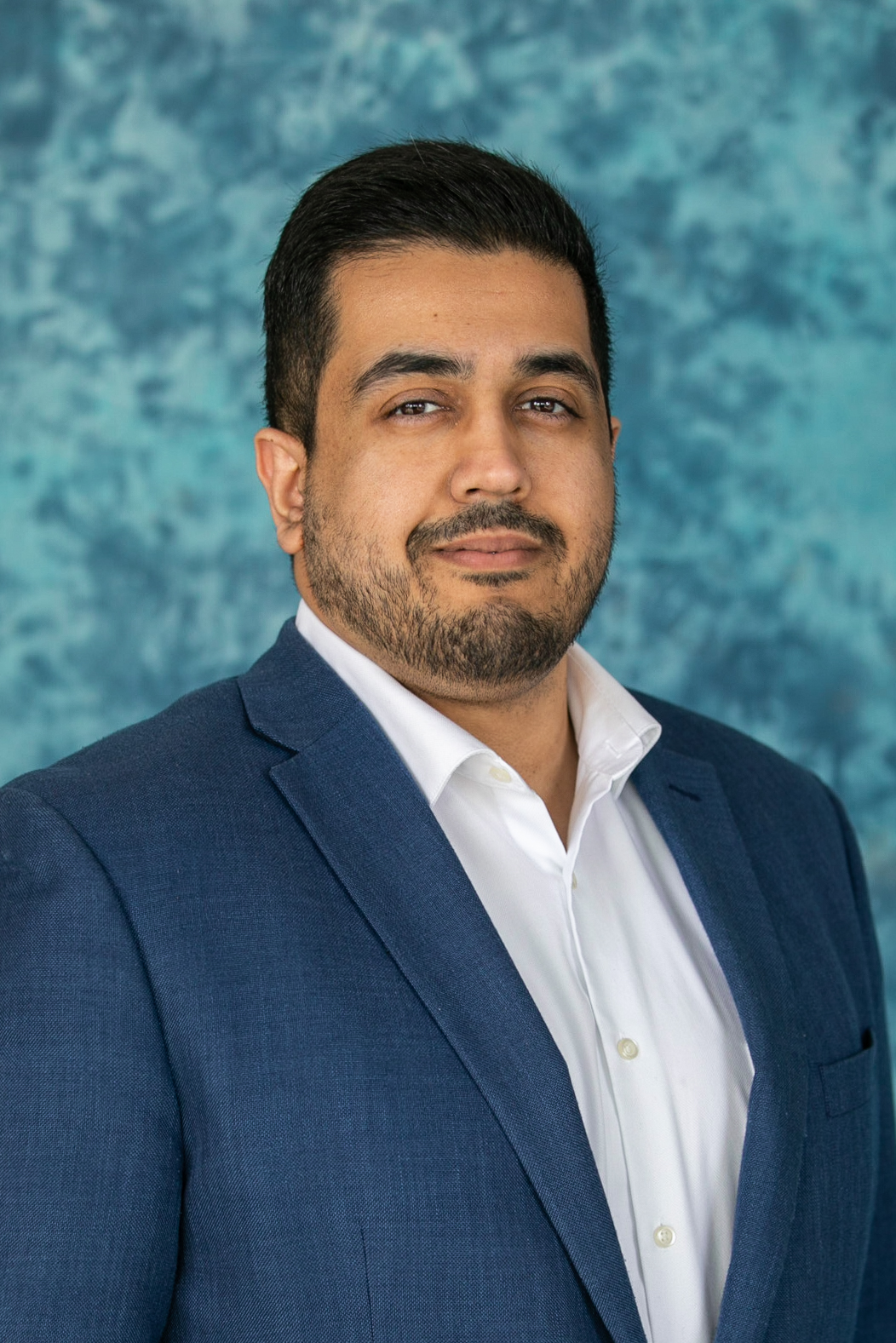
Dr. Ahmar U. Zaidi is a pediatric hematologist who spent the last several years at the Children’s Hospital of Michigan, where he helped care for thousands of patients with sickle cell disease. He currently serves as Senior Medical Director, Clinical Development for Agios Pharmaceuticals. Along with numerous publications and clinical trial experience, he has worked tirelessly as an advocate for sickle cell disease patients, fueled by a belief that medical misinformation and disinformation steadily contribute to poor outcomes in sickle cell disease patients. He co-founded and hosts the sickle cell educational podcast, Cheat Codes; and has been an advocate for social media as a tool for patient and physician education. He has served as the Chair of the Hematology Anti-Racism Task Force for the American Society of Hematology and the Chair of the Board for The Sickle Cell Reproductive Health Directive.
In this podcast, Ahmar Zaidi talks with Helen Osborne about:
- His journey from pediatric hematologist to pharmaceutical medical director and advocate for people living with sickle cell disease.
- The biological and social dimensions of sickle cell disease, from its genetic origins to the ongoing need for global advocacy and education.
- Innovative ways to expand patient understanding—through podcasts, social media, and accessible health communication—to promote informed decision-making and equity in care.
Producer and audio editor: Adam Weiss, Relativistic Media
Transcript:
HELEN: Welcome to Talking About Blood. I’m Helen Osborne, host of this podcast series and a member of the advisory board for The Blood Project. I also produce and host my own podcast series about health communication, and it’s called Health Literacy Out Loud. Today, I’m talking with Dr. Ahmar Zaidi, who is a pediatric hematologist and sickle cell disease advocate. He currently serves as a senior medical director of clinical development at Agios Pharmaceuticals. Amar, welcome to Talking About Blood.
AHMAR: Hey, Helen! I’m so happy to be here.
HELEN: I’m glad you’re here, too. So you went from being a pediatric hematologist. You did that in a clinic, I gather, like seeing patients.
AHMAR: That’s right.
HELEN: And I want to hear about that. To now you’re working at a pharmaceutical company. That’s a big switch. Tell us more about that journey that you’ve been on.
AHMAR: Sure thing. So, Helen, I’m, as you said, a pediatric hematologist by training who found himself quite enamored by the red blood cell.
HELEN: Okay.
AHMAR: That sort of adoration of what I think is the most fascinating cell in the body led me to a disease called sickle cell disease. And sickle cell disease became sort of my 9 to 5 and my 5 to 9 in the way of understanding that it was a disease that not only required clinical care, but required a tremendous amount of advocacy.
HELEN: Break that down a little bit. Break that down for the clinical care and the advocacy.
AHMAR: Sure thing. So, you know, sickle cell disease, I guess let’s back up even further. Let’s zoom out all the way and let’s talk about my adoration of the red blood cell being related to sort of this idea that it is an intricate cell that when it works well, it works very well. It’s one of the most wonderful marvels of nature. But when the red blood cell stops working well, things go particularly poorly. In sickle cell disease, what we have is a disease in which modifications in hemoglobin cause the red blood cell to change shape from the smooth disc that it’s supposed to be into this crescent moon that starts getting stuck in blood vessels. It starts breaking open and releasing sort of the toxic contents of the red blood cell out into the bloodstream. This, of course, comes with a variety of physiologic complications. But one of the things about sickle cell disease that really pulled me in is that it’s a disease of marginalized populations.
HELEN: Oh, okay.
AHMAR: And as such, the disease expands well beyond the biologic realm and really becomes a biopsychosocial disease. And that biopsychosocial aspect of the disease is really what pulled me in.
HELEN: Give me an example. I know we have a lot of folks who are listening who are very familiar with sickle cell disease at some level, maybe, you know, different understanding than yours, but they’re probably hematologists, been in practice a long time. We have people who might be newer to the sciences or new to medicine, and we have people just curious about blood. So tell us a story that can make this more vivid. You talk about the biopsychosocial dimensions.
AHMAR: So if we think about the inception of sickle cell disease, sort of the first humans with sickle cell disease, what we learn is that it is a story of resilience and survival, that starts millions of years ago in sub-Saharan Africa, where in a fight against the Anopheles mosquito and malaria, a subpopulation of human beings develops a mutation that confers protection against death from malaria.
HELEN: Wow.
AHMAR: And this mutation, when inherited in one copy, is what we now call sickle cell trait. But you can imagine that when two copies of this gene are inherited, you get sickle cell disease.
HELEN: How fascinating. We actually have done a podcast on sickle cell traits, but this one’s on sickle cell disease. So you’re going back to its origins.
AHMAR: Right. So if you think about the origin, you know, you have the sub-Saharan origin, you have sort of this origin of this disease in a population where malaria is kind of endemic to the region that this population is in. Now, in the United States, you probably are thinking, well, Ahmar, malaria doesn’t exist in the United States. Well, the reason sickle cell disease exists in the United States is because of the transatlantic slave trade. So what you have is a population of individuals who developed a mutation to protect themselves against the ramifications of malaria, but end up in a region against their will. Now, separated from the need to be protected from malaria with a disease that is chronic, debilitating, terminal with a health care system that is not necessarily the best equipped to care for the marginalized communities that are affected by this disease.
HELEN: Thank you, Ahmar, for that background, putting that into context. So here you are, you’re working in a clinic somewhere with children, I assume, because your field is pediatrics. Now what? What’s it like in everyday practice moving forward from its roots?
AHMAR: As you said, I was in a children’s hospital taking care of children with sickle cell disease in inner city Detroit and felt sort of very fortunate that I was able to have some influence in that sphere. I felt quite fortunate that I was coming to sickle cell disease in a time where there was quite a bit of scientific progress in terms of advances of new therapies, new clinical trials, a spotlight on a population that had been ignored largely. And I was starting to sort of feel that my impact on the disease in my clinic was not enough.
HELEN: Oh, okay.
AHMAR: I was starting to feel as though I was spending time on the sideline in an era in which the progress in sickle cell disease was accelerating.
HELEN: So the progress was accelerating, but you’re seeing one child or one family at a time for 20 minutes, half hour, whatever that you’re doing. You had this sense that you can make a bigger difference. Is that right?
AHMAR: I felt the desire to, whether I had the capacity or ability to do so is unclear. That story’s still being told. I had the desire, certainly, to want to make a bigger impact.
HELEN: And does that get to the word advocacy? Because in the beginning, you talked about advocacy. And is that what you’re doing now? You went from the clinic to, I want to hear what you’re doing now, but then the underlying theme is advocacy?
AHMAR: So now, Helen, I am working in what’s called clinical development. So designing clinical trials, to look at new therapies in sickle cell disease and hopefully get new therapies to this population that hasn’t had much in the way of new medications for themselves. So running trials globally. Now, the concept of advocacy in sickle cell disease is a very interesting one. No matter how you interface with this population of patients, no matter how you interface with this disease, the need for advocacy is constant. In the clinic, I found myself advocating for the disease with hospital administrators who didn’t understand why patients with sickle cell disease continuously ended up in their emergency rooms.
HELEN: Oh, okay. And that’s kind of a no-no these days in health care.
AHMAR: You know, you can imagine that in a time where people talk about the opioid crisis and people are worried about sort of that aspect of medicine, being somebody from a visible minority community showing up in an emergency room with acute pain from sickle cell disease and asking for relief from pain is, unfortunately, generates quite a bit of stigma, quite a bit of eye rolls, quite a bit of assumption of bad intention from patients. So the need for advocacy is honestly constant. In the role that I’m in, the need for advocacy looks a little different. It’s advocating for aspects of the disease that are often overlooked. It’s advocating for different ways to measure disease severity. It’s advocating with regulatory bodies. It’s a different realm.
HELEN: It is. And your work is international, you say.
AHMAR: It’s a very global role. I get to oversee clinical trial execution across sort of 15, 20 different countries. For me, honestly, Helen, as I’ve grown a little bit older and gotten a little wiser, I have started to come to the realization that my understanding of sickle cell disease is minuscule compared to what I thought it was. And this role, my exposure to patients living with sickle cell disease globally has opened my eyes to what sickle cell disease actually is. So I had a pretty good understanding of what sickle cell disease looked like in Detroit, Michigan.
HELEN: There’s not a lot of malaria in Detroit.
AHMAR: Yeah. So the, you know, the sort of biopsychosocial aspect of what sickle cell disease looks like in Detroit is different from what it looks like in São Paulo, Brazil, and what it looks like in Riyadh, Saudi Arabia, and what it looks like in Brussels, and what it looks like in Barcelona, right? So that widening of my lens into what sickle cell disease actually looks like has been just so educational for me as a student of sickle cell disease. I mean, it’s really been a blessing for me to be able to expand my scope of understanding in sickle cell disease.
HELEN: Thank you. Now, you raised a few terms now, like expanding your understanding and also education. Right. You and I talked a little bit before this podcast about ways you are working on helping other people expand their understanding of sickle cell disease and to gain new education about it. Some of those ways are really innovative and clever. Tell us about some, please.
AHMAR: Yeah. So my first kind of learning, I guess, in sickle cell disease and our inability to sort of transfer knowledge well came in clinic. And that started with this idea that I just didn’t have enough time to in my clinic visit to spend with patients to really make meaningful change in the trajectory of their care and the trajectory of their ultimate outcome. I started thinking about how I could expand my time with the patient. And the answer to that is not have the patient come for more visits, right? Because that’s not practical for the family, that’s not practical for the patient, it’s not necessarily practical for the health care system. So what I started doing is recording a podcast called Cheat Codes, a sickle cell podcast. And the intention of that podcast was to take that what was five minutes in the clinic of talking to the patient at the end of the visit and expand that into a 45–60 minute discussion to do true justice to the discussion that was needed for a patient to make an informed choice.
HELEN: Like a visit would be about a medication or a treatment or how to manage symptoms?
AHMAR: That’s right. So, for example, a standard of care medication in sickle cell disease is hydroxyurea. Okay. But for me to really give the patient what they need to know about hydroxyurea would take me 45 minutes to 60 minutes. So what I did is just record that. I’m going to record this as a podcast, and I’m going to walk into a patient’s room and say, look, I’m really interested in starting you on hydroxyurea. I want you to go listen to episode three of my podcast, share it with whoever needs to hear it, and then let’s make this decision.
HELEN: Wow.
AHMAR: And Helen, it was beautiful.
HELEN: Wow.
AHMAR: The way that that changed the adoption of medication, therapy, the way it elevated the understanding of patients to sort of understand everything. What was happening in sickle cell disease was an amazing thing for me to see.
HELEN: And I’m just checking. I just want to check in with you about this. You’re now working for a pharmaceutical company. Were those all going in one direction? Were they like sponsored? They may have been paid for by the company, but they were, were they all leaning towards almost those ads we see on TV, like here’s this medicine and here’s all the good reasons to take it. Or was it more just here’s information and we’re going to talk together and make a decision later together?
AHMAR: It’s very much the latter. It’s very much the latter. It was very much presenting to the patient exactly what we would in clinic, which is here’s all the good. Here’s the benefit. Here’s the risk. Here’s the data. Here’s what other patients feel about it. You know, just arming them with that, that opportunity to make an informed decision. You know, we throw that term around informed decision. Right. But really, for a patient to be truly informed, it’s less of a informed consent is not a noun. It’s a verb. Right. It’s an action. You have to really put in the effort to make sure a patient is informed.
HELEN: Absolutely. I love the way that you’re doing it as not taking up your precious one to one clinical time, but finding a very, very worthy format to enhance that. I mean, people struggle with that all the time. My background is health literacy. We’re all about teaching health information and communicating it clearly. And I love that idea of having a series of these. That’s fascinating. For listeners of this podcast, would they be able to try out one of those podcasts and see and listen for themselves, see for themselves?
AHMAR: Absolutely. It’s available on all streaming platforms. It’s called Cheat Codes, a Sickle Cell Podcast.
HELEN: Terrific. We’re going to try to have that on your Talking About Blood webpage. Are there other ways? That’s an innovative way to expand your reach and be an advocate and be a teacher. Are there other ways you’re getting word out there about sickle cell disease?
AHMAR: I am a big believer in the value and use of social media and health literacy.
HELEN: Oh, good.
AHMAR: I think social media gets a little bit of a bad rap in terms of being a valuable platform in which to get ideas across.
HELEN: Tell us about some good ways it’s being used.
AHMAR: I mean, I think that, you know, you can basically log on to any social media platform and find advocacy happening for sickle cell disease. The community of advocates is huge. I sort of have, to maintain my lack of bias, I should say, as I’m running a clinical trial, I have tried to spend a little less time on social media. But prior to this role, I was using it absolutely as a tool to promote the dissemination of good knowledge, the dissemination of quality knowledge, the rebuking of myths in sickle cell disease that are very proliferated. They’re everywhere. People have all sorts of misconceptions about sickle cell disease. And certainly social media has been very valuable in fighting some of those misinformations.
HELEN: Ahmar, I am so impressed by what you did. You had this passion for these red blood cells, this awe for it. And then you saw what goes right and what happens when it goes wrong. You treated patients. You know that world. You expanded their access to education so you can be even a more effective clinician, it sounds like. But now your scope’s worldwide. Your journey is great. Our listeners to this podcast, as I said, they might be seasoned hematologists or professionals, been doing this a long time. Our listeners might be those newer in the sciences, just getting started or early stages. And it could be people like me who are just curious and really want to know more about all of this. What messages or hopes would you pass along to each of those groups?
AHMAR: I guess my desire, Helen, is that sickle cell disease become a well-known entity amongst all of these stakeholders you just mentioned. You know, you and I have been talking for about 20 minutes, and in that 20 minutes, there have been 10 children born with sickle cell disease globally.
HELEN: Oh my God, you made that so real by saying that.
AHMAR: In those 20 minutes, two individuals have died from complications of sickle cell disease.
HELEN: Oh my goodness.
AHMAR: This is a disease that scope is enormous as far as blood disorders go. And one that just doesn’t get the attention it deserves, mostly because it affects people of color. And I think that as we sort of think about the larger world around us in a world that’s increasingly becoming superficial in its connections, I think it’s important to remember that this is a disease that probably touches people in your circle that you just don’t know about. If we break it down genetically, the gene for sickle cell disease is carried by one in 10, one in 12 individuals who are black. That’s a huge proportion of individuals that this disease might touch.
HELEN: Huge.
AHMAR: It’s very present in the Hispanic community, very present in the Arab community, very present in the Indian subcontinent community. So whether you know it or not, there’s somebody moving in your circle that is affected by this disease. My simple advice is to make it part of the conversation. Ask about it. Talk about it. You know, spread knowledge about it.
HELEN: No matter where, whatever level people are at, I can do that in my friend group, through podcasts. And then practicing physicians can be doing that or scientists can be learning more. I think another lesson learned that I hope that people will take from your experience is you can do big things. You can do things from your passion, your expertise in the clinic, but you have a vision. And maybe that wasn’t well plotted out there. Like your vision may not initially have included a series of podcasts or, you know, social media or working in a pharmaceutical company, but it’s all there. And you’re finding out how each one is effective. Ahmar, thank you. It’s a joy getting to know you and I am just wowed by all you have done, all you care about, all you do for this phenomenon. The sickle cell disease, as you talk about, is biosocial, psychological, everywhere. It’s affecting all spheres of life. I have such great admiration for you, and thank you so much for being a guest on Talking About Blood.
AHMAR: Thank you for having me, Helen. Thank you for all you do as well.
HELEN: So we just heard from Dr. Ahmar Zaidi. It’s important to find our passion, in his case it was about the red blood cell, and move forward for that for not only our advocacy and our day-to-day work, but also the bigger scope of how we can make a difference. To learn more about The Blood Project, that focuses in many ways on making a big difference about everything to do about blood, please explore its many resources for professionals and trainees and patients. And you can find that at thebloodproject.com. I invite you to also listen to my podcast series about health communication, and that’s at healthliteracyoutloud.com. Please help spread the word about this podcast series and The Blood Project. Thank you for listening, until next time, I’m Helen Osborne.