
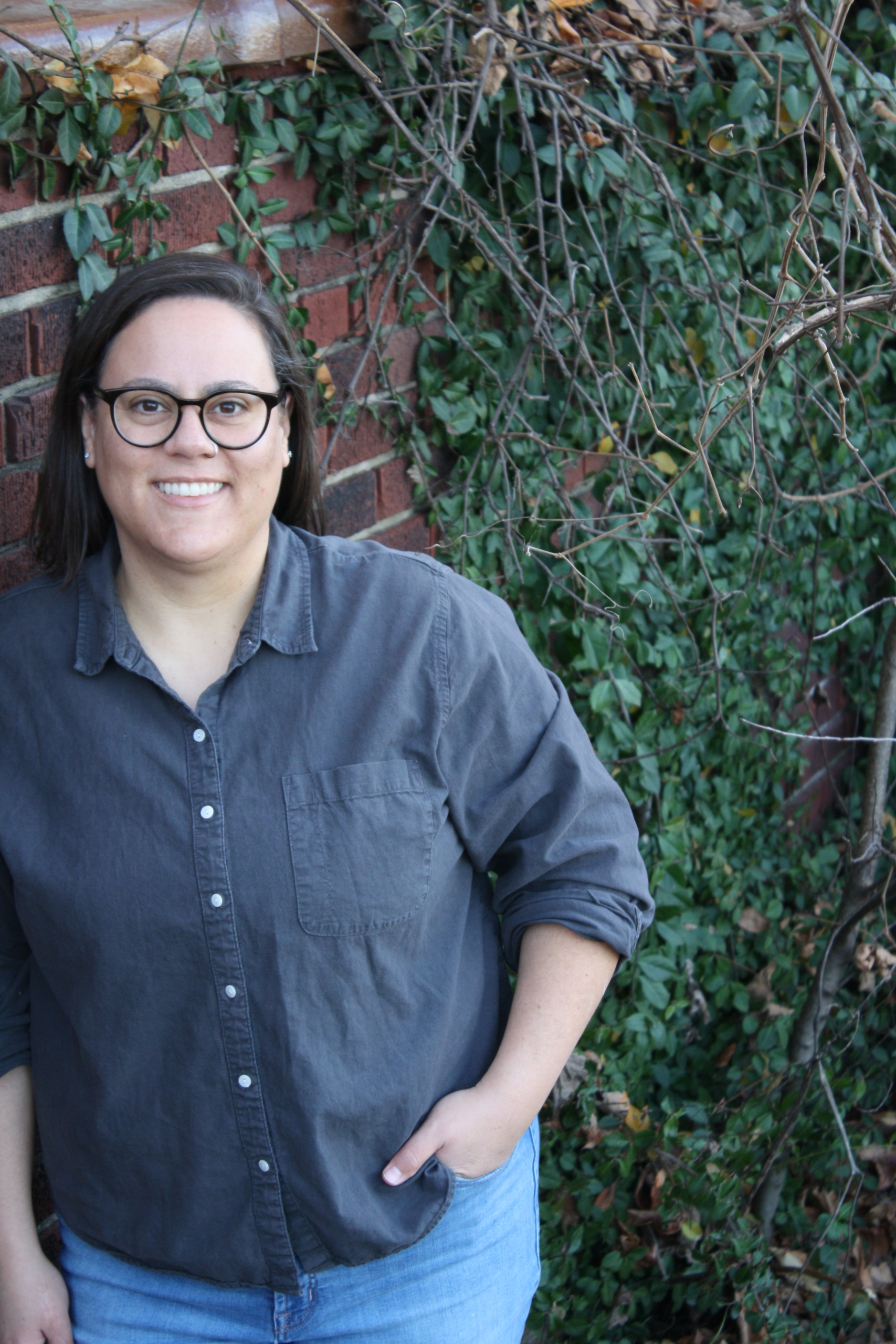
Kristin LaFollette, PhD is Associate Professor of English, Affiliated Faculty of Gender and Sexuality Studies, and Director of Composition at the University of Southern Indiana. She also oversees the medical humanities minor, and her research interests include rhetoric of health and medicine, technical and professional communication, and medical humanities.
She is the author of Rehumanizing People of the Past: Bioarchaeology, Medical Museums and Archives, and the Human Remains Trade (SUNY Press, 2026). Her other research has been published in various journals, including Rhetoric of Health and Medicine, Technical Communication and Social Justice, Across the Disciplines, Journal of Basic Writing, and Journal of Multimodal Rhetorics. Her article in Across the Disciplines received the 2023 Association for the Rhetoric of Science, Technology, and Medicine (ARSTM) Article of the Year Award. As a poet, Dr. LaFollette is the author of Intern Year (Harbor Editions, 2026), Hematology (winner of the 2021 Harbor Editions Laureate Prize), and Body Parts (winner of the 2017 GFT Press Chapbook Prize). She is the immediate past president of the Indiana College English Association (ICEA), chair of the Medical Rhetoric Standing Group (MRSG) at the Conference on College Composition and Communication (CCCC), and a member of the Board of Directors at Perugia Press.
In this podcast, Kristin LaFollette talks with Helen Osborne about:
- Why the humanities are an essential part of medicine and how they help clinicians see the whole person behind the diagnosis.
- How stories, poetry, art, and patient narratives strengthen observation, listening, empathy, and clinical decision-making.
- Simple ways healthcare professionals and trainees can bring a more human approach to patient care.
Producer and audio editor: Adam Weiss, Relativistic Media
Transcript:
HELEN: Welcome to Talking About Blood. I’m Helen Osborne, host of this podcast series and a member of the advisory board for The Blood Project. I also produce and host my own podcast series, and that’s about health communication, and it’s called Health Literacy Out Loud. The Blood Project website is all about bringing blood to life that not only includes science, but also the stories and experiences and cultural contexts and even ethical questions that shape health and healing. Kristin LaFollette serves as Director of Humanities and Content Strategy at The Blood Project. Kristin is Associate Professor of English, Affiliated Faculty of Gender and Sexuality Studies, and Director of Composition at the University of Southern Indiana. Among her many accomplishments and affiliations, Kristin is author of the book, Rehumanizing People of the Past and also two poetry collections. One is called Intern Year and the other is Hematology. Kristin and I are both active contributors to The Blood Project. I’m delighted to now have a conversation with her about why the humanities matter so much in medicine. Kristin, welcome to Talking About Blood.
KRISTIN: Thank you so much for having me.
HELEN: I find our intersection interesting. We’ve never met in person, but it’s very interesting that neither one of us are physicians, neither one of us are PhD scientists, yet we’re very active in The Blood Project. I do the podcast, which are the spoken words and the personal stories, and you’re dealing with the printed word and poetry and art. Tell us more about how you oversee and what your thoughts are about the humanities on The Blood Project specifically, and in science and medicine generally.
KRISTIN: Yeah, so my role with The Blood Project, as you mentioned, I’m the Director of Humanities Content and Strategy. One thing I really appreciate about The Blood Project as an educational platform is that they are really focused on not just the scientific side of things, but also bringing in the humanistic side, sort of bridging that gap between evidence-based medicine and patient care so that providers understand the science behind diagnosis and treatment, but also how to interact with patients in a more humanistic way and consider the whole person in patient care. And so, my job is to sort of curate that humanities section of the platform and ensure that we have offerings that can help providers, students, early career physicians who visit our platform understand more about a more humanistic approach to diagnosis and treatment.
HELEN: I’m curious from different ways, why does humanities matter so much to people who are diagnosing and treating people and doing the lab-bench science. Why does this even matter?
KRISTIN: Yeah, so that’s a great question. And I get this question a lot from students who are in my medical humanities classes. They always want to know what the purpose is of this? Why is it important? Why should we be doing this? And I think medical humanities or health humanities programs, as they’re sometimes called, they really began forming in medical schools between the 1960s and the 1990s. And they really started to grow at the undergraduate level more around the 2000s. And these programs are very interdisciplinary. They intersect things like literature, philosophy, religion, history, art, to help future providers better see and understand the human experience of illness, injury, and healing. And through this, future providers can develop important skills, things like self-reflection, self-awareness, communication, creative critical thinking, and empathy, compassion. And with empathy especially, providers more deeply consider others’ perspectives and experiences.
HELEN: Can the arts do that?
KRISTIN: Yes, they can, because when we engage specifically with things like the arts and literature, we can see and understand perspectives that are different from our own. I think especially in the Western world, we’ve traditionally thought of illness and injury as problems to be solved through the application of science. And while this knowledge and application is obviously necessary and very important, this approach can really downplay or devalue the human experience. You know, even if it’s not intentional, healthcare providers can de-individuate patients. They can dehumanize them or objectify them by thinking of them as a body or a system of parts. But we know that medicine is a humanistic discipline. Patients are people. Health care providers are people. And the practice of medicine is much more subjective than I think we like to admit since it involves a lot of intuition and chance.
HELEN: That’s really interesting. I’m thinking of my encounters just this week as a patient with professionals and their subjectivity, their inference, their humanity comes through and it’s mattering to me. I’m not just this one body part that isn’t working right now as well as it should. I’m a person behind that. Kristin, I’m curious, how did you make this leap? Do you have a science background or medical background?
KRISTIN: Yes, so my so actually I did start out as a biology major as an undergraduate, and then realized in my final year of that program that that just wasn’t for me anymore and I decided to get a degree in English because I was really invested in becoming a writer. And so, once I finished my undergraduate degree in English, I went back to school and got my master’s degree in creative writing. I thought long-term I’m going to be a writer and particularly a poet. And I think I realized very quickly that it’s difficult to make a living as a poet.
HELEN: Uh-huh.
KRISTIN: And so, I was teaching after having finished my master’s degree and a mentor suggested to me if you’re really interested in academia and want to be taken seriously, you need a PhD. So, I started looking into PhD programs and decided I kind of wanted to take a different route. And I ended up pursuing a PhD in rhetoric and writing studies. And so, one of the fields within my field of rhetoric and writing studies and technical and professional communication is rhetoric of health and medicine, which is really more focused on the ways we think and communicate about health and wellness in medicine and the ways that we think and interact with patients, the ways we communicate with patients, the way we communicate about health and disease. And so, because of my background and my interest in medicine for those many years, it seemed like just a natural place for me to land within rhetoric and writing studies and in particular in rhetoric of health and medicine.
HELEN: That’s really interesting. Our paths have been intertwined over the years. When I was in my early college years, I couldn’t decide whether I wanted to be a doctor or an artist. So I went into occupational therapy, which brings the arts to medicine, and that’s evolved to many other ways. So, I had more medical, clinical work than perhaps you’ve done. I was in hospitals for years, and I did the arts on the side, and then these podcasts bring it to another version there. Tell us some stories. You’re a great storyteller. You’re bringing the humanity into this. Can you tell us a story, whether you’re from your own experience or your students or the literature that you’re seeing, a story about why the humanities matter in medicine and science?
KRISTIN: So one of the examples that comes to mind immediately is something that we have written a case study for that’s available under our humanities case study section on The Blood Project platform. And this is one that Bill, the Executive Director and Founder of the Blood Project and I worked on together.
HELEN: Bill Aird.
KRISTIN: Yes, correct. Bill Aird. There was a situation, well, so I guess kind of the background of this is that women face quite a few barriers in getting diagnosed and treated with particular conditions. And one of the conditions that Bill sees quite a bit is iron deficiency anemia. And he was describing to me a situation where a patient had gone to the hospital to receive treatment because she was having issues with, swallowing I believe now I probably need to revisit this a little bit more. You can visit it yourself on The Blood Project website.
HELEN: Scroll down to Humanities, you’ll find it.
KRISTIN: Exactly, exactly. But I believe the issue that made her go to the emergency room in the first place is that she was having issues swallowing and so they performed an endoscopy and they found that she had been eating toilet paper, toilet tissue.
HELEN: Oh my goodness.
KRISTIN: Right. It had lodged itself in her throat. They removed that. And when they asked her about it after that procedure, she denied doing it. And so, they immediately determined that this person had some mental health concerns and had her committed to a locked psychiatric unit.
HELEN: Whoa.
KRISTIN: When in reality, and this is part of why the humanities are so important, because it can be so easy to make assumptions or overlook things if you don’t know enough about a particular demographic of person, for example. But iron deficiency anemia is very common in women, for one. Second, one of the sort of key symptoms of someone with iron deficiency anemia is pica, or eating things that you wouldn’t normally eat on a regular basis. And so it turned out that this woman had very severe iron deficiency anemia. Pica as a result of iron deficiency anemia. And once she actually received treatment for that anemia, she sort of thought to herself, I don’t even know why I was doing that. I have no idea why I was eating that toilet paper. It doesn’t even make sense. But that’s part of it. Your body sort of takes over and tells you, like, do whatever you can to try to get these nutrients. They’re missing. And that’s what was happening and it was totally missed. And now this person has all of this trauma associated with this medical experience because she wasn’t truly seen or understood or listened to. Her symptoms weren’t really considered and as a result, you know, it took a while to actually figure out what was going on and treat her. And I think the humanities can help in situations like this.
HELEN: Tell us, how, how can it help?
KRISTIN: So, one of the things that I’m thinking of, for example, that I do in my own medical humanities class is that we have a unit on sort of inequities in health and medicine. And we do all kinds of readings. We engage with different videos and media and things that help them see some of these inequities that exist. And one of those, for example, are women’s barriers that they face in treatment. And we read a book, for example, that’s called All in Her Head by Elizabeth Comen. And it’s about the ways that women typically aren’t listened to in the same way their pain isn’t taken as seriously. I’m thinking of you and I have talked about in the past the podcast, The Retrievals, which was about these women that were getting fertility treatments at Yale.
HELEN: That was from the New York Times, I think, or Serial Productions, yes.
KRISTIN: Yeah. Correct. It’s a great series and it’s one that I share with my students as well to help them see these women, all these women were saying, “I’m in pain. My pain is not controlled in this procedure.” And they were kind of told, “Well, like, you know, lots of people have this procedure. This medication usually takes care of it. You’re fine.” And it turned out that they were not receiving any pain medication at all. It was actually being stolen by one of the nurses who was involved with their care.
HELEN: Right.
KRISTIN: Yeah. So when we engage with stories like that, patient experiences and stories that help us see the real lived experience of what’s happening to people when they seek out diagnosis and treatment, we can help to challenge those inequities, work against some of those biases, and really make sure that we’re treating people the way that they deserve to be treated.
HELEN: Thank you. When I’m looking at your work and mine, I’m glad you spoke about pica and craving certain nutrients of different versions. I actually did one of The Blood Project podcasts about pica, people who are craving dirt or craving ice or, you know, craving chalk kind of substances. So same kinds of things. So, I bring in the spoken word and you’re looking at, you talked about you doing a case study. You are a poet. I know there’s a visual art component. How do you think about how these all interrelate?
KRISTIN: So, and that’s a recent development with The Blood Project as well. We just recently started accepting visual art, which I think is very exciting. And I should mention as well, with all of our offerings that we have at The Blood Project, we include a set of guiding questions to really help visitors to the platform, think more in depth about what it is we’re hoping that they’ll get out of working with and interacting with this piece. But I think art specifically, you don’t even have to study art that has a connection to a medical theme to really get something out of it and have those skills sort of transfer to medicine. Because one thing I’m thinking is, like, for example, in my own medical humanities classes, when I have students engage with artwork and really sit with it and study it and analyzing it, we’re helping them develop their skills for seeing and observing and picking up on details and subtleties and things like that, which are really important in patient care. When you’re interacting with a patient, they may not always say what’s on their mind. But you’re a good observer, if you’re good at picking up on details, you can sort of pick up on some of those subtleties, ask better questions, think more about this person’s perspective about why they might be responding in a particular way and how to follow up on that and ensure that they’re having a good patient experience. And I think, not just artwork, but any of the humanities that we engage with do that. When we think about learning about and understanding different religious practices or philosophies, that is only going to help a healthcare provider know how to better tailor the care they’re providing, diagnosis, treatment plans to someone’s particular subjectivities and positionalities. Because not every disease is the same. You know, you might have a set of people that have the same diagnosis, but the treatment of that is going to be different because you’re dealing with different people and I think that humanities really help to reorient medicine to its humanity in treating the individual person.
HELEN: I’m going to put you on the spot here. I assume you go see physicians and everybody else’s patients like the rest of us. Have you ever had a sense when you’re the one being treated, whether that provider brings the arts to it? Because I’m thinking some clinical encounters I had, there are some physicians I relate to much better than others. And I’m trying to figure out what are those qualities. But you do this every day, this work. Do you ever see evidence of that when you’re a patient?
KRISTIN: That’s a great question and I think yes in some ways and in other ways not. I recently switched primary care providers because I felt like my previous provider didn’t really take a humanistic approach or care to know or understand me or see me as a person. And I do feel like my new provider does that in a way that the previous one didn’t and that I’m appreciative of. And because I think part of it, too, is if you don’t feel like you have that connection, with your provider you’re not going to be open with them or share things with them or be comfortable maybe talking with them about weird, embarrassing things that are going on with your body. And so, if you feel like they’re a good listener, truly a good listener, I can’t stress that enough. That’s something that we really focus on a lot in medical humanities too, is being a good listener, being able to truly hear and understand what the patient is saying, repeat things back to them, and ensure that you’re having a full understanding of what they’re saying.
HELEN: I’m thinking back for all the work I’ve done in health literacy and healthcare. We as clinicians used to be able to bring out a little bit of who we were into that setting, whether it’s the artwork we chose or, you know, people might put something on their stethoscope that could show their sense of humor or magazines that they might have in the waiting room. I’m not sure in today’s medical world we can do that. I’m not sure there’s space for the clinician to personalize it and bring forth who they are. I’m learning more about clinicians by if they’re just making an offhand comment about where they’re going on vacation or, you know, some book that had mattered to them. So, I don’t know, and I welcome your suggestions, is there any way that clinicians can bring forth and evoke their sense of humanity?
KRISTIN: This is something that students often ask me about in my medical humanities courses too, because truly the system, at least in the United States, or like the Western concept of medicine, isn’t really set up in a way to be humanistic. Because if you think about how many patients a provider has to see in a day, and you might have 10 minutes with each patient and you have 30 patients to see, that doesn’t leave much space to be able to have a truly humanizing conversation with them.
HELEN: Right.
KRISTIN: Which is, I think, part of the problem. And the other side of this is providers are constantly dealing with insurance and they have notes that they have to make. And, you know, they’re receiving messages through apps. That’s a thing that we can do now, right? We can contact our providers just through an app. Like we have MyChart in my local area. And there are so many things, I think, that are competing for providers’ attention that it’s just becoming increasingly difficult for them to, to humanize their patients or even just let their patients know who they are. I think it’s just becoming more and more distanced. There’s this separation, like medicine, like I said, we need to reorient medicine to its humanity.
HELEN: It’s very interesting. As we’re having this conversation, I’m thinking about it, and I’m thinking about the fewer opportunities for a clinician to demonstrate their humanness. There’s also fewer opportunities to understand the patient and what the patient brings and what the patient cares about. I don’t know if your new primary care clinician has an inkling that you’re a poet. I don’t know if mine has a slightest acknowledgement that I do podcasts. You know, I don’t think they know that. It’s just been boiled down to our body parts. It almost seems like the system is taking away that human side of it. But you and I have this opportunity to talk. So hopefully lots of people are listening to our podcast. And as you know from The Blood Project, the audience tend to be people who might be advanced scientists or clinicians well into their careers. A lot of people who go to The Blood Project also are newer in their careers and then there are those like you and me, who are just curious about all matters of blood. What recommendations would you have for them, given our society and our pressures that are going on? How can you balance and bring in the humanities to medicine and science? And how can you do the opposite? So, bring in the humanities to medicine and science and science and medicine, how can you make it a little more humane?
KRISTIN: So, I think a humanistic approach to medicine helps all people see and understand medicine, patient care, and patient experience as deeply human endeavors. And I think everyone can have a hand in making that humanistic approach a reality. Like I’m thinking about patients or students who will be future providers, can really start thinking about things just like paying attention to language use and how particular words or phrases shape the ways we think about bodies and illnesses and people. Like one example that comes to mind that we talk about quite frequently in my class is the term “noncompliant”, which is sometimes used to refer to patients who resist particular treatment plans, but there could be any number of reasons for that. A humanistic approach sort of helps us parse those apart, but they can also engage with art and literature, which will help them to see and experience perspectives outside of their own and develop empathy, like I had mentioned. They can also reflect on their own experiences with healthcare, kind of like you asked me a little bit ago, what worked and what didn’t, which interactions were positive, and which weren’t, and how they can better advocate for themselves in the future or adapt their approaches to patient care. And I think providers at any level in their careers can remember that regardless of a diagnosis, every patient’s story and experience is different. So, like I said, listening is really important. They can engage with patient narratives through visual arts and memoir or graphic medicine, which is sort of an intersection of both visual art and writing, much like a comic and we have several graphic narratives available at TBP, for example. But I think very basically providers can value the humanities as important tools for patient care that help us ask better questions and see the whole person and they can instill this value in the students they work with as well. And I think bringing the humanities into science and medicine, I think these medical and health humanities programs are very important and they’re becoming more available at a lot of institutions nowadays as we’ve started to realize the importance of a truly relational approach in medicine. For example, I just oversaw the launch of a medical humanities program at my university in fall 2024, and it has been very successful so far, and it makes me really happy because students are seeing and understanding how much future healthcare providers need that humanistic approach to patient care.
HELEN: You and I are both true believers. Bill Aird must be too because a large part of this website is about the humanities. You’re a storyteller too. Dream big. What would this look like if this all worked?
KRISTIN: think if every healthcare provider took the humanities as seriously as we are, like you said, we’re true believers. And research shows that studying the humanities is beneficial for interacting with people in a more humanistic way. I think potentially we could see an overhaul in the medical system. Like I had mentioned just a little bit ago, I think the system right now is set up to make money, at least in this country, and not necessarily to consider the individual person and treat them with the utmost care and dignity and respect. I think we could see changes in that system overall. But I think that starts from the ground up. I think the more that these up-and-coming healthcare providers are studying the humanities, realizing the importance of them in engaging with the humanities, they’re going to become more humanistic providers, and then we can see that change sort of from the inside out.
HELEN: Thank you. That’s just the word I was thinking of. You talked about change from the inside out, and I was coming up with the terms is kind of internalize this. So, we internalize the humanities. We go into this kind of work because we’re inquisitive and we care, and this is a way to sustain us as providers, as clinicians, as scientists, and sustain us as poets and writers and podcasters. Kristin, thank you so much for being a guest on Talking About Blood.
KRISTIN: It was great to talk to you about the medical humanities. I’m always happy to talk about that.
HELEN: Thank you. As we just heard from Kristin LaFollette, it is so important to consider the humanities and all the work we do, whether we do the work in medicine or in science or directly in the humanities or just as people. To learn more about The Blood Project and explore its many resources for professionals and trainees and patients, go to thebloodproject.com. I invite you to also listen to my podcast series about health communication, and that’s at healthliteracyoutloud.com. Please help spread the word about this podcast series and The Blood Project. Thank you for listening. Until next time, I’m Helen Osborne.