
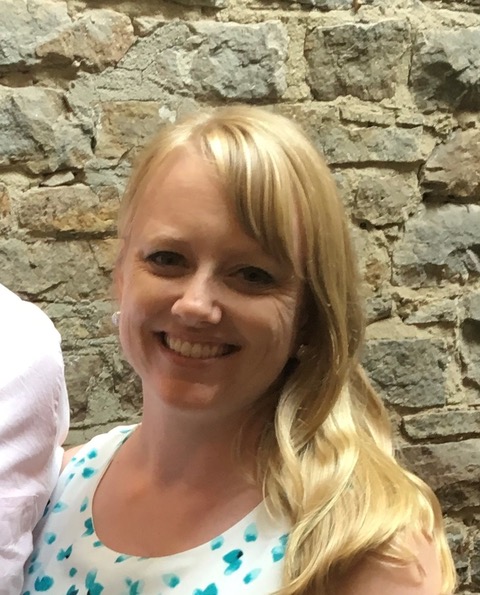
Megan Conboy is a Registered Nurse and mother of two boys from Ontario, Canada. She was diagnosed with Type 1 von Willebrand Disease at the age of 30 after experiencing bleeding symptoms throughout her life. Based on her experience, Megan has supported research and education initiatives as a patient advocate.
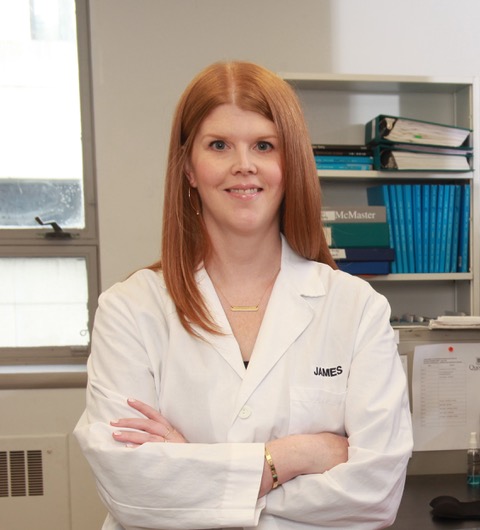
Dr. Paula James is a full Professor and Deputy Head of the Department of Medicine at Queen’s University. She is a clinician scientist with an active research program focused on the molecular genetic basis of inherited bleeding disorders and the clinical impact of these conditions. She has published > 200 peer reviewed papers in her field and held multiple national and international leadership roles including Clinical Co-chair of the 2021 ASH ISTH NHF WFH VWD Guideline Diagnosis panel. As of January 1, 2025 she is an Associate Editor for Blood (Hemostasis & Thrombosis).
In this podcast, Megan Conboy and Dr. Paula James talk with Helen Osborne about:
- A patient’s (Megan) personal experience with being diagnosed and living with vWD
- A physician’s perspective of diagnosing, treating vWD, and explaining how it affects patients
Resources Discussed in This Episode
Self-BAT (Self-Administered Bleeding Assessment Tool) – A validated screening tool that can help identify symptoms of a potential bleeding disorder.
Patient Perspective: von Willebrand Disease (UpToDate) – Megan Conboy’s personal account of living with von Willebrand disease.
Let’s Talk Period – Educational resources about heavy menstrual bleeding and inherited bleeding disorders.
Producer and audio editor: Adam Weiss, Relativistic Media
Transcript:
HELEN: Welcome to Talking About Blood. I’m Helen Osborne, host of this podcast series and a member of the advisory board for The Blood Project. I also produce and host my own podcast series, and that’s about health communication and is called Health Literacy Out Loud. Today’s focus is on an inherited blood disorder called von Willebrand disease. I’m talking with two guests who each bring experience living with, treating, and teaching about this disease. Dr. Paula James is a full professor and deputy head of the Department of Medicine at Queen’s University in Ontario, Canada. She is a clinician scientist with an active research program focused on the molecular genetic basis of inherited bleeding disorders and the clinical impact of these conditions. She’s published more than 200 peer-reviewed papers in her field and held multiple national and international leadership roles. Paula James also is associate editor for the journal Blood, Hemostasis, and Thrombosis. Megan Conboy also is from Ontario, Canada. She’s a registered nurse and mother of two boys. Megan experienced bleeding symptoms throughout her life. At the age of 30, she was diagnosed with type 1 von Willebrand disease. Now a patient of Dr. James, Megan supports research and education initiatives as a patient advocate based on her experience with this disease. Welcome to you both to Talking About Blood.
MEGAN: Thank you for having me, Helen.
PAULA: Thanks for having me, Helen.
HELEN: I want to start from the beginning. Please describe what von Willebrand disease is.
PAULA: So von Willebrand disease is the most common inherited bleeding disorder that we know about in humans. It was originally described 100 years ago, so it’s the 100th anniversary in 2026, and it causes excessive bleeding from the skin and the mucous membranes. And in the most severely affected cases, it also can cause very painful bleeding into joints and muscles.
HELEN: A hundred years ago—that’s just really interesting. The name of it, von Willebrand—was there someone of that name involved in this a hundred years ago, or do you know the history behind that?
PAULA: Yeah. So the original paper was written by Dr. Eric von Willebrand, who described a family living in the northwestern part of Europe that were affected and had significant bleeding symptoms. The index case in that family was a young woman named Hjordis, who died at the age of 14 of heavy menstrual bleeding.
HELEN: Oh my goodness. Thanks for putting that into context. Megan, when did you start hearing about this disease?
MEGAN: I remember briefly hearing about it, actually, in nursing school, but it wasn’t until later in life—as you say, I was diagnosed around the age of 30—that I really learned much about it and was able to recognize what was going on in myself.
HELEN: Okay.
MEGAN: I was actually very fortunate to have a connection with one of Paula’s colleagues who works with inherited bleeding disorders. And we had a very fortuitous conversation one day about some of the symptoms that I had been having recently through childbirth and throughout my life. And she was able to point me in the right direction to learn a little bit more about screening for inherited bleeding disorders.
HELEN: Okay. And so this fortuitous conversation—Paula, how did you start getting involved that this was going to be your special focus in medicine?
PAULA: It started early for me back when I was training as a hematologist. I was very interested in benign, or classical, hematology. I enjoyed looking after patients with hematologic malignancies, but I was very drawn to the issues surrounding patients with bleeding disorders, especially women with bleeding disorders who struggled to have their symptoms recognized and diagnosed. It felt like it was an area that would be of interest and where I could hopefully make a difference for people.
HELEN: That’s interesting that you bring up women and a struggle to have their symptoms diagnosed. Megan, can you tell us more about your story?
MEGAN: Yeah, for sure. So looking back, even from the time when I was a young child, I can remember having bruises on my legs and even asking my family doctor about this and being told, “Well, you know, you’re fair, you’re active. This is probably just totally normal.” Progressing into my teen years, I had really what I know now were very heavy periods. But at that time, it just wasn’t talked about. I had no context for what constitutes heavy menstrual bleeding.
HELEN: That’s really interesting. How would a 14-year-old really know what’s heavy and what’s just regular?
MEGAN: Right. And I only had brothers. And my mother, I suspect, also had heavy menstrual bleeding.
HELEN: Oh.
MEGAN: So I had nothing to compare it to. It wasn’t something we talked about easily as friends. Any cultural references I had to periods were things like lots of period products and medications to manage the pain. So it was just assumed that this was what it was. I didn’t realize it was abnormal to be bleeding for seven days at a time. And nobody ever asked about how my periods were. It wasn’t recognized.
HELEN: And you’re 14 years old.
MEGAN: Yeah, from the time I was 12, actually.
HELEN: So you’re a young teen, tween, and probably just entering the system when you’re learning to become an advocate for your own care, but that’s pretty young to be doing it. Then what happened? So you’re living with this. You’ve got your bruising. You’ve got your heavy periods, and no one’s paying a lot of attention to this, it doesn’t sound like.
MEGAN: Through the natural course of my teen years, I started on oral contraceptives, which helped incidentally to manage the bleeding. That wasn’t the intention, but that was a nice side effect throughout high school. And then I actually ended up having children fairly young, in my early 20s. I also have a diagnosis of endometriosis. And in recognizing that, I was advised to, you know, try to have children early. At that point, I still didn’t know. Despite having symptoms like bleeding gums when I went to the dentist, nosebleeds—nobody had put all of these distinct pieces together to say, “Hey, we might need to look into this a little bit more.” So I went into a pregnancy not knowing that I had an inherited bleeding disorder. And I experienced iron deficiency throughout my pregnancy, which was not recognized early on. I felt very unwell, very tired, short of breath. And at the time of delivery, I had a very long and complex labor and ended up bleeding a lot. It got to the point where, after everything was said and done, I was holding my baby, my first newborn baby. My husband was with me. And I remember just saying to him, “I really don’t feel well.” And the blackness coming in—I didn’t realize at the time I was going to lose consciousness. He had to make the snap decision to take the baby and go call for help. And the next thing I knew, I was waking up to doctors and nurses standing all around me and working on resuscitating me.
MEGAN: It was a very scary experience. It was not a good start to having a newborn. I had to stay in the hospital for longer. I had to have a lot of additional fluids. And on top of that, there was no real formal follow-up to make sure that my iron stores were renewed, or to even say, “Maybe, again, we should look into this a little more. This is a significant hemorrhage that has happened. This is a significant bleeding event.”
HELEN: So you’re in your 20s somewhere, and no one has raised the issue of an inherited bleeding disorder at this point. Paula, that gets to what you mentioned in the beginning, that one of your interests was about women struggling to have their symptoms diagnosed. Tell us from the practice perspective what you’re doing. When does that awareness start happening?
PAULA: Well, ideally, it would happen before somebody starts menstruating because the symptoms are lifelong and there will be clues in childhood—nosebleeds, easy bruising, oral cavity bleeding, like Megan was talking about. And so, in the ideal situation, we make the diagnosis before the start of menstrual periods so that we can have a plan in place to deal with heavy bleeding if it occurs. Just unfortunately, lots of times it’s been missed, and we don’t have that opportunity.
HELEN: Is Megan’s story one that you hear over and over, or is she unusual? Here she is in her 20s, and no one’s ever put words to this or had a plan for the bleeding.
PAULA: Yeah, it’s very, very common. I hear this story every day that I’m in clinic.
HELEN: Well, you’re a specialist. Does this go through, you know, from primary care to a referral to a hematologist? When does that transition happen to having a meeting with someone like you who really understands this condition and knows how to treat it?
PAULA: So, as you were mentioning earlier, along with Megan and my entire team, we’ve done a lot of work to make these symptoms known in our local community and in the broader community. We’ve created resources so that people can access accurate information on a website of ours called Let’s Talk Period. And increasingly, we are seeing referrals coming from people who might have contact with these patients—an emergency room physician, a gynecologist, an obstetrician, maybe an ear, nose, and throat doctor if somebody’s been having terrible nosebleeds. So I do think that there is a shift that has started, which is certainly what we’ve been working towards.
HELEN: And when you talk about raising awareness, I am putting on my health literacy hat for this one, but thinking about raising awareness with different populations. Paula, you’re saying you’re getting more referrals, and that sounds like you’re raising awareness among the professional community at all levels. Megan, your background is as a nurse. I don’t know if you ever heard about this in your clinical practice. And also, as just an individual with heavy bleeding, when did you get an inkling that something might be wrong with you when it comes to bleeding?
MEGAN: I really didn’t put the pieces together. Even with that clinical background, they all seemed sort of disconnected until, as I mentioned earlier, that fortuitous conversation with a colleague of Paula’s about 10 years ago. And it was right around the time they were developing one of their validated tools that patients can use to self-screen for bleeding symptoms. I took this self-bleeding assessment tool, and it was the first time that all of those dots got connected for me in one place. I scored positively on this screening tool, and what that allowed me to do was take that to my primary care physician and ask for a direct referral to Paula, knowing that she worked in inherited bleeding disorders. But that was because of a personal connection.
HELEN: Wow. Tell us more about that screening tool. Paula, are you one of the people who developed this? Is this the tool that—what’s it called—Let’s Talk Periods?
PAULA: So the website is called Let’s Talk Period. The tool itself is called the Self-BAT. And as Megan said, that stands for the Self-Administered Bleeding Assessment Tool. It’s a questionnaire that asks a series of questions about bleeding and then gives a score based on the responses. We’ve studied this in thousands of individuals now, so it’s been well validated. A positive bleeding score, especially in an adult who menstruates, is a very significant red flag that there could be an underlying bleeding disorder and that additional testing is warranted for that individual.
HELEN: This is part of your research that you’re doing. Are tools like this tools for the public? This is a self-assessment, parallel, it sounds like, with raising greater awareness in the professional community. Tell us about how you’re looking at this, at the bigger picture of this.
PAULA: So it started as a research project. The development of the Self-BAT was a master’s student of mine’s thesis project, and so we published that a number of years ago. But we wanted to convert that into something that was useful for the general population, and that’s when we created the Let’s Talk Period website. That’s not part of a formal research project. That is something that we launched and made freely available to anyone. So anyone, anywhere can go on the website and take the Self-BAT and get an assessment of their own bleeding.
HELEN: Great. And then in the write-up that we’re going to do for this podcast episode, we’ll have a link to that. But if people just search, they’ll find this.
PAULA: Letstalkperiod.ca.
HELEN: Letstalkperiod.ca. Thank you. Okay, so now, Megan, you met Paula somehow, and you two start working together. Can you start talking about the treatment and also just putting words to all these symptoms that you couldn’t put into context by yourself? What happens at that beginning of that treatment path?
MEGAN: Yeah, I mean, it was nice to even know that there might be an answer out there for all of these seemingly unrelated things going on. I was able to see Paula as part of a Women and Bleeding Disorders Clinic that combined gynecology with hematology. As part of that clinic, she has a specialized registered nurse who supports inherited bleeding disorders patients. I have experienced a lot of various specialists and healthcare experiences over my time with concurrent conditions, but this felt like I was really being seen and like they actually understood what was going on and were able to give me some tools to be able to manage what was happening. So I was able to get a prescription, an appropriate prescription for tranexamic acid, for example, to reduce the bleeding during my periods without having to be on an oral contraceptive that I didn’t want to be on at that point. I had no idea this was even an option before that point. We were also able to look at some prophylactic treatments in case I needed to undergo a procedure like dental work or surgery. And in case there was an accident, I was just fortunate up until that point that I hadn’t had an accident that would or could have caused severe bleeding. So we were able to do some further testing and to confirm that it was indeed type 1 von Willebrand disease, and also check for sensitivity to certain medications that only work for some people and not others. So I felt like someone was catching me, like I had a plan.
HELEN: Okay.
MEGAN: They were able to give me some resources to learn more about the disorder, a handbook not just for myself but for my family as well. A diagnosis like this can sound frightening, especially if it’s not something you’ve heard of before. And given the familial nature of it as well, understanding what to do for my children, how to screen them, and what to look for.
HELEN: I was wondering about that, since it’s an inherited disorder. Paula, from your perspective, when you see a patient with this constellation, what’s the start of the treatment and the ongoing treatment? Did Megan kind of cover that, or are there other pieces that you’d want people to know about?
PAULA: Yeah, I think she covered it well. We always look for iron deficiency when we meet patients because they’re very often iron deficient and anemic, and so we provide supplemental iron. We use tranexamic acid very commonly. The test Megan was talking about to figure out if a specific medication works for her. That’s a medication called desmopressin, or DDAVP. And then we also have a concentrate of von Willebrand factor because the problem in von Willebrand disease is that a clotting protein named von Willebrand factor is missing or it doesn’t work right. I can give somebody an infusion of that clotting factor to treat or prevent bleeding. And Megan, I think, has had all of those treatments depending on the situation she’s been in over the years.
HELEN: And you two will have an ongoing relationship—or Megan, certainly with that clinic, Women and Bleeding Disorders.
MEGAN: That’s true. I feel like I can reach out anytime if I know I have any kind of procedure coming up. I can just reach out to the team quite easily and get a quick response, and they will work directly with whoever is doing the procedure to put a prophylaxis plan in place to manage any potential bleeding. In my situation, I’ve had multiple significant surgeries related to endometriosis. As part of that, not only immediately before and during the surgery, but ahead of time to check for iron deficiency. I actually did have an iron infusion before going into major surgery to make sure that I was as fit for that surgery as I could be at that point in time. During those surgeries, I felt like there was a plan in place. I didn’t have any worries about bleeding because I knew that everything was taken care of.
HELEN: How wonderful. I can just sense this working as a team. And you, Megan, had to do your own learning. Paula, you’re doing the treating and the research, but you’re definitely a team and spreading word out of that. The two of you, separately and together, I think, are doing teaching about von Willebrand disease and also doing some advocacy. Tell us more about that from each of your perspectives.
PAULA: So any chance I get, I tag Megan to help me because, as you’ve heard, she tells a very compelling story. Megan comes with me now to teach the medical students at Queen’s.
HELEN: Wow.
PAULA: I take some of the time and go through the basics, and then Megan tells her story, which is really the most impactful way to teach a new physician about the importance of this disease. She teaches graduate students with me. She’s gotten involved in a number of the research projects being done by my team, trying to shorten the time to diagnosis. Having her patient voice to inform us and help guide us to make good decisions that are patient-centered has been wonderful. I’m very grateful for her generously always giving me her time when I ask for it because she’s really helping move the needle here in terms of advocacy and understanding.
HELEN: I’m just so impressed and touched by that, that Megan’s a part of the teaching team, even medical students. Megan, is there other work that you’re doing? I mean, I’m not saying that’s not enough. That’s a lot. That’s living your life and staying well. But are there other things you’d want others to know about as far as advocacy and teaching and research and bringing in the patient perspective?
MEGAN: Yeah. I had the privilege, actually, to author a patient perspective article for UpToDate.
HELEN: Oh, well-regarded. Yeah, resource.
MEGAN: For anyone who has access there, they can read my patient perspective article on this experience with Type 1 von Willebrand disease. I also had the privilege to go with Paula to Washington, D.C., a couple of years ago looking at research outcomes. Paula might be able to touch on that a little bit more.
PAULA: We were looking to create a set of core outcomes for clinical trials looking at new therapies for von Willebrand disease, and we wanted to make sure that any clinical trial that was being designed included things that really mattered to patients. So, for example, not just could we improve the clotting factor levels, but did we improve quality of life?
HELEN: Oh, how wonderful.
PAULA: Megan was a patient advocate. We had a number of patient advocates involved in that project, but she again graciously volunteered her time to inform the work of that group, which was published a few years ago.
HELEN: I’m so impressed and wowed by both of you. I’m so glad you are part of this podcast, too, so that our listeners—who may be senior hematologists, who’ve been doing this work for a long time; those new in their science careers or medical careers; and the patients, the lay public, who are just curious about blood—can all be hearing about two perspectives on one disease that you’re learning more about and that is more treatable. Are there lessons learned that you’d want to share with any component of that audience?
PAULA: From my point of view, the lesson for new physicians—or physicians who’ve been practicing for many years—is: listen to your patients. Megan had all of the details that were necessary for that diagnosis to have been made long before it was actually made. So that would be my plea. Listen to what your patients are telling you and follow that path.
MEGAN: From my perspective, don’t be afraid to ask about bleeding. Some of that stigma—if somebody had just asked me about bleeding, this may have been solved sooner for me. I am just so honored to be able to have a small voice in sharing that message to maybe improve other people’s experience with this disease.
HELEN: Well, separately, together, I am so grateful for both of you and your takeaway message about “listen and ask.” We can all apply that in our lives, whatever our sphere of influence. Thank you both so much for being guests on Talking About Blood.
MEGAN: Thanks so much, Helen.
PAULA: Thanks, Helen, for your focus on this. We really appreciate it.
HELEN: As we just heard from Dr. Paula James and Megan Conboy, it’s important to listen and to ask and to work as a team to treat people with all diseases and conditions, including von Willebrand disease. To learn more about The Blood Project and explore its many resources for professionals and trainees and patients, go to thebloodproject.com. I invite you to also listen to my podcast series about health communication, and that’s at healthliteracyoutloud.com. Please help spread the word about this podcast series and The Blood Project. Thank you for listening. Until next time, I’m Helen Osborne.