English Version
Ode to Blood
Your absence in my extremities
causes a tingling sensation.
When you seep from a cut, even a single drop,
it provokes fear and even tears.
A liter of donated blood can save a life,
but the spilling of two liters can cause death.
The blood that flows from my womb
can create life each month – or disgust
seeing it emerge and stain my inner thighs.
Red scarlet, which for thousands of years
across countless cultures
has been offered to the gods,
a precious liquid that holds the secret of life.
Menstruation
In each cycle – emotional, hormonal, and painful –
my swollen womb opens.
While through the tunnel passes the blood of a child who never was.
Goodbye, son, daughter… farewell forever…
And so, each month, a failed potential detaches from me,
a genetic loss that will be passed on to no one but the toilet…
10 Weeks
Of cartilage and translucent skin
you are made, my dear alien baby.
With a big head like your mother
and a ferocious appetite like your father.
Tiny red veins through which your own singular blood flows,
decorate your minuscule body.
Your little cartilage bones
are flexible so that in thirty weeks
you may leave my womb and finally meet you.
Spanish Version
Oda a la sangre
Tu ausencia en mis extremidades
me causa cosquilleo.
Al brotar por alguna rajadura, aunque sea una sola gota,
provoca temor y hasta llanto.
Un litro de sangre donado puede salvar una vida,
pero al derramarse dos litros de sangre puede provocar la muerte.
La sangre que fluye de mi vientre
puede crear vida cada mes – o asco
al verla salir y manchar la entrepierna.
Escarlata que por mil culturas milenarias
ha sido ofrecida a los dioses,
líquido preciado que contiene el secreto de la vida.
Menstruación
En cada ciclo, emocional hormonal y doloroso
mi vientre hinchado se abre.
Mientras por el túnel pasa la sangre de un hijo que no fue.
Adiós hijo hija , hasta nunca…
Y así cada mes se desprende de mi un potencial fracasado,
pérdida genética que no se pasará a nadie más que al inodoro…
10 Semanas
De cartílago y piel traslúcida
estás hecho, mi querido bebé alienígena.
Con la cabeza grande como tu madre
y un hambre feroz como la de tu padre.
Pequeñas venitas rojas en las que circula tu propia y única sangre,
decoran tu minúsculo cuerpo.
Tus huesitos de cartílago,
son flexibles para en treinta semanas
salir de mi vientre y finalmente conocerte.
Authors Note
Originally written in Spanish, these poems reflect on blood, its power, symbolism, and constant presence in my life, especially as I entered motherhood. “Ode to Blood” forms part of a longer ode to the body, its liquids, and cavities. It emerged from a moment of appreciation for my bodily functions, intimate processes that are nonetheless universal and bind all humans in shared vulnerability. “Menstruation” was born out of sadness and frustration. The call to motherhood was so powerful, yet my husband remained hesitant. Each cycle became an emotional journey, reminding me of what I had not accomplished. After a few years of conversation, patience, and persuasion, we were finally both ready to start a family. “10 Weeks” was written after our second ultrasound. I felt overwhelming joy and reverence for the life growing within me. In this poem, I capture the eternal bond of love and blood that connects me to my baby.
Guiding Questions
Consider the following questions after reading this series of poems:
- What role does blood play in these poems? What do the references to blood represent, communicate, and/or make clear?
- How do these poems encourage you to rethink or reimagine the body and its processes (e.g., menstruation, pregnancy)?
- What specific words or lines stand out to you? Why? How to they contribute to the overall meaning of the poem?
- What is the impact of viewing the English and Spanish versions of the poems alongside each other? What does the bilingual presentation communicate about identity, humanity, and/or embodiment?
About the Author
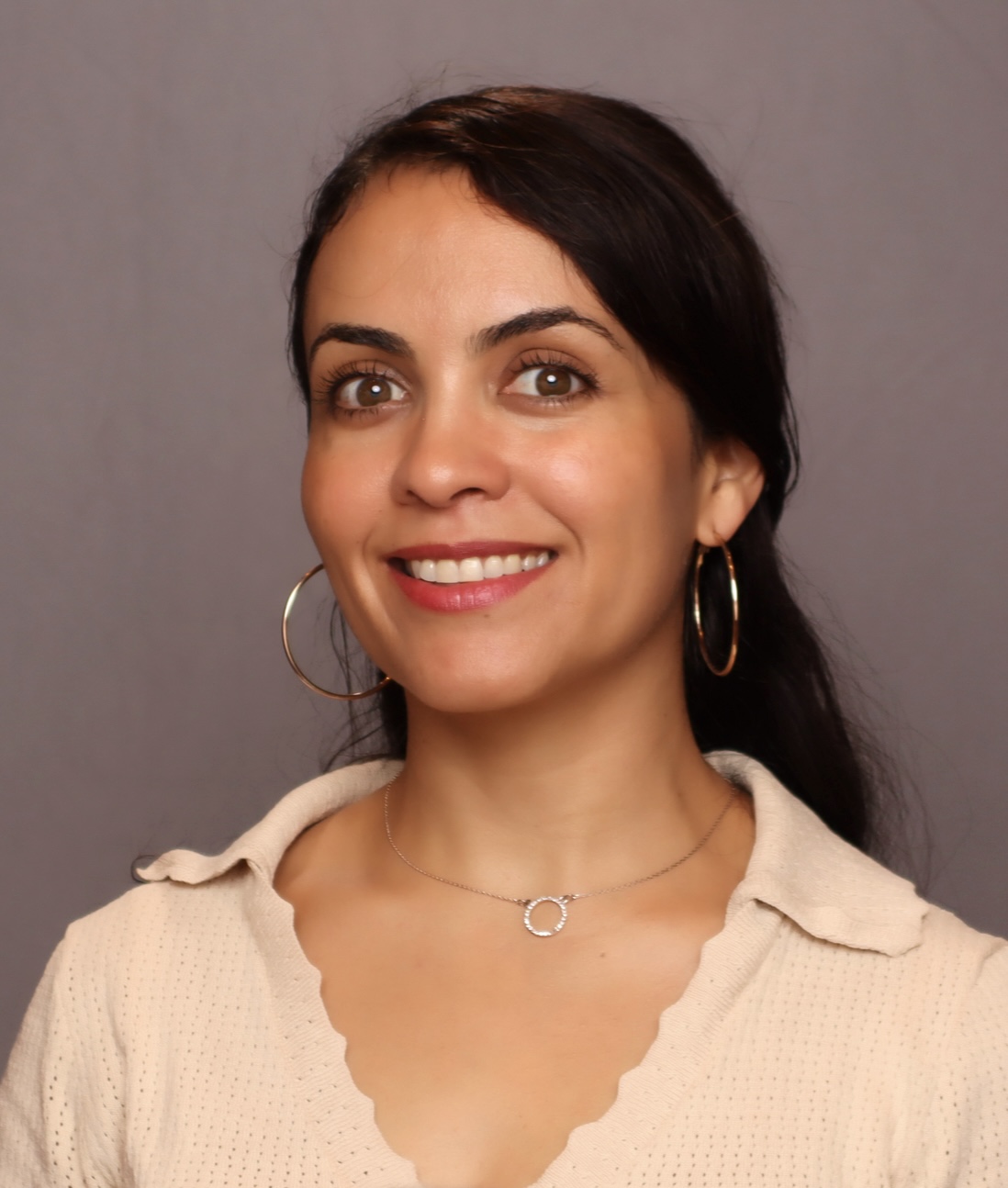
Carina Saiidi Padilla is a doctoral student and language instructor in the Department of Spanish and Portuguese at the University of California, Irvine. Her research focuses on representations of addiction (particularly alcoholism), intergenerational trauma, and healing practices in Mexican and Chicano literature and culture. Her research seeks to demonstrate the healing power of writing, storytelling, and community building. Carina was born and raised in Los Angeles but spent a few years of her childhood in Mexico where she developed strong roots and an appreciation for Mexican culture. She earned her BA in History with a minor in Spanish and Portuguese at the University of California, Los Angeles, and her MEd at Loyola Marymount University. Before pursuing her PhD, Carina was a high school Spanish teacher in inner city Los Angeles schools, teaching in predominantly Latino communities. Her goal as an educator has been to instill in her students a love for culture, language, and identity. She hosts a podcast and YouTube channel called “Carina Spanish” where she helps students and teachers analyze Spanish Literature.