
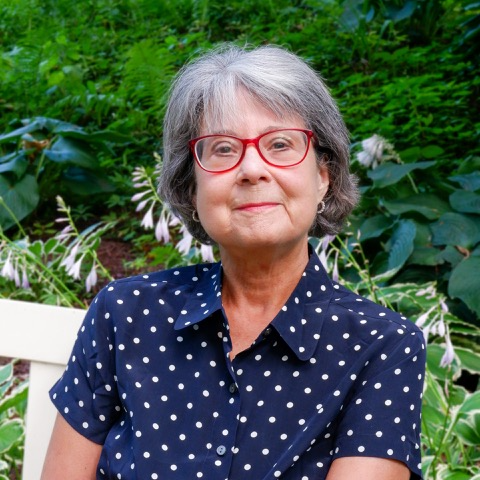
Susan Lederer is a professor of medical history and bioethics at the University of Wisconsin School of Medicine and Public Health. She is the author of “Flesh and Blood: Organ Transplantation and Blood Transfusion in 20th Century America”.
In this episode, Susan Lederer talks with Helen Osborne about:
- The evolution of blood transfusion from early animal-to-human experiments to complex surgical procedures and eventually to modern blood banking and transfusion practices in the 20th century.
- How scientific advances in blood typing, anticoagulation, and storage transformed transfusion from a rare, high-risk intervention into a widely used, life-saving medical practice, particularly during and after World War II.
- The cultural, social, and ethical dimensions of blood transfusion, including wartime donation campaigns, racial discrimination in blood collection, and the ongoing challenges and vulnerabilities of the blood supply system.
Producer and audio editor: Adam Weiss, Relativistic Media
Transcript
HELEN: Welcome to Talking About Blood. I’m Helen Osborne, host of this podcast series and a member of the advisory board for The Blood Project. I also produce and host my own podcast series, and that’s about health communication called Health Literacy Out Loud. Today, I’m talking with Susan Lederer, who is a professor of medical history and bioethics at the University of Wisconsin, School of Medicine and Public Health. Susan is the author of the book, “Flesh and Blood, Organ Transplantation and Blood Transfusion in 20th Century America“. Susan, welcome to Talking About Blood.
SUSAN: Hi, Helen. It’s so good to see you.
HELEN: So, since we are literally talking about blood, let’s focus on the blood part of your work and specifically blood transfusions. So, start us all off at the same place with a perspective about blood transfusions in America or just the history of it. A quick run-through.
SUSAN: Well, first, I just want to begin by saying that a lot of work has focused on the technical and scientific features associated with blood transfusion. And that work is very important. But I will say that my particular interest in blood and in moving blood between bodies is the cultural meaning that accrued to Americans in particular who experienced either giving blood or receiving blood in the first part of the 20th century.
HELEN: Okay, I’m just breaking down all these parts of the cultural meanings in America in the 20th century between people who are giving blood and receiving blood. So I have a feeling we’re going to be getting to all those different components. So how did this whole thing about blood transfusion start?
SUSAN: Well, I guess I would remind your listeners that even though I focus on the 20th century, blood transfusion was actually first undertaken in the 1660s in England.
HELEN: Whoa!
SUSAN: And even then, when a young man received blood, the blood of a lamb, there were cultural meanings about what was actually transpiring. And in this case, the lamb, of course, has religious significance, but it also is known as a meek animal. And it was intended to have the therapeutic benefit of calming this excitable young man.
HELEN: Oh, okay. That’s really interesting. So blood transfusions from an animal, trying to instill some of the characteristics of the animal to a human.
SUSAN: Exactly.
HELEN: Now, let’s forward to, you know, the 20th century. Are they still doing transfusions from animals to people?
SUSAN: A small segment of the blood transfusions at that time do involve animals. And it’s really hard to understand from at least my vantage point, because by this time they knew that animals and humans had different blood types or blood groups. Not all, but most. It turns out chimpanzees have the same blood group A that humans have, but they’re hard to find in America to use as transfusion material.
HELEN: Oh okay.
SUSAN: By the 1920s, they had stopped, really. I mean, it was more of a kind of an odd practice. Rather, they realized that the best blood for transfusion of a human came from another human being.
HELEN: So how did that all come about?
SUSAN: Well, again, I would remind your listeners something that I still found amazing when I first learned this, that blood transfusion in the early 20th century was actually not a procedure mediated by needles and plastic bags, but was actually a surgical procedure that involved cutting open the arm of a donor and exposing a blood vessel, cutting open either the leg or the arm of the recipient, and literally sewing the ends of the vessel together, you know, end to end. This is extraordinarily difficult surgery, and it required, you know, very fine hand.
HELEN: Oh my goodness.
SUSAN: And that narrowed its ability to become a popular procedure.
HELEN: Two surgical procedures happening at the same time in the same space.
SUSAN: Yes, and actually in close proximity, because the vessels are end to end. So we’re talking about, well, the first one that I focus on is a father who’s also a surgeon, is being transfused to his infant daughter who is dying from hemorrhage of the newborn. And so this is in his dining room. He’s on the dining room table. She’s on an ironing board right next to it and they are literally joined together.
HELEN: Oh, I barely have words for that one. But it’s a dad who wants to keep his baby alive. That’s an extenuating circumstance, too.
SUSAN: Absolutely.
HELEN: How did we move from there to, as you talked about, the needles and the plastic bags and stranger to stranger? And, you know, how did that all happen?
SUSAN: You know, it took a couple of decades. I mean, I think of the first really meaningful blood transfusion, surgical transfusion, took place in America in 1906. And one of the surgeons who pioneered this began to develop techniques that made the kind of precision of knitting together these ends to ends sort of more practical for less dexterous surgeons. There were also improvements in being able to keep blood liquid, you know, by the addition of chemicals, for example, which would also lead to the first blood banks.
HELEN: Wait, let me stop you right there. If you don’t do it quickly enough, the blood from the donor will not stay liquid?
SUSAN: No, I mean, one of the things that when blood is exposed to the atmosphere, if it’s healthy blood, it coagulates, it clots.
HELEN: Okay.
SUSAN: That’s why you had to put them together end to end.
HELEN: Oh okay.
SUSAN: Because blood had to flow, otherwise it wouldn’t flow between the two, it would stop up.
HELEN: Fascinating. Okay, so now they’re doing it person to person. Now they need the science or the technology to do something to the donor’s blood so it doesn’t coagulate, correct?
SUSAN: Right, and they also begin to develop, you know, tubing, needles, stopcocks. I mean, the other problem with the surgical procedure is that they didn’t know how much blood was actually flowing. And so you have a tableau in which someone is always focused on the very pale or white face of the recipient, and they ignore the donor. And then when the donor turns white, then they stop the transfusion.
HELEN: Oh my goodness!
SUSAN: And that happened several times. So it was a difficult procedure. It becomes much easier by the advent of World War I, but it’s still not a very common procedure. And the leading American transfuser, a surgeon from Cleveland, performed the most transfusions during World War I on the American side, 216 times.
HELEN: 216 in the whole war.
SUSAN: Yes, you can imagine it was very rarely performed. And the other thing that I’m interested in is that sometimes they only undertook it when the person seemed in imminent risk of death, so at the very last minute. And oftentimes for the donor, the recipient might actually die while they’re together. And I found that a profoundly sort of moving challenge for potential donors, either being directly sewn to someone who’s dying or then having the person you’re trying to save dies while they’re connected to you.
HELEN: Oh, my goodness. Get us back to that story you started with before about the dad and his newborn baby.
SUSAN: Sure. Well, the father, who was a surgeon in New York City, was familiar with the work of a French surgeon, very famous, named Alexis Carrel. He worked at the Rockefeller Institute. So he shows up at the doorstep of Carrel and begs him to undertake this particular surgery because at that time, that’s the only thing possible that would have saved her. They had not isolated clotting factors, for example, which would be used today. Carrel initially refused because he didn’t have a license to practice medicine in New York, but he was persuaded by the father. And so this young woman survived and the father, his arm was bandaged up and he retained his ability.
HELEN: This young woman, the baby, right?
SUSAN: The baby grew up to be a young woman.
HELEN: Okay, so she survived.
SUSAN: So she survived and it really convinced, it was covered in the press. It received a lot of attention. And I think it did much to introduce the concept of blood transfusion to many Americans. Although again, it remained only rarely performed, I would say until World War II and after.
HELEN: Okay, these are fascinating stories. Thank you for being an historian who’s looking at all of this. Now, I’m thinking about all the different components, if I may use that word, to make blood transfusion happen.
SUSAN: Sure.
HELEN: So you have the idea that this will work, to take blood from one being to another, started with animals, then with people. Then you have all the physical properties of that, and the clotting factors, and you need the science to be able to address that. You need the technology to be able to deal with the tubing, and then you have to get this more into common practice. That’s a lot, and you’re talking for a hundred-year span, so it’s starting maybe early 1900s. How does it get to be more commonplace?
SUSAN: Well, I will say I think that a turning point in the history of blood transfusion is World War II. As you know, World War II started in Europe before America entered the war. And from the very start, Americans were being asked to donate blood to save our allies in Britain. And so you have, at least in the New York area, first massive campaign, and Americans donated some 15 million pints of blood, which was sent to Britain. But then when it became clear that America was not going to stay out of the conflict, the Army and the Navy asked the American Red Cross to collect blood, again, on a national level, to be distributed and or processed into plasma that could be sent overseas to save American soldiers. So in this particular instance, giving blood on the home front was a patriotic duty. And massive numbers of Americans signed up. Unfortunately, not all blood was welcome, however.
HELEN: I was wondering about that. You go from so few donations to this massive amount. Was it all used? Was it thrown away? You know, if you’re trying to inspire everyone’s sense of generosity, that wouldn’t go too well if it’s not really used, would it?
SUSAN: That’s true. And one thing to keep in mind too is that for blood to be useful as a liquid in transfusing, they only kept it for three weeks. So blood supplies needed to be continually replenished, at least for the home front. But for the conflict in both Europe and Asia, blood was being processed into plasma, which had a much longer shelf life and could be processed and sent overseas much more readily.
HELEN: So what about this blood typing? I mean, I know certain people, universal donors, take this kind of blood, that kind of blood. It sounds like from being a very rare procedure to on a large scale, how did that get refined, that system?
SUSAN: Well, that’s a long story, and I could spend my whole time speaking about that.
HELEN: Give us the condensed version.
SUSAN: Okay, the very condensed version is that from my vantage point, blood transfusion was pioneered by surgeons who were interested in the mechanics and technologies of moving blood from one body to another. And it’s only after blood transfusion becomes more established that you have specialization, for example, in blood banking. The growth of the science of hematology and also the growth of immunology.
SUSAN: So, for example, even though Karl Landsteiner did the pioneering work for which he received the Nobel Prize in 1900 by identifying what we now know as the A, B, and O blood groups, he published in immunology journals, which were not read, I think, for the most part, by surgeons.
HELEN: Oh, okay.
SUSAN: And so there’s a story about how people in different scientific communities are not really conversing with each other. And I mentioned the surgeon who did 216 transfusions in World War I. He did not do any typing of that blood. Also, the fact that they didn’t do that made blood transfusions seem a lot more dangerous than it would be if you actually type the blood before transfusing. So again, a much lengthier story that I could go into. And then it also turns out that at the beginning of the century, I think most people and most physicians believed blood was kind of a simple liquid. It carried a lot of cultural weight, but it was relatively undifferentiated. It’s over the course of the 20th century we learn from the work of hematologists and immunologists that in addition to the A, B, and O groups, there’s something like 300 proteins on the surface of a red blood cell. Most don’t have clinical significance, but some have a great deal, like the discovery in the 1940s of the Rh factor. It takes a long time and it’s refined over the course of the century. And I would argue blood transfusion becomes much more valuable when it becomes much safer.
SUSAN: Again, pointing to the fact that Americans responded en masse to the calls for blood donation in World War II. I mentioned earlier, not all blood was welcome because initially the blood of African Americans was rejected, not on scientific grounds, but on social grounds, that people would reject the blood from that group of people.
HELEN: Oh.
SUSAN: And it was only after a year of comment and controversy that the Red Cross relented. They began to accept the blood of African American donors, but their blood was not processed into plasma for being sent overseas, and it had to be separately labeled as African American blood.
HELEN: Oh my goodness.
SUSAN: And so there was considerable resentment, I think, on the part of that community. First, they had been unable to donate blood for the cause that their own sons and brothers and husbands were involved in, and then treated as different or other kinds of blood. But after World War II, the experience of so many surgeons with blood transfusion in the war also made it seem much more valuable on the home front. And the number of indications for blood transfusion actually expanded, particularly with developments in heart surgery and open chest surgery, which had not been undertaken before, but which required at that time maybe four to six to seven extra pints of blood. And so one of the concerns I think that is true over the course of the century is that there never seems to be enough blood of the right type. And one of the perennial searches over the course of the 20th century is the development of a blood substitute that would make typing into various groups, which is necessary for a safe blood transfusion, no longer be necessary.
HELEN: Oh, my goodness, you’re raising more and more issues. And I’m also thinking of other podcasts I have done about blood transfusions and donations on the battlefield in contemporary war now. I’ve also done some about people who are refusing blood transfusions for religious reasons, and also people now who do not want to get blood, professors of rhetoric talk about that, because they’re worried about donors who had a COVID vaccine. So these implications you’re talking about in the 1900s, now we’re in the 20s, and it’s still going on. I’m also learning from you that there’s many people involved in this. There’s a lot of science. There’s a lot of technology. There’s history. There’s culture. There’s bias. You have people who are donors. You have people who are recipients. And from what I’m learning, that has to do with our beliefs and our bias and our politics, perhaps, in addition to our blood. But we also have our intermediaries. And I’d just like to hear a little bit more of that, whether it’s the blood banks. Now we’re having this podcast. Lots and lots of hematologists are listening to this. I would consider them some of the intermediaries. And who else is involved, from marketing? How else do you get people to donate that blood? Who else is involved in this whole process beyond that physical one person gives blood, one person gets blood?
SUSAN: You know, I’ll remind people that blood banking began seriously in the 1930s when the Cook County Hospital in Chicago opened the first blood bank. From the start, they developed a system in which people could make deposits and people could make withdrawals. To me, it’s kind of crazy that it occurs in a decade full of bank failures amid the Great Depression.
HELEN: Okay. I was wondering, is that the word, “banking”?
SUSAN: Yes. So, they adopt that. And so, for example, if somebody knew that they were going in for surgery or they were in the hospital and they developed the need for blood, their family members or their friends could be tapped, go in and make contributions. They didn’t have to be the same blood type as the original. And that person would develop a surplus in his or her account from which blood could be taken. So, in that sense, you have people responding sort of to direct need, you know, because, their proximity to the person. And also, from the start, you know, if there was a serious emergency or, you know, an accident, the hospital blood bank could put out a call, and members of the public could come even without any connection to the individuals receiving the blood to respond in a crisis. One of the things I think that’s also notable about the American blood system, unlike, say, the English blood system, which was, you know, England’s a much smaller country. It developed a sort of a national blood service. And in every, you know, town or city where there were hospitals were connected by a national policy. In the U.S., I think the first blood banks were at individual hospitals like Cook County or Johns Hopkins had one. The University of Tennessee was the first in the South to have one. And so there were independent blood banks that would eventually become joined together in a system. And then you also have kind of a parallel or actually a much larger blood system conducted by the American Red Cross.
HELEN: Okay.
SUSAN: And so even today, we might have a national blood policy, but we have this sort of differential network of people in different spaces creating policies and doing practices.
HELEN: It sounds almost like it reflects our whole U.S. healthcare system.
SUSAN: Well, I think there’s probably something to that. We are very individualistic in our approaches as a people to a lot of this. But I think looking back over the 20th century, when I think of say the later 20th century, blood transfusion became one of the most important interventions. Saving countless number of lives. But the fragility of our blood bank system was also highlighted when a new disease, a very dangerous, often fatal disease, AIDS, entered the blood system.
HELEN: Oh, okay.
SUSAN: So, in the 1980s, learning that some of the people who had benefited so much from blood transfusion, mostly hemophiliacs, for example, whose blood lacked the clotting factor, which had been, which could by the 1980s be concentrated from maybe thousands or at least hundreds of donors, the clotting factor that would save their life when they developed bleeding. So in order to stop the bleeding. But at the time, sort of the processes to instill screening of the blood from such a disease were imperfect at best. Or decisions were made not to test the blood for that new disease given little was known about it or they didn’t think it was in their particular community. Really, I think, highlighted how fragile the system is for something that we depend on, you know, for life or death.
HELEN: Susan, what a history you have done in just our brief time together to really put this all into context from that very first blood donation from a was a lamb to a person more than 400 years ago, to what’s going on in contemporary times. And you so magnificently talked about all the surrounding issues that were going on beyond the physiology of the blood. I thank you so much. This was a fascinating conversation. Thank you, thank you, thank you for being a guest on Talking About Blood.
SUSAN: Thank you.
HELEN: As we just heard from Professor Susan Lederer, it is fascinating and important to learn about our origins and our history, in this case, the history of blood transfusions. To learn more about The Blood Project and explore its many resources for professionals and trainees and patients, go to thebloodproject.com. I invite you to also listen to my other podcast series that is about health communication and that is at healthliteracyoutloud.com. Please help spread the word about this podcast series and The Blood Project. Thank you for listening. Until next time, I’m Helen Osborne.