
In this video lecture, Dr. Paula Bolton-Maggs discusses:
- The variable bleeding phenotype of factor XI deficiency and why factor XI activity levels do not reliably predict bleeding risk.
- How thrombin generation and other alternative assays may better identify patients with a bleeding tendency than APTT-based testing.
- Individualized management of bleeding and surgery, including antifibrinolytics, factor replacement, and considerations surrounding thrombosis risk.
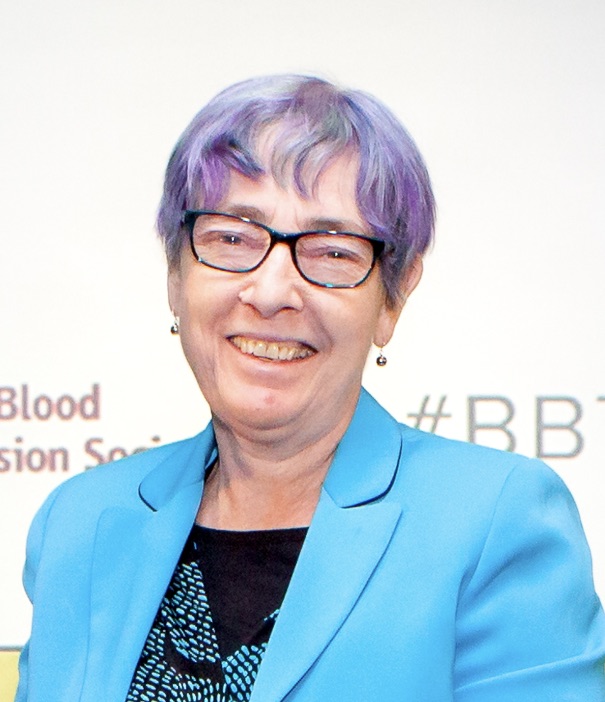
Paula H.B. Bolton-Maggs FRCP, FRCPath, DM Oxon is a Consultant haematologist (retired), former Medical Director of the Serious Hazards of Transfusion (SHOT) haemovigilance scheme (2011-2018), and current data analyst for incidents of avoidable, delayed and under/overtransfusion. (website www.shotuk.org). She served as Honorary Senior Lecturer in the Faculty of Biology, Medicine and Health at University of Manchester UK from 2003 to 2025.
Paula has researched for 25 years into Factor XI deficiency and had a major interest in rare bleeding disorders. She was on the Executive Committee of the World Federation of Haemophilia from 2004 to 2012 and chaired the data and demographics committee and the working group on rare coagulation disorders. Additionally, she was a contributor/lead for several national guidelines published by the British Society forHaematology (in the British Journal of Haematology) including paediatric and neonatal transfusion guidelines 2004, (updated 2017), use of FFP and cryo 2004(updated 2017), guidelines on the administration of blood components 2018, guidelines on diagnosis and management of hereditary spherocytosis 2004,(updated 2011), indications for irradiated blood components 2020, the use of autologous transfusion 2024 and the management of individuals with absent or dysfunctional spleens 2024. Also guidelines on the diagnosis and management of rare bleeding disorders published in 2004 (published in Haemophilia) and platelet disorders 2006 (published in BJH) for the UK Haemophilia Doctors’ Organisation.
(Video Lecture Summary)
Introduction
Dr. Paula Bolton-Maggs reviews factor XI deficiency, historically referred to as hemophilia C, with particular emphasis on its unpredictable bleeding phenotype and the limitations of conventional laboratory testing. She discusses its clinical presentation and molecular genetics, the role of factor XI in coagulation, emerging approaches to assessing bleeding risk, and strategies for managing surgery and bleeding. She concludes by considering the growing interest in factor XI inhibition as an approach to thrombosis prevention.
Clinical Features of Factor XI Deficiency
Factor XI deficiency was first described in 1955 in an American Jewish family whose affected members experienced bleeding following dental extractions. Unlike classical hemophilia, the disorder is inherited autosomally and affects both men and women. It is particularly common among Ashkenazi Jewish populations, with a gene frequency of approximately 8%. Dr. Bolton-Maggs emphasizes that although factor XI deficiency has often been described as recessive, bleeding symptoms can occur in individuals with partial deficiency who are heterozygous for a pathogenic variant.
Spontaneous bleeding is uncommon. Instead, bleeding typically follows surgery or injury, particularly at sites with high fibrinolytic activity such as the nose, tonsils, and genitourinary tract. Heavy menstrual bleeding and postpartum bleeding are important manifestations in women. Increasingly, patients without a previous bleeding history are identified when an isolated prolonged activated partial thromboplastin time (APTT) is discovered during preoperative testing.
Major and Partial Factor XI Deficiency
Historically, factor XI deficiency has been divided into major deficiency, with factor XI activity below approximately 15 to 20 IU/dL, and partial deficiency, with levels approximately between 20 and 70 IU/dL. Dr. Bolton-Maggs prefers the term “major” rather than “severe” because a very low factor XI level does not necessarily correspond to severe clinical bleeding.
Studies of affected families demonstrate the poor relationship between factor XI activity and bleeding phenotype. Some patients with major deficiency have little or no bleeding, while a meaningful proportion of patients with partial deficiency experience clinically significant bleeding. Data from the European Network of Rare Bleeding Disorders similarly showed no association between factor XI clotting activity and bleeding. These observations underscore one of the lecture’s central messages: the factor XI level measured by conventional APTT-based assays does not adequately reflect an individual’s hemostatic capacity.
Challenges with Laboratory Diagnosis
Defining factor XI deficiency is complicated by differences in laboratory reference ranges. Some laboratories use 50 IU/dL as the lower limit of normal because this threshold is commonly applied to factor VIII and factor IX, but Dr. Bolton-Maggs explains that it is not appropriate for factor XI. Published studies that established factor XI reference ranges in healthy populations have generally reported lower limits closer to 60 to 80 IU/dL.
APTT reagents also differ substantially in their sensitivity to factor XI deficiency. The same sample may therefore produce a normal APTT with one reagent and an abnormal result with another. While APTT-based assays can identify reduced factor XI activity, neither the APTT nor the resulting factor XI activity level reliably predicts whether a patient will bleed.
Molecular Genetics
Factor XI deficiency is associated with numerous variants in the F11 gene, including several population-specific mutations. Among Ashkenazi Jewish populations, the type II mutation is a stop mutation associated with essentially absent factor XI and an increased risk of inhibitor development. The type III mutation is associated with higher baseline factor XI activity and may carry a somewhat lower bleeding tendency.
Dr. Bolton-Maggs also reviews mutations identified in other populations and notes the extensive genetic heterogeneity now recognized in factor XI deficiency. Hundreds of mutations have been documented, reinforcing that factor XI deficiency encompasses a broad molecular spectrum rather than a single genetic defect.
The Role of Factor XI in Coagulation
To explain the unpredictable phenotype, Dr. Bolton-Maggs examines the physiologic role of factor XI. Tissue injury and tissue factor provide the major stimulus for coagulation and rapidly initiate fibrin formation. Factor XI has a supporting role, helping to amplify thrombin generation and stabilize and expand the developing clot.
Factor XI can be activated through the contact pathway as well as through feedback activation by thrombin. The conventional APTT primarily evaluates the contact pathway, whereas much of the physiologically relevant contribution of factor XI occurs after coagulation has already been initiated. Factor XI is therefore not essential when a strong tissue factor stimulus is present, helping explain why profound deficiency may exist without spontaneous bleeding.
Why Factor XI Levels Do Not Predict Bleeding
Bleeding risk reflects the overall balance of hemostasis rather than the concentration of factor XI alone. Dr. Bolton-Maggs discusses several factors that can modify this balance, including blood group, VWF levels, other coagulation factor levels, prothrombotic variants such as factor V Leiden, and factor VIII levels.
Patients with similar factor XI activity can therefore have very different capacities to generate thrombin. She illustrates this with patients who have extremely low factor XI activity yet demonstrate relatively normal thrombin generation and little bleeding, as well as patients with only partial deficiency who have impaired thrombin generation and significant bleeding histories.
Thrombin Generation and Alternative Assays
Thrombin generation assays may provide a more physiologic assessment of hemostasis in factor XI deficiency. Studies using platelet-rich plasma, low concentrations of tissue factor, and inhibition of contact activation demonstrated markedly impaired thrombin generation among patients with a known bleeding phenotype, independent of their APTT-based factor XI activity.
Further work showed that thrombin generation under these specific conditions could distinguish bleeders from non-bleeders based on parameters such as endogenous thrombin potential and peak thrombin generation. Plasma clot formation and fibrinolysis assays and emerging proteomic approaches have also identified differences between patients with and without bleeding tendencies. However, Dr. Bolton-Maggs notes that these assays are not readily available in routine clinical laboratories.
Inhibitors in Factor XI Deficiency
Factor XI inhibitors can develop in congenitally deficient patients, particularly individuals homozygous for the type II mutation. Some patients may continue to respond to plasma products, while others require an alternative hemostatic strategy.
Dr. Bolton-Maggs highlights evidence supporting the use of very low doses of recombinant activated factor VII in patients with factor XI inhibitors. Experimental studies demonstrate restoration of thrombin generation, and clinical experience has shown successful management of patients using doses substantially lower than those traditionally used for other inhibitor states.
Factor XI and Thrombosis
Factor XI also has an important relationship with thrombosis. Population studies indicate that factor XI deficiency is associated with protection against thrombotic stroke and venous thromboembolism, although it does not appear to protect against myocardial infarction. Conversely, higher factor XI levels have been associated with increased risks of myocardial infarction and venous thrombosis in several studies.
This relationship has important implications for replacement therapy because increasing factor XI activity may carry thrombotic consequences, particularly in patients who already have other risk factors.
Planning for Surgery
Management of surgery should begin with a detailed personal and family bleeding history rather than relying on the factor XI level alone. The type and anatomical site of surgery are also important because procedures involving tissues with high fibrinolytic activity carry greater bleeding risk. Clinicians should evaluate for additional bleeding disorders, including VWD, assess for factor XI inhibitors, consider the patient’s individual thrombotic risk, and evaluate potential hazards associated with plasma products.
Dr. Bolton-Maggs emphasizes that not every patient requires prophylactic replacement. The strength of the hemostatic challenge and the patient’s previous bleeding history should guide the treatment strategy.
Treatment Options for Bleeding and Surgery
Management options include observation, antifibrinolytic therapy, fresh frozen plasma, factor XI concentrate, and low-dose recombinant activated factor VII. Tranexamic acid alone has been shown to provide effective hemostatic coverage for dental extraction in patients with factor XI deficiency, illustrating that replacement therapy is not always necessary.
Fresh frozen plasma can provide factor XI but carries concerns related to volume load and blood product exposure. Factor XI concentrates are available in some countries but are not licensed or available in the United States. Dr. Bolton-Maggs emphasizes that available concentrates are not equivalent and differ in their composition and effects on thrombin generation.
Thrombotic Risk of Factor XI Concentrates
Thromboembolic events have been reported following factor XI concentrate administration, including pulmonary embolism and cerebrovascular events. Many affected patients were older and had additional thrombotic risk factors, and some events occurred despite thromboprophylaxis.
Different factor XI concentrates also produce different effects on thrombin generation at equivalent doses. These observations have led to more cautious guidance in the United Kingdom. Patients requiring surgery should be managed in experienced hemophilia centers, prophylactic replacement should be avoided when possible, and factor XI concentrate or fresh frozen plasma can instead be kept available for use if necessary. When concentrate is required, Dr. Bolton-Maggs describes using small doses of approximately 10 to 15 IU/kg and providing thromboprophylaxis.
Pregnancy and Delivery
Women with factor XI deficiency do not uniformly require replacement therapy during childbirth. Dr. Bolton-Maggs reviews data showing that most women with very low factor XI levels were able to deliver without prophylactic replacement and did not experience significant bleeding.
Previous bleeding history was an important predictor of bleeding during delivery. This further supports individualized management based on clinical phenotype rather than automatically treating patients according to their measured factor XI level.
Factor XI Inhibition for Thrombosis Prevention
The observation that factor XI contributes to thrombosis but is not essential for normal hemostasis has made it an attractive target for anticoagulant development. Several factor XI inhibitors have demonstrated prevention of thrombosis in clinical studies, including after knee replacement and in other thrombotic settings.
Dr. Bolton-Maggs cautions, however, that the bleeding implications of pharmacologic factor XI inhibition remain incompletely understood. A factor XI level measured using an APTT-based assay should not be assumed to predict bleeding risk in patients receiving these agents. Important questions also remain regarding emergency surgery, trauma, and the absence of specific reversal agents.
Conclusion
Dr. Bolton-Maggs concludes that factor XI occupies a supporting rather than essential role in hemostasis and can be activated through both the contact pathway and thrombin-mediated feedback. Conventional APTT-based factor XI assays predominantly reflect the contact pathway and correlate poorly with clinical bleeding. Under specific experimental conditions, thrombin generation assays more successfully distinguish patients with and without a bleeding phenotype.
Because bleeding depends on the strength of the hemostatic challenge and the individual’s broader coagulation balance, management of surgery and bleeding must be individualized. Personal bleeding history, procedure type, thrombotic risk, and available treatment options should guide decisions rather than the factor XI activity level alone.