
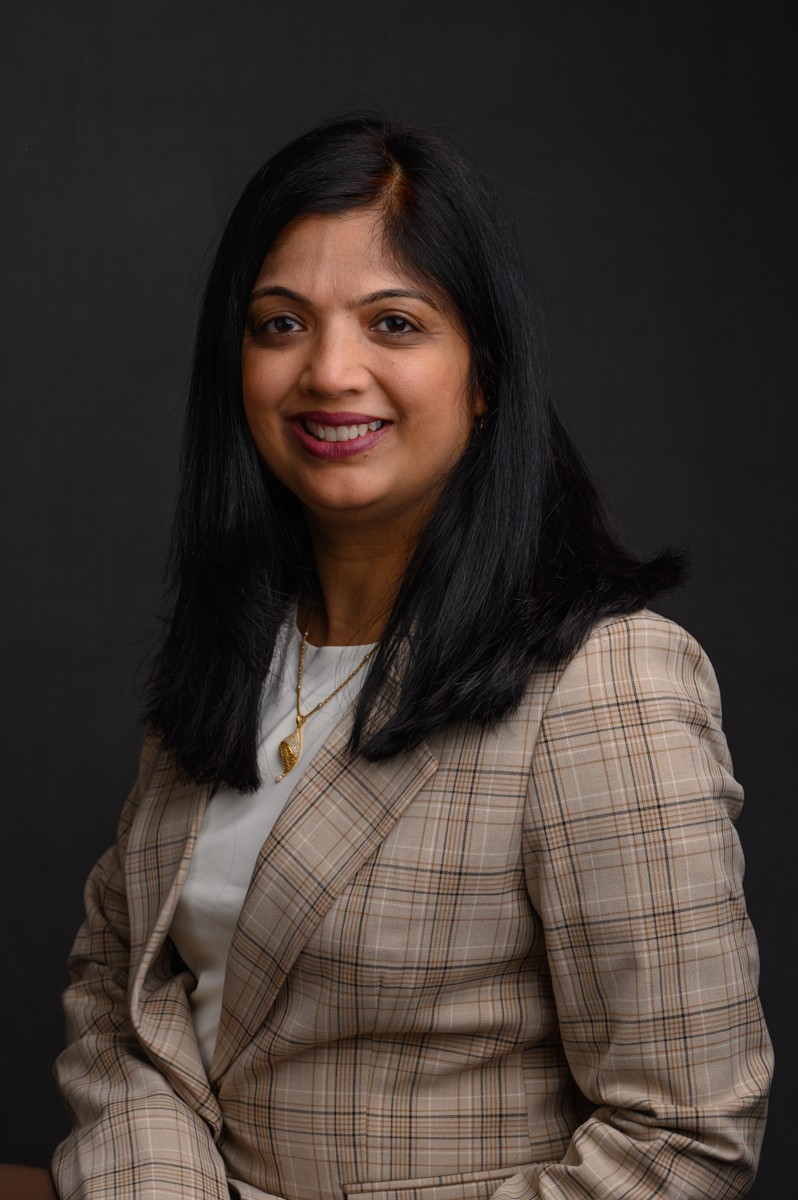
Mital Sanariya is an HR professional and mother of twins from Boston, Massachusetts. She was diagnosed with Factor X Deficiency, a rare bleeding disorder, at the age of 13 when she experienced her first menstrual period. Throughout her life, she has faced various symptoms and challenges associated with this condition and has gained valuable firsthand experience managing a rare bleeding disorder. Mital is interested in sharing her journey and patient experience to help support research, raise awareness, and provide insight for others affected by Factor X Deficiency and other rare bleeding disorders. Her goal is to contribute to a better understanding of the condition and help improve outcomes for future patients.
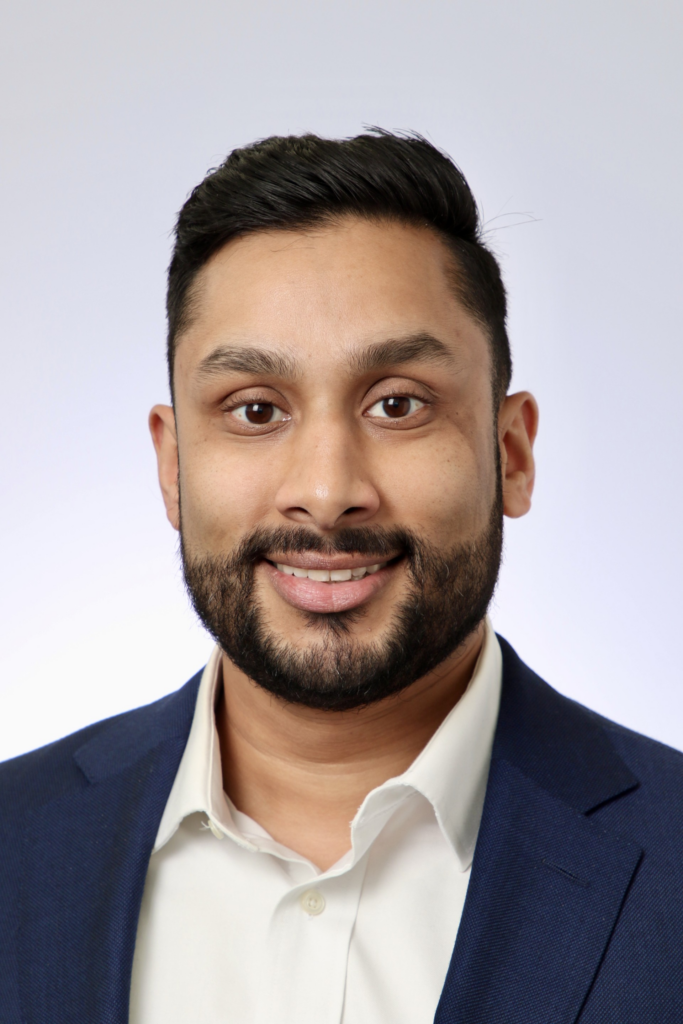
Dr. Ishan Tatake is an attending hematologist-oncologist at the Beth Israel Deaconess Medical Center in Boston, Massachusetts. He’s also an Instructor of Medicine at Harvard Medical School. Ishan’s clinical interests is in benign and malignant hematology, and his academic interests are in quality improvement, patient safety, and systems-based hematology
In this podcast, Mital Sanariya and Dr. Ishan Tatake talk with Helen Osborne about:
- What Factor X deficiency is, how this rare inherited bleeding disorder can present, and how it is diagnosed and treated.
- Mital’s experience of living with Factor X deficiency, from her diagnosis at age 13 to recognizing bleeding symptoms and learning to manage the condition in daily life.
- The importance of patient-clinician partnership, individualized treatment plans, and helping patients advocate for themselves and prepare for bleeding emergencies.
Producer and audio editor: Adam Weiss, Relativistic Media
Transcript:
HELEN: Welcome to Talking About Blood. I’m Helen Osborne, host of this podcast series and a member of the advisory board for The Blood Project. I also produce and host my own podcast series about health communication, and that’s called Health Literacy Out Loud. Today’s focus is a rare blood clotting disorder called Factor X deficiency. I’m talking with two guests who bring their experiences diagnosing, treating, and living with this disease. Dr. Ishan Tatake is an attending hematologist-oncologist at the Beth Israel Deaconess Medical Center in Boston, Massachusetts. He’s also an Instructor of Medicine at Harvard Medical School. Ishan’s clinical interests is in benign and malignant hematology, and his academic interests are in quality improvement, patient safety, and systems-based hematology. Mital Sanariya is a human resources professional and mother of twins. She was diagnosed with Factor X deficiency when she was 13 years old and experiencing her first menstrual period. Throughout her life, Mital has faced a range of symptoms and challenges associated with this disorder. She’s also gained valuable experience in managing it. Mital now builds on her patient experience to support research, raise awareness, and provide insight for others affected by Factor X deficiency and other rare bleeding disorders. Her goal is to improve outcomes for future patients. Ishan and Mital are in ways, a partnership. He’s her physician. She’s his patient. And very fortunately for all of us, you’re both guests on Talking About Blood. Welcome.
ISHAN: Very happy to be here. Thank you, Helen.
MITAL: Honored to be here. Thank you for inviting us.
HELEN: Well, let’s take it from the beginning. Tell me more about Factor X deficiency.
ISHAN: Factor X is an essential blood-clotting protein, and deficiency of Factor X is really quite rare, with an estimated prevalence of about one in a million.
HELEN: Wow!
ISHAN: This is a deficiency that comes up when an affected child receives a mutated gene from both mom and from dad, so it’s inherited in an autosomal recessive pattern. And there’s a lot of different ways that this can manifest. This usually comes to clinical light in early childhood when there is excessive bleeding, menstrual bleeding, nose bleeding, bleeding after surgical procedures, even at the time of birth with circumcision or bleeding from the umbilical stump.
HELEN: Okay.
ISHAN: And so these types of unexpected or excessive bleeding lead clinicians to suspect a type of bleeding disorder.
HELEN: Is this the only kind of bleeding disorder that leads to this unexpected or excessive bleeding?
ISHAN: No, there are a number of different bleeding disorders involving blood-clotting proteins and platelets, as well as blood vessel walls and skin integrity. But the most common inherited blood-clotting protein disorders are hemophilia A and B, which are most commonly found in males because of the inheritance pattern.
HELEN: Okay, thank you. Mital, when did you start learning about this disease?
MITAL: As I mentioned, I was first diagnosed at age 13 with my first period. But since childhood, I’d been having some bleeding episodes: tooth bleeding, nose bleeding, blood in my urine, bruises, anything unexpected without doing something to myself, or without hurting myself badly, or having any trauma. I would have those kinds of bleeding episodes. But before the diagnosis happened, we didn’t have any idea that it was happening because of the Factor X deficiency. We always thought I was a child and younger, so I played, hit myself somewhere, or did something hard and that’s why it happened. It took much longer to heal than for other kids compared to my age. It would take a lot more icing time, a lot more you know, rest, and a lot more days off from school to heal those bruises, or the nosebleeds or gum bleeding. But we had not thought of getting advice or any kind of diagnosis done. Doctors didn’t realize, and we didn’t realize, since this is not something that common. But at age 13, when my period stayed on for 30 days and didn’t stop, I was completely out of energy. I almost passed out in the bathroom and couldn’t get up from the bathroom when I was trying to change myself. That’s how I was brought to the hospital. First, I got a blood transfusion because I was very low in hemoglobin and my red blood cells. Then the doctor tried to dig in a little more deeply. What is it? Why did it took 30 days, and why is it still not stopping? Why is it not clotting? Why was all this heavy, heavy bleeding happening?
HELEN: Okay.
MITAL: And that’s the time it came up that this is something I have.
HELEN: Okay. And your doctor then was not Ishan. It was somebody else in another location entirely.
MITAL: No.
HELEN: Talk about, from each of your perspectives, the diagnosis of this. It’s a one-in-a-million disease from the medical perspective, and from the patient perspective, you’re a kid. You’re 13 years old, and you know, nobody quite planned on this one. It wasn’t like you had, I gather, a family that said, ‘Oh, we have this bleeding disorder.’ It was like no one was reassuring in that way. What’s the diagnosis like for each of you?
ISHAN: So,I often see patients who are referred to me for the question of a bleeding disorder. My first step is to really try to dig in and understand: Is this expected bleeding, or is this unexpected bleeding? We have a number of tools to try to understand that. But at the very least, we have a number of very simple screening tests to really understand the basics of the blood coagulation system. These are critical tests that, if they are unusual or outside the normal range of what we’d expect, then we dig further. This is where we might discover a Factor X deficiency.
HELEN: Now, if I can put this into context, because our listeners can be from anywhere in the whole world wanting to know about this. You are a blood specialist at a very prominent hospital in Boston with all the resources. How can this be diagnosed for someone who doesn’t have all the advantages of being in a major medical area like this with a specialist?
ISHAN: Looking for signs of unusual bleeding or bruising has to raise suspicion from the first time you see any doctor, not necessarily a specialist. This can be something like bleeding at birth; unexplained hematomas, which is bleeding into muscle, soft tissues, bones, or joints; excessive bleeding after a procedure like wisdom tooth removal or another tooth removal; heavy menstrual periods; or bleeding in the gums or nose. These are types of things that may happen from time to time but shouldn’t be recurrent. This raises the red flag: Is there a bleeding disorder?
HELEN: Okay, so it’s the recurrence, and it might be any clinician. By the time someone gets to you, they’ve been referred to you. What was your diagnostic journey like, Mital?
MITAL: As Dr. Ishan mentioned, unusual bleeding. The difference I see between other people’s bleeding and my bleeding is, let’s say other relatives in my house had a dental procedure done. They might see bleeding for a day or two, and it goes down as time goes by.
HELEN: Okay.
MITAL: Mine will increase as time goes by. If I had a dental procedure done without taking the premedication of the factor, then my bleeding would keep increasing rather than going down day by day. The same thing happens with my bruising. If I don’t take my factor, it will increase. It will get bigger and keep getting bigger rather than getting better.
HELEN: It seems you have learned so much about this and how to manage this. How and when did you finally get diagnosed? You were 13 years old. You’ve got all these problems. They’re managing the blood loss, perhaps. What happened then that you finally connected with a specialist at an advanced hospital and were diagnosed with a one-in-a-million disease?
MITAL: Once I found out, okay, this is what I have, this is what I need to take, and these are my doctors, after that I started noticing my symptoms. What is it? When do I have to call the doctor? Before, we didn’t know that. But after that, the doctors made us aware. Dr. Bauer and Dr. Ishan are both very responsive and very caring when something comes to my symptoms or any bleeding episodes. They’re right on it, and they always take care of it as fast as possible. Now the factor is available to take at home, so they will set up the nurse at home. But if it wasn’t, then they will make arrangements for me to go to the ER and make sure I get it as fast as needed.
HELEN: It sounds like the partnership between you two together is really making a difference because you’re already talking, Mital, about ways to manage this disease. Ishan, is patient education and talking about planning ahead and managing the disease part of your relationship?
ISHAN: Absolutely. It’s not a one-size-fits-all treatment plan, and it’s not a static treatment plan either. There’s always a sense of dynamism to how we approach the treatment. In some cases, we use behavioral interventions, like avoidance of things that might induce trauma. Contact sports, for example, might be things to avoid.
HELEN: Okay.
ISHAN: There are medicines that can help minimize certain types of bleeding or help stabilize blood clotting that’s going on. And then, as Mital mentioned, there are medications that help replace the missing clotting factor to really help rebalance the clotting system. And we use these to different degrees depending on what is needed. If it is some kind of biopsy or surgical procedure, we may approach it one way. We have made a plan for long flights or travel to be able to have a supply in store to take prior to these long flights if there is any sort of bleeding.
HELEN: Oh, a supply of what to have in place for long flights?
ISHAN: That maybe brings us to a little bit of what we use to treat this particular clotting factor deficiency.
HELEN: Right.
ISHAN: For Factor X deficiency, the main treatment is replacement of the deficient factor. Historically, this was replacement with whole blood, which contained all the clotting factors. Subsequently, frozen plasma, fresh frozen plasma, which really takes out some of the unwanted components of blood. Now, all of these had additional side effects. This got more refined to clotting factor concentrates, which include Factor X but other factors as well. And most recently, there is a purified Factor X concentrate that we can use. It’s given as an infusion at home.
HELEN: Okay.
ISHAN: It can be done as needed for bleeding episodes or as prophylaxis, so routine infusions twice to thrice a week to try to prevent bleeding episodes. In addition to replacement of factors, there are a number of adjunct behavioral and therapeutic interventions. One is avoidance of trauma to try to decrease stressors that might cause excess bleeding.
HELEN: So you might be telling an active kid, ‘Your soccer days are done’?
ISHAN: There would have to be a discussion about how to best manage that, whether that’s using more aggressive prophylaxis to try and rebalance the clotting system, knowing that there might be some increased risk of bleeding.
HELEN: Mital, what have you learned about managing this disease?
MITAL: What so far I have learned is that first, we have to know our body. We have to advocate for our body and our symptoms, right? Because the doctor will only find out when we tell them.
HELEN: Okay.
MITAL: And the other thing is that the doctors have so many more patients than just myself to take care of. As I said, I’m so blessed and honored to have a team of doctors like this to care for me. But I still have to watch: What is happening? Where is my pain coming from? Is it repetitive? Is it staying more than two days? Does it seem like bleeding, or is it something else? Now, being this age, I have to learn how to look for the signs that ok, this is a sign of having some bleeding somewhere. Remember, not all bleeding is visible. I’m not seeing every time something visible.
HELEN: Oh, that’s interesting.
MITAL: It could be joint bleeding, where I’m not seeing it directly with my eyes, but I have to learn my symptoms. Where is it going? What is this? Discuss it with my doctor. Then we learned that when the pain happens in a joint I asked the doctor a few times, ‘Why does this happen to me?’ Because I see that pain increase and increase, but I don’t see any sign of a bruise. I don’t see any blood coming out but this is what happens. The doctor’s team explained to me that that’s called joint bleeding, and it’s very serious. Whenever it happens, I have to tell the doctor, and then I will be treated with my treatment plan. Those are the things we have to watch. And as the doctor mentioned about sports and other things, yes, I almost do everything other people do, but I know my limitations. I know when to stop, how much to play, how much to pick up, or how much to carry. Like all other stuff. I’m not trying to isolate myself, but I do use my limitations when it comes to what I can do compared to others.
HELEN: What I’m really getting a sense of from both of you is this inherent sense of partnership. Partnership with you two. It may not be just you two, but a doctor-patient or clinician-patient partnership for diagnosing and managing it consistent with a person’s priorities. The kid who wants to play soccer versus a mom of twins. You know you’ve got different factors that you have to figure out there. I a also am curious about the partnership among clinicians because this is such a rare disease. You’ve seen it maybe a few times, but other people may never have seen this. And I’m also interested, because this is an inherited disorder, about the partnership within families. So tell us all more.
ISHAN: I think one of the challenges, because it’s such a rare disease, is that many clinicians may be unfamiliar with the management. Finding a place that has specialized care may not be available for all patients. Where we’re recording right now is Boston, Massachusetts, and there’s no shortage of specialty care in hospitals. But this may not be the case around the country or around the world. So having a treatment plan that’s written out, and having the patient know that plan and be able to advocate for themselves whenever they are not at their “home institution” where they’re receiving care, is key. In addition to that, there are a number of other consequences of a bleeding disorder like this. Recurrent joint bleeds can lead to chronic joint pain and immobility, and might create a need for orthopedic intervention, joint replacement, physical therapy, and so forth. Recurrent menstrual bleeding requires care with gynecology to help figure out other ways to try to manage that. And so it is really a multidisciplinary management plan.
HELEN: Mital, what would you like others to know? You’re quite an advocate now. You’re a teacher, you’re an advocate, and you’re living this. And you’re both teaching by being part of this podcast. What would you like others to know?
MITAL: The other thing I really want to mention here is that since it’s very rare, other people don’t know about it. So even for myself, my parents didn’t have any symptoms. My kids don’t have any symptoms.
HELEN: Oh, okay.
MITAL: Other people around you may don’t know about it when you use some limitations, and they may wonder why you’re being limited in certain things.
HELEN: Mm-hmm.
MITAL: So educate people around you. I tell my kids, ‘Okay, these are my limitations. You should know this.’ My parents and my other family members, too. You may not have to give them the whole history if you don’t feel like it, but there is some education is needed where you are. Even at my work, I would tell one or two people, ‘If something happens to me related to bleeding, I need to go to this hospital. Talk to this doctor.’
HELEN: Oh, okay. So you’re even doing planning ahead with people in your orbit there.
MITAL: Yeah, because sometimes something could happen when I may not be able to speak for myself. Then there has to be a plan in place, right? For example, when I fly to a different state or a different country, I take a letter from Dr. Ishan or Dr. Bauer explaining that this patient has this and if something happens, please do this. They write out the things, and I carry that letter. If I’m within the state, most of the time they can reach doctor and see each other’s records. That’s fine. If I’m in Massachusetts, I don’t carry it all the time. But if I’m going out of Massachusetts or out of the country, I will have that letter with me.
HELEN: Thank you. Do you use any of those devices? I know there are watches, and there’s bracelets, and QR codes. Is this part of that? We’re talking mainly about routine everyday care, but emergencies can happen. I mean bad things can happen unexpectedly. How would you communicate that to others who would need to know in an emergency?
ISHAN: I always recommend, you know, in addition to having a written-out plan with your doctor if you have the ability to do that and that’s something Mital and I have done, so we have a plan like that in place that it’s always good to carry a medical alert bracelet or card, or have it in your phone, in the event of an emergency. That way, people know this is something that really should be considered and managed appropriately.
HELEN: Yeah. How are you feeling now, Mital? How are you feeling? Are you good?
MITAL: Yeah, I’m very good. As I said, I’m very blessed and happy to have doctors like Ishan and Dr. Bauer, who has been very helpful through this journey and case. They always keep the notes in my case. If I ever go somewhere in the ER when I haven’t yet reached out to them, they can completely see everything that’s written. If I ever call the on-call doctor on Saturday and say, ‘Hey, can you place the nurse order for me?’ they can see it because Dr. Ishan has written everything line by line about what to do when this patient calls. Things like that is very helpful.
HELEN: Thank you. You both are advocates. You both are educators. And you both are experts in your own sphere of what it’s like to diagnose, treat, and live with a rare disease. Thank you so much for being guests and sharing this with listeners of Talking About Blood. We have so much to learn from these conversations from two perspectives. Thank you, thank you, thank you.
ISHAN: It’s a pleasure. Thank you so much.
MITAL: My pleasure as well to share this. Thank you so much.
HELEN: As we just heard from Ishan Tatake and Mital Sanariya, it’s important to talk about blood and talk about the perspectives of this as a provider and a patient. I think what really came through from this conversation is the positive element of partnership. That’s what Talking About Blood is all about, too. To learn more about all the many resources, please go to thebloodproject.com. I also invite you to listen to my podcast series about health communication, called Health Literacy Out Loud, at healthliteracyoutloud.com. Please help spread the word about this podcast series and The Blood Project. Thank you for listening. Until next time, I’m Helen Osborne.