
Did you know that Norman Bethune (1890-1939) was a rather irascible Canadian thoracic surgeon who made a huge impact on blood transfusion during the Spanish Civil War? Born in Ontario, his university studies included a number of breaks, including a stint as a stretcher-bearer in France during World War I. During his early days in Montreal as a medical practitioner, he developed a keen interest in the provision of medical care to the underprivileged. He contracted pulmonary tuberculosis and insisted on lung collapse as a treatment even though it was an entirely experimental therapy at the time. He made a full recovery. He married Frances Penney in 1923 but divorced her as he thought he would not survive tuberculosis. He later remarried her!
Bethune visited Russia in 1935 to study the provision of the free health care system. He was converted to the idea that medical care was ‘a right of the individual and not a charity.’ When he returned to Canada he became a member of the Communist Party.
When the Spanish Civil War broke out it soon became clear that there would be large numbers of civilian casualties. In 1936 he was invited by the Committee to Aid Spanish Democracy (CASD) to lead a surgical team to Spain. With funding from CASD, he obtained a station wagon, an incubator, and an autoclave, which allowed him to bring blood to wounded people before they were transported to the hospital. He was made director of the blood transfusion service in Madrid with a team that included two Spanish physicians, a Canadian driver, nursing and administrative staff, and technicians. Blood donors were recruited via radio and newspapers.
Unfortunately, as the war progressed, Bethune became more difficult and eventually returned to Canada. However, he continued to raise money for the blood transfusion service in Spain. He eventually went to China to join Mao Zedong and died of septicaemia from a wound obtained during surgery.
Bethune was not the only person with the idea of bringing blood to the wounded on the battlefield before transport to hospital. Dr Durán-Jordà, a Spanish haematologist in Barcelona had a similar idea before Bethune. Thus, we can say that the Spanish Civil War provided the backdrop for the development of a modern blood transfusion service.
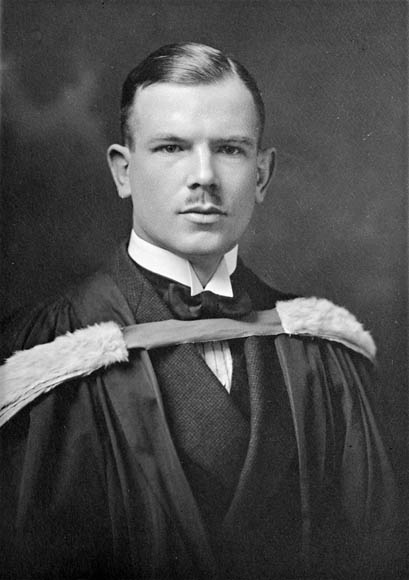
Photo Credit: Library and Archives Canada/PA-160708
Copyright: Expired, Public domain, via Wikimedia Commons
Thumbnail Editorial credit: Erman Gunes / Shutterstock.com
View of Norman Bethune statue at University of Toronto. Toronto, Canada – September 20, 2025.