
When the CBC Cannot Be Trusted
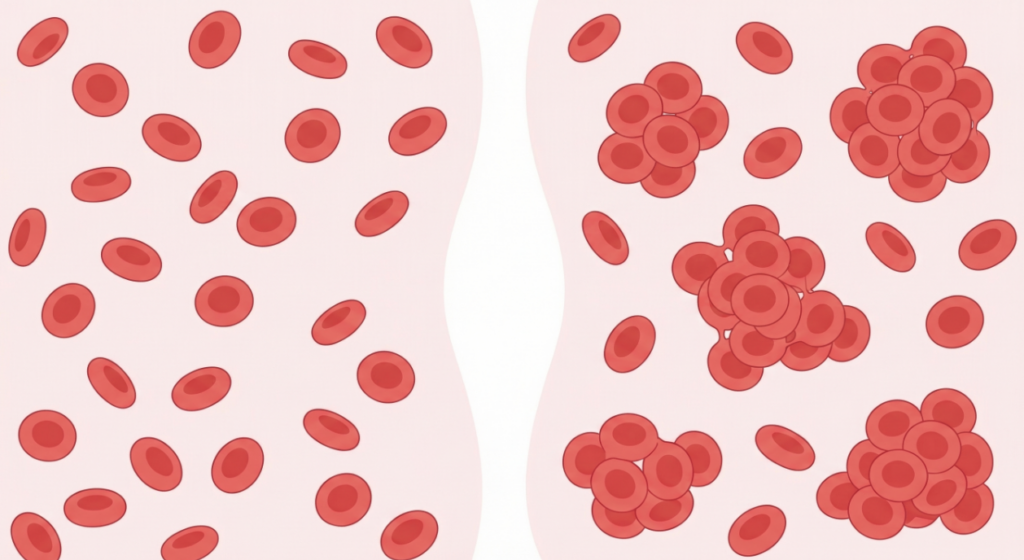
When the DAT Keeps Changing
Cold, warm, or mixed autoimmune hemolytic anemia in critical illness
By William C. Aird, MD
Case Presentation
A 53-year-old man with:
- chronic lymphocytic leukemia (CLL)
- chronic thrombocytopenia
- type 2 diabetes
- hypertension
underwent planned cervical spine surgery.
His postoperative course was complicated by:
- worsening anemia
- thrombocytopenia requiring transfusion support
Hematology was consulted because laboratory results were difficult to interpret in the setting of suspected cold agglutinins.
The automated CBC reported:
| Test | Result |
|---|---|
| RBC count | 1.8 ×10¹²/L |
| MCV | 142 fL |
| MCHC | 38 g/dL |
These results were internally inconsistent and raised concern for laboratory artifact.
The automated CBC analyzer had difficulty reporting reliable RBC indices because of marked red cell clumping.
Peripheral smear demonstrated prominent red cell agglutination, suggesting cold agglutinin activity.
Why can cold agglutinins make the CBC difficult to interpret?
Explanation
Cold agglutinins cause red cells to clump together when blood cools.
Automated analyzers count individual particles. When RBCs form aggregates, the analyzer may interpret each clump as a single large cell.
This typically produces the classic pattern of cold agglutinin interference:
- falsely low RBC count
- spuriously elevated MCV
- elevated MCHC
- inconsistent hematocrit measurements
Because RBC aggregates are counted as single large particles, the analyzer reports a falsely low RBC count and spuriously elevated MCV.
Peripheral smear review is therefore critical when automated indices appear internally inconsistent.
A Practical Solution
When cold agglutinins are suspected, laboratories often warm the blood sample to 37 °C and repeat the CBC in an attempt to disperse red cell aggregates.
Warming frequently disperses RBC aggregates and corrects the spurious abnormalities in RBC indices.
However, when strong cold agglutinins are present, automated parameters may remain unreliable.
If warming the blood sample does not correct the CBC abnormalities, which laboratory measurement remains reliable in the presence of strong cold agglutinins?
Explanation
Automated analyzers rely on counting individual cells.
When RBC aggregates are present, many RBC parameters become unreliable, including:
- RBC count
- MCV
- RDW
However, spun hematocrit directly measures packed red cell volume after centrifugation and therefore remains accurate despite RBC agglutination.
For this reason, spun hematocrit often provides the most reliable estimate of red cell mass in patients with strong cold agglutinins.
What Was Done in This Case
In this case, the hematology team relied on the spun hematocrit, which remains accurate despite RBC agglutination.
A spun hematocrit measured 28%, confirming that the automated RBC indices were unreliable.
Peripheral smear review confirmed:
- numerous RBC aggregates consistent with cold agglutinins
- platelet count approximately 30–40 ×10⁹/L
Underlying Disease
The patient had chronic lymphocytic leukemia, a condition frequently associated with autoimmune cytopenias, including:
- warm autoimmune hemolytic anemia
- cold agglutinin disease
- immune thrombocytopenia
These complications arise from immune dysregulation caused by the malignant B-cell clone.
Chronic lymphocytic leukemia can be associated with secondary cold agglutinin–mediated hemolysis, often referred to as cold agglutinin syndrome (CAS).
Which underlying condition in this patient most strongly predisposes him to cold agglutinin–mediated hemolysis?
Explanation
Chronic lymphocytic leukemia (CLL) is strongly associated with autoimmune cytopenias because the disease produces immune dysregulation.
Malignant CLL cells disrupt normal immune tolerance by altering interactions between B cells, T cells, and antigen-presenting cells. This dysregulated immune environment can lead to the production of autoantibodies directed against blood cells, including red cells and platelets.
As a result, patients with CLL may develop several autoimmune complications, including:
• warm autoimmune hemolytic anemia
• cold agglutinin disease
• immune thrombocytopenia
These autoimmune cytopenias may occur even when the leukemia burden is modest or clinically stable, reflecting immune dysfunction rather than direct marrow infiltration.
In this case, the presence of CLL increased the likelihood that the patient’s cold agglutinins were related to CLL-associated immune dysregulation.
Clinical Management
In this patient, the primary clinical concern was postoperative bleeding risk due to thrombocytopenia.
Management included:
- thrombopoietin receptor agonist therapy (romiplostim) to increase platelet production
- transfusion support
- monitoring hemolysis markers (LDH, haptoglobin, bilirubin, reticulocyte count)
- transfusion of warmed blood products
In patients with persistent or symptomatic cold agglutinin hemolysis associated with lymphoproliferative disorders such as CLL, treatment is often directed at the underlying B-cell clone, commonly with therapies such as rituximab-based regimens.
In this postoperative setting, however, the immediate priority was stabilization, transfusion support, and correction of laboratory interpretation problems rather than initiating clone-directed therapy.
Teaching Points
- Cold agglutinins can interfere with automated CBC measurements.
Red cell aggregates may cause spuriously low RBC counts, abnormal MCV values, and internally inconsistent hematocrit measurements. - Spun hematocrit is often the most reliable measurement of red cell mass.
Because it directly measures packed red cell volume after centrifugation, it remains reliable despite red cell agglutination. - Peripheral smear review remains critical in interpreting abnormal laboratory results.
Visualization of red cell aggregates on the smear can quickly reveal cold agglutinin interference and guide appropriate laboratory troubleshooting. - Cold agglutinin–mediated hemolysis may occur secondary to lymphoproliferative disorders such as CLL.
These secondary forms are often referred to as cold agglutinin syndrome (CAS) and result from immune dysregulation associated with the underlying lymphoproliferative disorder.