
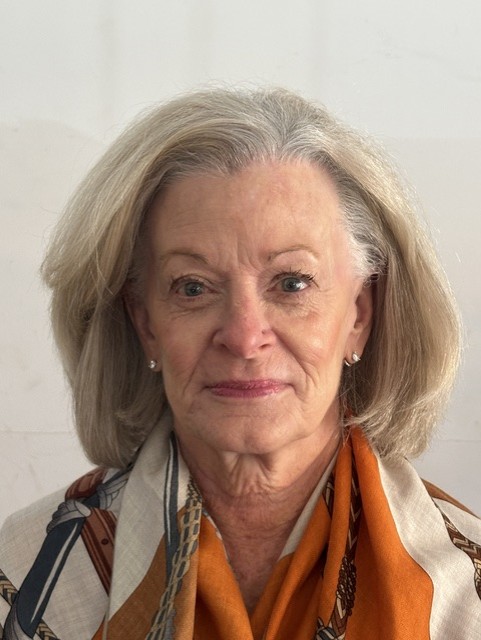
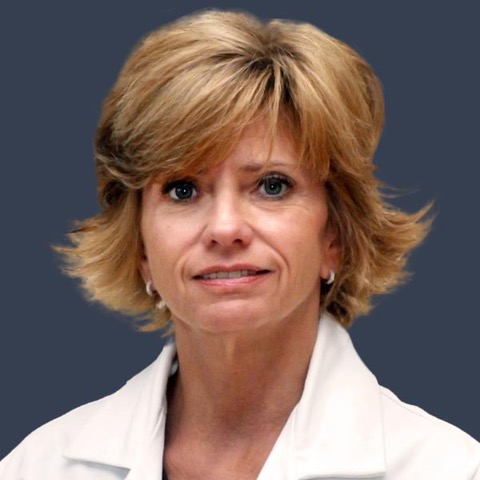
Duffy Weir is a patient of Dr Broome’s. She had a 35-year career in the retail shopping center industry. Duffy was also an athlete —running half marathons and skiing until in 2018 she was not feeling like herself. That was when she was diagnosed with cold agglutinin disease. Now 8 years later, she’s her old self again!
Dr. Catherine Broome is Professor of Medicine at Medstar Georgetown University’s Lombardi Cancer Center. She is Board certified in Internal Medicine, Hematology and Medical Oncology. Catherine’s clinical practice focuses on adults with benign hematologic diagnoses. She teaches at the Georgetown University School of Medicine and serves as a mentor to medical students in its fellowship program. Catherine’s research interests include the role of complement in CAD as well as other autoimmune hematologic disorders.
In this podcast, Duffy Weir and Dr. Catherine Broome talk with Helen Osborne about:
- A patient’s (Duffy) personal experience with CAD
- A physician’s perspective of CAD and it how it affects patients
Producer and audio editor: Adam Weiss, Relativistic Media
Transcript:
HELEN: Welcome to Talking About Blood. I’m Helen Osborne, host of this podcast series and a member of the advisory board for The Blood Project. I also produce and host my own podcast series about health communication, and that’s called Health Literacy Out Loud. Today’s focus is on cold agglutinin disease, otherwise known as CAD or C.A.D.
I’m talking with two guests who each bring their own experiences with this disease. Dr. Catherine Broome is professor of medicine at MedStar Georgetown University’s Lombardi Cancer Center. She’s board certified in internal medicine, hematology, and medical oncology. Catherine’s clinical practice focuses on adults with benign hematologic diagnoses. She also teaches at Georgetown University’s School of Medicine. Catherine’s research interests include the role of complement in CAD as well as other autoimmune hematologic disorders.
Duffy Weir is a patient of Dr. Broome’s. She had a 35-year career in the retail shopping center industry. Duffy was also an athlete, running half marathons and skiing until 2018 when she was not feeling like herself. That was when she was diagnosed with cold, gluten, and disease. Now, eight years later, Duffy feels like her old self again. Welcome to you both to Talking About Blood.
DUFFY: Thank you, Helen.
DR. BROOME: Thank you for having us.
HELEN: This disease is something that I hear is a rare disease, and I would love to hear about it. I’m honored to have two perspectives talking about this. I want to hear about this disease and help me out. Is it okay to say C.A.D or CAD? What’s the shortened version of this disease, the name of it?
DR. BROOME: Yeah, CAD is the shortened version of cold agglutinin disease, which, as you pointed out, is a rare form of an autoimmune hemolytic anemia. It generally is going to affect individuals in their sixth, seventh, and eighth decade of life, but we can see it at any age.
HELEN: Okay, and just because we’re three women talking about this, I just want to identify you or Dr. Catherine Broome. So you treat patients with this. So thank you, Catherine, for adding that. I wanted to hear about this disease from both of your perspectives. So Catherine, thank you for putting that into perspective. For both of you, what’s it like getting diagnosed with this? Catherine, what’s it like diagnosing someone with this? And for each of you, please talk a little bit more about treating and living with this disease. Please.
DUFFY: So I’ll take a stab at that. For me, it took about five months for physicians to figure out what was going on with me. I had so many blood tests that were failed, and I had to go back and get more and more blood drawn. I first saw an internist, and the internist thought from my blood test results that I might have liver cancer or lymphoma,
HELEN: Ooh.
DUFFY: That was a scary moment. And then I saw a hematologist who drew more blood, more failures of the blood draw because of the agglutination of my red blood cells. And finally, a second hematologist diagnosed it after I had a bone marrow biopsy to determine whether or not I had cold agglutinin disease. It was a long journey, and it was a scary time.
HELEN: That sounds long and scary and you’re not feeling well the whole time, I assume.
DUFFY: I did not feel well. My hemoglobin was in what I called the crazy eights. For someone my age, Dr. Broome, I think it’s around 12 to 14. My hemoglobin would have been normal if it was in that range, but it wasn’t.
HELEN: So, Catherine, from your perspective, what’s it like to diagnose someone with this rare disease?
DR. BROOME: Well, you know, I think that in a tertiary academic center, which is where I work, it is actually, you know, gratifying for most of the patients because like Duffy, they likely have been through multiple tests and maybe even multiple physicians. And, you know, while five months sounds like a really long time, that journey can be years for some patients who are, you know, misdiagnosed or not diagnosed at all.
So I feel like, you know, when I can give patients an actual name of a disease and then we can talk about you know, what does this mean and what kind of treatments do we have to offer you to try and make you feel better, it’s actually a good feeling to be able to do that for the patients.
Duffy brought up a really important point, and that is that CAD is oftentimes either not diagnosed or misdiagnosed because of the way the blood is handled. The specifics of this disease are that when the blood is cooler than our core body temperature, and that means even room temperature, not cold, but just room temperature, those red blood cells are going to stick together or agglutinate, and that makes a lot of testing that we do on that blood in the test tube actually impossible. And so the result comes back, you know, not able to be tested, not able to be tested, no result available. And Duffy alluded to that. She had had many tubes of blood drawn, but no answers were forthcoming because in order to maintain the integrity of the blood sample, it must be kept warm.
HELEN: Oh.
DR. BROOME: At core body temperature, which is 98.6 degrees before it’s tested and during the testing, in order to allow for accuracy of all of those tests that we want to do.
HELEN: Okay, I’ve got a few questions certainly worrying in my brain right now. I think we maybe should go back to what is the name of this disease, and also I want to hear about the relationship between the two of you, because, Duffy, you talked about seeing other doctors. Dr. Broome did not come in until later in this story.
DUFFY: She was my godsend. She was. She’s embarrassed. I’m sorry to embarrass you, but yes, it was five months later and I was skiing and I just couldn’t breathe. I was at an elevation of 11,000 feet above sea level. And I said to my husband and my family, let’s just go back home. I can’t catch my breath. And there were many nights where my husband would take my pulse and my heart was racing. And I think that’s another indication of this disease. It just, everything felt haywire to me. But fortunately, after that episode, my husband and I started really searching for answers about this very rare disease and he read online that there was a clinical trial at Georgetown and that Dr. Broome was the person in charge of it. And I was too scared, to be honest with you. It took me 15 months of feeling miserable until one day, my daughter said to me, “Mom, you really ought to consider this clinical trial because nothing is working for you”. I actually had had a run with a monoclonal antibody infusion, and I waited five months to see if anything happened with that, and I had no results.
HELEN: Let’s get to the clinical trial in a minute because we’re still in the diagnosis part. So you’re talking about Duffy, you’re just feeling awful. Luckily, you have a health professional or more than one in your family who can help steer you towards this. Not everyone is as fortunate as that. Somehow you learned about Dr. Broome in there and made that connection. But for you both, can you talk about what this disease is? What’s it like to have it? It has the word cold in it, which is unusual in my knowing that a disease has cold in it. Catherine, you talk about the blood test has to be, you know, at a certain temperature there. Please describe what this disease is.
DR. BROOME: So, it is an autoimmune disease. We don’t quite know why some people develop autoimmune disorders. But there is the production of what is called an antibody. And generally, antibodies are good things. They help us to recognize bacteria and viruses and other things that we don’t want to be going on in our system. But when they recognize our own self, then they’re called ‘autoimmune’. And this disease is unique in that this antibody, which belongs to a subclass of antibodies called IgM, it is most active or activated at colder temperatures.
And so way back a hundred years ago, before we knew very much, doctors noticed that this interaction between these antibodies and the red blood cells happened only at colder temperatures. And so they called it a ‘cold antibody’. The word ‘agglutination’ refers to how this antibody causes really two things. One, it causes the red blood cells to stick together. And that results in symptoms that patients often experience in the cold, mostly in their hands and their feet, where their hands and their feet may turn blue or white and feel very cold and sometimes even get painful. The other thing that happens when this antibody binds to these red blood cells is that it causes an activation of another part of our immune system called complement.
And complement then binds to these red blood cells and causes them to be cleared from our circulation. It’s a process called hemolysis. And that’s in part, what caused many of Duffy’s symptoms of the shortness of breath and the feeling her heart raced, not being able to do the kinds of activities that she was used to doing, fatigue. It’s the anemia, the decrease in the number of circulating red blood cells caused by this hemolysis that leads to many of those symptoms.
HELEN: Thank you for that, for putting that all into context there. And when you say this happens in cold, do you mean the cold environment or a person whose temp is usually just a little bit colder or both?
DR. BROOME: Well, it happens, honestly, as our blood cells circulate through our body. So, the center part of our body, which we call our core, temperature 98.6. But as the blood flows out into your fingertips, into your toes, tip of your nose, the ears, the temperature of those areas of your body is below 98.6 degrees. And that process of then that IGM becoming active happens, even if you feel like you’re in a relatively reasonably temperatured space, right? So you don’t have to be out in the freezing cold. It really is a physiologic thing. Our hands, our feet, our nose are all cooler than the central part of our body.
HELEN: Does this happen more for someone who would live in a cold climate? Duffy, you’re talking about being so high up in altitude, but I mean, would someone in Alaska be more likely to have this than somebody living in Florida?
DR. BROOME: They’re not more likely to have it, but they may have more symptoms from it. So the occurrence of it really happens no matter where you reside. It’s about your immune system and some dysregulation of your immune system. But if you live in a colder climate, you may notice more symptoms than if you live in a warmer climate. Duffy maybe can talk about how she feels in the summertime versus the wintertime.
HELEN: Great! Duffy, tell us more.
DUFFY: Well, I have to say, before I met Dr. Broome, the hematologist that I saw said, you and your husband just need to move to a warmer climate.
HELEN: Oh.
DUFFY: And we said, that’s not going to happen. Our whole life is here. And so I knew that I had to find another solution. I take staying warm very seriously. I did once I was diagnosed with, I mean, what Dr. Broome just described, my fingers, my toes, my nose. I’ve had many episodes of shoveling snow and coming in looking like a little purple snurf. Seriously.
DUFFY: But in all seriousness, I take staying warm all the time. I’m usually in long sleeves. I usually have a shawl. Even in cold restaurants, I always take something to keep myself warm. It’s just how I’m living now. There’s the before and then there’s the after. Even now, I still keep myself warm.
HELEN: Thank you. So there’s the functional part. So you did get diagnosed. You did come upon Dr. Broome. And then there’s the clinical trial that I want to hear about. It sounds like, Duffy, you found everyday ways to cope with some of the symptoms there. For both of you, can you talk about the treatment of this? What is that like? And also, you’ve been talking about the clinical trials. So I want to hear about that and how it’s affecting from both of your perspectives.
DR. BROOME: So, treatment has, I think, evolved a lot over the last five to seven years. Prior to that, we didn’t really have a a great therapy for this disorder. Like many autoimmune diseases, many treatments prior to five to seven years ago were really directed at immunosuppression, trying to suppress disease. the production of this antibody. Many of those have significant side effects. And oftentimes, in this particular disease, they’re not as effective as we would like for them to be. Some of them are actual chemotherapeutic drugs that we use in doses lower than we would use to treat a cancer, but nonetheless can have similar side effects of increased risks of infection, lowering of blood counts, etc. And about seven-ish years ago, a clinical trial was started to, to look at a very specific therapy that would impact the ability of this antibody, this IgM, to activate complement. Complement is what is causing the hemolysis. It’s what is causing the destruction of the red blood cells, and that really is the part of this disease that staying warm doesn’t necessarily help. You can wear gloves and a hat and scarves and all those things to try and decrease the amount of what we call circulatory symptoms, sticking together of those red blood cells. But all of those measures really have very little impact on the destruction of the red blood cells. And so this clinical trial was looking at a very specific drug that had a very specific mechanism of action that really was designed to address the hemolysis, the destruction of those red blood cells.
HELEN: So that gets us to deciding to be part of this. Now, Catherine, you’re one of the investigators on this drug, I assume?
DR. BROOME: I am. I was one of the principal investigators. We were a site here at Lombardi Cancer Center at Georgetown.
HELEN: And Duffy, now you’re maybe part of the picture. How do you enter this?
DUFFY: So we read about it, and I finally made a decision, and I was pretty excited that I did. I got a call back instantly from one of Dr. Broome’s colleagues, and she said, yes, you sound like you are a candidate for this, and I was scared to death. I just didn’t, I had never participated in a clinical trial, and I thought, I don’t know that I want to be a guinea pig.
HELEN: Okay.
DUFFY: I did know that it was a clinical trial that there could potentially be. It’s a blind study, so I could have potentially been on a, what is it called?
DR. BROOME: A placebo.
DUFFY: A placebo, thank you, for a period of time. And so Dr. Broome didn’t know, I didn’t know. So when I came and met Dr. Broome, she did perform another bone marrow biopsy and she was the only doctor that I’ve ever been to that showed me my blood in a test tube and see she shook it back and forth and showed me the grains of sand like agglutination that was going on and suddenly I understood what was happening in my body.
HELEN: I’m just going to stop you right there. My background is all about health literacy and communicating health information clearly. Now you have a rare disease and, you know, it’s being studied and all that. What really works is to see it, not just hear about it, but to actually see it. That’s a terrific way of communicating something that’s so difficult to explain.
DUFFY: It was brilliant. It was absolutely brilliant. And it just stuck with me that moment. I thought Dr. Broome’s the person that I want to be under the guidance of. So we proceeded to do the clinical trial and it was a back to back infusion two weeks in a row. And we both looked at each other and I remember you saying, Dr. Broome, it looks like you probably got the placebo because nothing happened. And so for six months, I was on the placebo thinking, I can’t wait until the turn of events in January. It started in July, and by January, it was a day of reckoning. I got the real drug, and within two weeks, my hemoglobin had risen from the crazy eights to 10, 11, 12. And I felt like a new person.
HELEN: Was it frustrating for each of you to both have this sense of this test drug is not working for Duffy, but to know that you have to stick with the protocol for six months?
DUFFY: Well, it was for me. I don’t know if Dr. Broome thought it was frustrating.
HELEN: What about for you, Catherine?
DR. BROOME: It is. I mean, you know, you certainly are getting to know patients as individuals and you want them to feel better as quickly as possible. But as a scientist, what you know is that these trials that are what are called double-blinded and randomized are designed to make sure that there is no bias, that I cannot bias the results in any way. And anything that Duffy says to me or anything that we talk about during her visits or anything that I see on her physical exam cannot bias the study. And that’s how we are ensuring that we are getting safe and effective drugs to market for patients for these rare diseases and even for common diseases. We wouldn’t want to provide something that does not provide the benefit that is desired or sought for patients. And certainly we never want to give anything to people that isn’t safe. This, you know, frustration of double blinding and there being a placebo is felt, you know, on both sides of the aisle. But we all have to remember where we’re trying to get. And that is we’re trying to get the most unbiased information possible to know, does this medication really do what we think it does in a safe way?
HELEN: Thank you. Let’s fast forward to now. This was a number of years ago. Duffy, I want to know how you’re feeling. And Catherine, I want to know about how this is being used as a tool of treatment.
DR. BROOME: So from the standpoint of treatment, you know, the FDA approval of this medication, the generic name of which is sutimlimab, has really revolutionized the therapy for cold agglutinin disease. It has given patients a non-immunosuppressive choice. that is highly effective at treating the hemolysis, the anemia. It does not impact those circulatory symptoms that we talked about. It unfortunately does not impact the sticking together of the red blood cells, but that is a temporary phenomenon. And as the blood circulates back into the core of the body, those cells let go of each other and they go back to normal circulation. Our hope, you know, as we learn and study more about this disease, is that we can find a therapy that may be effective for both aspects of this disease. Low toxicity, safe to administer for patients. But right now, you know, this has been a big leap forward for the treatment of cold agglutinin disease.
HELEN: Thank you. Duffy, tell us what it’s like for you now.
DUFFY: Well, first of all, I can’t say enough about the experience I’ve had finally getting the drug, the drug approved. I went through the whole clinical trial, then got the real drug. And it was a day of great celebration for me because within two weeks of back-to-back infusions, I felt like my heart palpitations had reduced, my fatigue had reduced, I still, as I said, staying warm seriously, but I’m able to resume my usual activities. I work out every day, I try and eat healthy, and every two weeks I have an infusion. I have tried to press Dr. Broome to push that a little bit longer, and occasionally when I travel, I can go to 17 days, and I’m fine. But I’m pretty religious about keeping my schedule.
I used to travel from home to Georgetown to get my infusions, and that was a two-hour commute just with traffic and all. And now I get my infusions in my home and it has made my life work. For three hours or four hours, I get my infusion and I’m good to go. I’ve had no side effects whatsoever. So it’s been a really great thing. And I will say, I have a different mentality about clinical trials now. I’m all thumbs up.
HELEN: That’s what I was just going to get to. Thank you both for sharing two perspectives of the same story, and I found it really fascinating to hear about a rare disease and how the difficulties in getting diagnosed and the journey you have to go through, Catherine, from you, from the scientist and the research perspective as well as a clinician there and Duffy, what it’s like living with this. You’ve both come to a good place about this. For the listeners of Talking About Blood, it can be seasoned hematologists or practicing physicians. It might be those newer to the sciences or medicine and people just interested in all things to do about blood. What messages do you want to pass on to all of our listeners?
DR. BROOME: I would say if you think that you may have cold agglutinin disease and have not gotten a diagnosis, please talk to your physician about handling the blood warm. Talk to your physician about ordering appropriate testing, including a direct antiglobulin test. And if you are living with cold agglutinin and disease and feel like you’re not able to do the things that you want to do, you know, please talk to your physician about the available therapeutic options.
HELEN: Thank you. And Duffy?
DUFFY: For me, I would say it’s really about surrounding yourself with the right people and the right physicians. For me, it’s hard because I don’t look like I’m ill and explaining this disease to my friends and my family was a real challenge because they didn’t quite get it. And it’s important to have your cadre of friends and family to support you through a chronic disease like this. And I’m very fortunate in that regard.
HELEN: Thank you. And I feel fortunate to have this conversation with both of you coming together, talking about this one rare disease from two perspectives. Thank you both so much for being guests on Talking About Blood.
DUFFY: Thank you, Helen.
DR. BROOME: Thank you for having us.
HELEN: As we just heard from Dr. Catherine Broome and Duffy Weir, it’s important to consider a disease and its treatment and its testing from all the perspectives. And that includes perspectives as a practicing physician, a clinician, a scientist, and also the patient living with this disease. That brings in the humanity of illness and treatment.
To learn more about The Blood Project and explore its many resources for professionals and trainees and patients, go to thebloodproject.com. I invite you to also listen to my podcast series about health communication, and that’s at healthliteracyoutloud.com. Please help spread the word about this podcast series and The Blood Project, and thank you for listening. Until next time, I’m Helen Osborne.