While the specific words written at the Manson Family crime scenes may be forgotten, (“PIG,” “DEATH TO PIGS,” “RISE,” “POLITICAL PIGGY,” and the misspelled “HEALTER SKELTER”), one detail is frequently recalled when people recount the Manson Family murders: blood was used to write messages at the Tate, LaBianca, and Hinman crime scenes. The Manson Family killings are generally discussed within the context of serial murder, defined as: the “offender(s) must have unlawfully committed at least two discretely separate intentional murders over a period of time” (Gurian, 2022, p. 214).[i]
The type of blood manipulation associated with the Manson case is relatively rare, but similar behavior has been documented or reported in other serial murder cases. Like other unusual features of serial murder, blood manipulation can become one of the most prominently reported aspects of a crime. For context, blood manipulation refers to the actions of a serial killer in which the victim’s blood is deliberately handled, displayed, or utilized in a manner separate from the act of killing; this may include consumption, intentional marking (e.g., writing words or symbols), or any other practice of draining blood to create a purposeful visual display.
This article examines two serial murder case studies exploring blood evidence and blood manipulation. The cases, discussed in The Blood Project Podcast episode “Serial Killers and Blood,”[ii] illustrate extreme forms of human behavior and include reports of practices that are highly taboo, including the possible consumption of human blood. At the same time, these cases demonstrate the importance of distinguishing between documented evidence and details that may have been amplified, repeated, or sensationalized through media reporting.
First Case Study: Vaughn Orrin Greenwood, “The Skid Row Slasher”
Vaughn Orrin Greenwood, known as the “Skid Row Slasher,” was an American serial killer who operated primarily in Los Angeles and targeted homeless men. Serial killers are often assigned monikers either by themselves or by the media, and these names frequently reference a location, method of killing, or other perceived characteristic of the crimes. In Greenwood’s case, “Skid Row” refers to an area of Los Angeles, while “slasher” describes a killer who uses a sharp weapon to inflict wounds, often resulting in fatal blood loss.
Greenwood’s known victims included David Russell, 64; Benjamin Hornberg, 67; Charles Jackson, 46; Moses Yakanac, 47; Arthur Dahlstedt, 54; David Perez, 42; Casimir Strawinski, 58; Robert Shannahan, 46; Samuel Suarez, 49; George Friar, 45; Clyde Hays, 34; and Mance Porter, 70. William Graham and Kenneth Richer survived attacks attributed to Greenwood. Greenwood’s criminal history extended across two periods. In 1966, he was convicted of aggravated battery in connection with an attack on Mance Porter and served approximately five and a half years. Years later, Greenwood (then 33-years-old) was convicted of multiple murders associated with his later killing spree and received a life sentence by a judge who called him “a phenomenal danger-to society”,[iii] and that his presence in any community would be a menace.[iv] He was also convicted of assault in connection with the attacks on Graham and Richer.
The first murder attributed to Greenwood occurred in 1966, when David Russell was killed in Los Angeles. Greenwood’s attacks were characterized by extreme throat injuries, with victims reportedly suffering deep slashes. Between 1974 and 1975, Greenwood killed at least nine additional homeless men. His victims were often found in alleys, doorways, or inexpensive hotels, sometimes after being attacked while intoxicated or asleep.
Blood is an important feature of accounts of Greenwood’s crimes. Some reports describe cups or glasses containing blood at two crime scenes, while other accounts describe the bodies as having been arranged in unusual positions.[v] Additional reported details include the removal and placement of victims’ shoes, salt scattered around the bodies, and unusual markings associated with the wounds.[vi] These details have contributed to descriptions of the murders as ritualistic. Likely because Greenwood reportedly manipulated blood at the crime scenes, media accounts at the time drew comparisons to the Manson Family murders.[vii] However, the reliability of some of these claims requires careful consideration. Reporting indicates that investigators at the time were reluctant to confirm some of the more unusual details surrounding the crime scenes.[viii] Consequently, descriptions of Greenwood’s alleged blood-related behavior should be presented as reported or alleged rather than established fact; this distinction is important because unusual details can become increasingly prominent as a case is retold. A detail initially presented as a possibility or allegation may, through repetition, eventually be treated as an established characteristic of the offender. Greenwood’s case therefore provides an opportunity to examine not only blood manipulation itself, but also how media accounts shape the popular understanding of serial murder.
Marginalized Victims and the Concept of the “Less Dead”
Greenwood’s victims were primarily homeless men, placing them within a population that has historically experienced significant social marginalization. The vulnerability of homeless individuals is particularly relevant to the study of serial murder because offenders may select victims whom they perceive as less likely to receive attention or whose disappearance may be overlooked.
Egger (1990)[ix] introduced the concept of the “less dead” to describe victim populations perceived by serial killers as having diminished social value. His examples included prostitutes, homeless people, vagrants, migrant farmworkers, homosexuals, poor individuals, elderly women, and runaways. Egger (2003)[x] argued that dehumanization can contribute to the perception of these victims as worthless or expendable. From this perspective, offenders may rationalize their crimes by viewing their victims as undesirable or as individuals whose removal somehow benefits society.
Gurian and Hannah Schilling, through research conducted at Norwich University, have explored whether Egger’s concept remains applicable today and whether the terminology can be modernized. Their work considers the continued social and criminal justice indifference that marginalized victims may experience and draws on data from The Murder Matrix[xi] to identify additional victim categories. These include elderly people of both sexes, hitchhikers, persons experiencing homelessness, immigrants, members of the LGBTQ+ community, migrant farmworkers, sex workers, runaways, sojourners or travelers, substance users, vagrants, individuals with criminal records, and people with low socioeconomic status, including those who are unemployed or earn less than minimum wage.
The significance of these categories extends beyond terminology. They highlight the possibility that social marginalization may influence both victim selection and the amount of attention a victim receives after a crime occurs. Egger’s (1990) concept of the “less dead” was an important contribution to the study of serial murder victims, particularly in drawing attention to populations whose victimization may receive less societal recognition. More than three decades after the concept was introduced, however, it may be appropriate to consider whether the terminology could be revisited considering contemporary social and cultural understandings of marginalization and victimization. One possibility is to reframe the term as “devalued” or “disregarded” victims, preserving the underlying concept while placing greater emphasis on the social processes that may contribute to certain victims being overlooked or afforded less attention and protection. Such a reframing would not diminish Egger’s (1990) original contribution, but rather build upon it by considering how the language used to describe marginalized victims might evolve alongside broader changes in society and criminological thought.
Greenwood’s victims illustrate this vulnerability. Homeless individuals may be more exposed to crime because of where and how they live and because of the circumstances surrounding homelessness (Erlenbusch, 2024).[xii] Research has found that individuals experiencing persistent homelessness face substantially increased risks of victimization, while other studies have documented discrimination associated with homelessness (Johnstone, Jetten, Dingle, Parsell, & Walter, 2015,[xiii]; Tong, Kaplan, Guzman, Ponath, & Kushel, 2021[xiv]).
The vulnerability of unhoused people to homicide also remains relevant in Los Angeles. Epstein (2023)[xv] reported that nearly one-quarter of homicide victims in Los Angeles in 2022 were homeless, despite unhoused individuals comprising approximately 1.2% of the city’s population. Epstein (2023) also reported on the arrest of Jerrid Joseph Powell, who was charged in connection with the killings of several homeless individuals. These more recent cases demonstrate that the vulnerability identified in discussions of Greenwood’s victims is not solely historical.
Blood Manipulation and Media Sensationalism
Greenwood’s case illustrates a broader problem in the study and reporting of serial murder: the distinction between what occurred at a crime scene, what investigators documented, what journalists reported, and what later retellings transformed into accepted fact. Accounts of Greenwood’s crimes frequently emphasize blood-related details, including alleged cups of blood, scattered salt, body positioning, removal of victims’ shoes, and unusual markings around wounds. These elements contribute to a narrative of ritualism and may make the case more memorable. Yet the available reporting suggests that some of these details may not have been definitively established by investigators.
This narrative pattern is not unique to Greenwood. Serial murder cases often attract narratives emphasizing ritual, deviance, symbolism, and unusual behavior. Such characteristics can make a case more compelling to the public, but they can also obscure distinctions between evidence and speculation. Repeated reporting may give an allegation the appearance of certainty, particularly when later sources rely on earlier accounts without independently verifying the underlying claim.
For this reason, blood manipulation should be examined both as a behavioral phenomenon and as a feature of crime reporting. The presence of blood at a crime scene is itself unsurprising given the violence often involved in serial homicide; what makes blood manipulation distinctive is the deliberate use of blood beyond its immediate production by the act of killing. When that behavior is documented, it may provide meaningful information about an offender’s actions or motivations. When it is merely alleged or repeated through secondary accounts, however, it should be treated cautiously.
Greenwood’s case therefore demonstrates two interconnected issues. First, it provides an example of the unusual blood-related behaviors that have been associated with serial murder. Second, it demonstrates how such behaviors can become amplified through media coverage and subsequent retellings. Understanding the difference between documented behavior and sensationalized narrative is essential when examining blood manipulation in serial murder.
Second Case Study: Hadden Clark
Hadden Clark is an American serial murderer who was convicted of two murders committed in Maryland: the 1986 killing of six-year-old Michelle Dorr and the 1992 killing of 23-year-old Laura Houghteling. Clark pleaded guilty to second-degree murder in Houghteling’s death and was sentenced to 30 years in prison. He was later convicted of Dorr’s murder and sentenced to another 30 years in prison. He received additional sentences in connection with a prior robbery. Clark has also claimed responsibility for numerous additional murders, although those claims have not been definitively substantiated.
In 1986, Michelle Dorr disappeared from her home in Silver Spring, Maryland. Clark was later determined to have killed her. Dorr was stabbed multiple times and buried in a shallow grave in a wooded area. Blood discovered in the Dorr family home initially became significant to the investigation, although it did not immediately lead investigators to Clark. Dorr’s father initially became the subject of suspicion after blood was discovered in the home, illustrating how blood evidence can become an important investigative feature while simultaneously contributing to an incorrect initial interpretation of a crime.
In 1992, Clark murdered Laura Houghteling, for whom he had previously worked as a gardener. Houghteling disappeared from her home in Bethesda, Maryland, and investigators identified Clark as a suspect. Evidence recovered from her bedroom included a bloody pillowcase, fingerprints, and other forensic evidence connecting Clark to the crime. Clark had entered the residence using a spare key and attempted to conceal his identity by wearing women’s clothing and a wig. He restrained Houghteling with duct tape before suffocating her with a pillow. Her body was subsequently buried in a wooded area.
The forensic evidence in Houghteling’s case was particularly important in establishing Clark’s involvement. The bloody pillowcase was consistent with Houghteling’s blood type, while fingerprints and hair fibers associated with Clark provided additional evidence connecting him to the crime scene. In contrast to Greenwood, however, the available evidence does not establish that Clark deliberately manipulated his victims’ blood as a separate behavioral act. Media reports, however, describe an incident where Clark drank beef blood as a restaurant worker.[xvi] [xvii] It is also unusual for multiple members of the same family to commit murder, but Clark’s brother, Bradfield, received 15-years-to-life for the murder of 29-year-old Patricia Mak, whom he killed using blunt force and strangulation, and later dismembered and ate parts of her body.[xviii]
Blood Evidence and Blood Manipulation
Clark’s case is useful to this discussion because it demonstrates the distinction between blood evidence and blood manipulation. Blood was an important component of both investigations, but the available evidence does not establish that Clark intentionally collected, displayed, consumed, or otherwise manipulated his victims’ blood for a ritualistic or symbolic purpose. His cellmate, Jack Truitt, claimed Clark told him he had drunk Dorr’s blood and eaten some of her flesh before burying her. Although these claims are unsubstantiated, they have contributed to the media narrative surrounding Clark as a serial murderer associated with extreme behavior.[xix] [xx] Similar to reporting on the Greenwood case, media coverage has also drawn comparisons between Clark and Jeffrey Dahmer, whose crimes included cannibalistic behavior.[xxi]
In Michelle Dorr’s case, blood discovered in the family home became an important investigative detail but initially contributed to suspicion falling upon her father. In Houghteling’s case, blood on a pillowcase became part of the forensic evidence connecting Clark to the murder. In both instances, blood functioned primarily as evidence of the violent act rather than as an apparent object of the offender’s behavior; this distinction is important when considering the broader concept of blood manipulation in serial murder. Not every unusual or significant presence of blood at a crime scene constitutes blood manipulation. Rather, the concept proposed in this article concerns the deliberate use of blood beyond its immediate production through the act of killing, for example, collecting, displaying, writing with, consuming, or arranging blood for a purposeful effect.
Clark’s case therefore provides a useful counterpoint to Greenwood. Whereas reports concerning Greenwood have associated blood with alleged collection, display, and possible consumption, Clark’s confirmed cases demonstrate the investigative significance of blood without establishing blood manipulation as an offender behavior. Including both cases illustrates why blood-related behaviors may need to be differentiated more precisely when developing variables for systematic serial-murder research.
Clark and The Murder Matrix
Clark also demonstrates the potential value of examining serial murder through multiple dimensions rather than focusing solely on the number of victims or the method of killing. Clark’s two confirmed victims were markedly different in age and circumstance. Michelle Dorr was six years old when she disappeared from Silver Spring, Maryland, in 1986. Her skeletal remains were found in 2000. Laura Houghteling was 23 when she was murdered in Bethesda, Maryland, in 1992. The contrast between the victims is notable from a victimological perspective, particularly in comparison with Greenwood, whose known victims were primarily homeless adult men. As discussed above, Egger’s (1990) concept of “the less dead” offers a useful framework for examining how social marginalization can shape the visibility and perceived significance of victims. Neither Dorr nor Houghteling was socially marginalized in the manner of Greenwood’s homeless male victims, yet their cases invite consideration of how age, gender, and other characteristics shape the relative visibility and valuation of serial murder victims. Clark’s case also illustrates the importance of distinguishing confirmed offending from unverified claims when compiling serial-murder data.
Taken together, the Clark and Greenwood cases demonstrate why additional variables may be useful in future analyses of serial murder. Greenwood raises questions concerning marginalized victims and alleged blood manipulation, while Clark demonstrates the importance of distinguishing ordinary forensic blood evidence from deliberate blood-related behavior. These distinctions may allow future iterations of The Murder Matrix to capture not simply whether blood was present at a crime scene, but how blood functioned within the crime and whether the offender deliberately manipulated it. The presence of blood at a crime scene should not, by itself, be considered blood manipulation. The distinction lies in whether the offender deliberately uses, collects, displays, or otherwise interacts with blood beyond the act of inflicting the fatal injury.
Concluding Thoughts and The Murder Matrix
The Murder Matrix is a research-driven, searchable database that I developed with support from Norwich University, Norwich University Applied Research Institutes (NUARI), Rachel Sickler, and Dr. Aamodt (who served as an advisor). The Murder Matrix is the culmination of over 20 years of research and was designed to bring together information about serial murder across jurisdictions and time periods. It represents an important step toward developing a more systematic understanding of serial murder.
The database brings together information concerning offenders, victims, offending patterns, modus operandi, and adjudication and outcomes. Its purpose is to facilitate research and improve understanding of serial murder through systematic, data-driven analysis rather than relying exclusively on individual case studies or popular accounts. The Murder Matrix is intended to include historical cases and different offender configurations, with cases dating from approximately 1900 to the present and organized according to solo male, solo female, and partnered (team) offending.
The Murder Matrix provides a structured framework for examining offender and victim characteristics. The Greenwood and Clark case studies examined here draw attention to additional dimensions that may warrant further coding or analysis. In this way, the value of The Murder Matrix extends beyond the information currently contained within the database: it provides a foundation for identifying patterns, asking new questions, and considering which variables may contribute to a more comprehensive understanding of serial murder.
The case studies examined here demonstrate both the value of such a framework and the potential for its continued expansion. Greenwood’s victims illustrate the importance of examining victim characteristics not only in terms of demographic variables, but also in relation to social marginalization and vulnerability. The reports surrounding Greenwood’s alleged blood-related behaviors similarly raise questions about whether unusual forms of crime-scene behavior, including deliberate manipulation, collection, display, or potential consumption of blood warrant greater attention as distinct variables in future research. In contrast, the blood evidence in Clark’s cases demonstrates the importance of distinguishing blood manipulation from the mere presence of blood at a crime scene. In Clark’s confirmed murders, blood was significant as forensic evidence and contributed to the investigation, but there is no established evidence that Clark deliberately manipulated, collected, displayed, or consumed his victims’ blood. Together, these cases demonstrate that the presence and evidentiary significance of blood should not, by themselves, be classified as blood manipulation. Rather, future research may benefit from examining how blood functions within a crime scene and distinguishing routine forensic evidence from deliberate offender behavior.
As with any developing dataset, the variables that can be examined are necessarily shaped by what has been documented, defined, and systematically coded. Some behaviors may be difficult to identify consistently because they are poorly documented, reported inconsistently, or obscured by the sensationalized retelling of individual cases. The Murder Matrix therefore provides a foundation upon which additional questions can be asked.
Future research could consider whether variables such as blood manipulation, crime-scene staging, ritualistic behavior, and victim marginalization can be operationalized and incorporated into systematic analyses of serial murder. Distinguishing between documented behavior, reported allegations, and later media narratives may also help researchers evaluate how reliably unusual crime-scene characteristics can be identified across cases.
The concept of the “less dead,” introduced by Egger (1990), illustrates another area in which the field can continue to evolve. Egger’s (1990) work was important in drawing attention to victims whose deaths may receive less recognition. More than three decades after the concept was introduced, however, contemporary researchers may reasonably consider whether terminology such as “disregarded” or “devalued” victims better reflects current understandings of marginalization and victimization. Such a reframing would build upon, rather than diminish, the contribution of earlier scholarship by considering how terminology might evolve alongside changes in society and criminological thought.
Ultimately, The Murder Matrix should be viewed as an evolving research resource. The cases discussed here suggest that important dimensions of serial murder remain deserving of further systematic examination. Expanding the variables available for analysis, including blood evidence, how offenders manipulate blood and how the social status of victims may affect their selection, investigation, and recognition, may contribute to a more comprehensive understanding of both serial offenders and the victims they target.
[i] Gurian, E.A. (2022b). Serial and mass murder: Understanding multicide through offending patterns, explanations, and outcomes. New York, NY: Routledge.
[ii] The Blood Project, “Serial Killers and Blood”. (2025). https://www.thebloodproject.com/serial-killers-and-blood/
[iii] “California suspect indicted in killings of 11 by slashing”. The New York Times. Retrieved from https://www.nytimes.com/1976/01/25/archives/california-suspect-indicted-in-killings-of-11-by-slashing.html
[iv] People v. Greenwood, No. A-324245 (Cal. Super. Ct. Los Angeles County Jan. 19, 1977)
[v] The Spokesman-Review, December 30, 1976, “’Slasher’ jury finds man guilty” retrieved from https://news.google.com/newspapers?nid=1314&dat=19761229&id=a-QRAAAAIBAJ&sjid=q-0DAAAAIBAJ&pg=3464,5899411).
[vi] The Spokesman-Review, December 30, 1976, “’Slasher’ jury finds man guilty” retrieved from https://news.google.com/newspapers?nid=1314&dat=19761229&id=a-QRAAAAIBAJ&sjid=q-0DAAAAIBAJ&pg=3464,5899411).
[vii] “California suspect indicted in killings of 11 by slashing”. The New York Times. Retrieved from https://www.nytimes.com/1976/01/25/archives/california-suspect-indicted-in-killings-of-11-by-slashing.html
[viii] “California suspect indicted in killings of 11 by slashing”. The New York Times. Retrieved from https://www.nytimes.com/1976/01/25/archives/california-suspect-indicted-in-killings-of-11-by-slashing.html
[ix] Egger, S.A. (1990). Serial Murder: A Synthesis of Literature and Research. In, Egger, S.A. (ed.) Serial Murder: An Elusive Phenomenon. New York: Praeger Publishers: 3-34.
[x] Egger, S.A. (2003). The Less-Dead. Encyclopedia of Murder and Violent Crime. Sage Publishing, Thousand Oaks, CA.
[xi] Gurian, E.A., & Sickler, R. (2025). The Murder Matrix. Retrieved from https://murdermatrix.nuari.org
[xii] Erlenbusch, B. (2024). “Violence and Hate against Unhoused Americans: 2020-2022.” Nationalhomeless.Org, National Coalition for the Homeless, May 2024, nationalhomeless.org/wp-content/uploads/2024-Hate-Crimes-Report_for-web.pdf
[xiii] Johnstone, M., Jetten, J., Dingle, G. A., Parsell, C., & Walter, Z. C. (2015). Discrimination and well-being amongst the homeless: the role of multiple group membership. Frontiers in psychology, 6, 739. https://doi.org/10.3389/fpsyg.2015.00739
[xiv] Tong, M. S., Kaplan, L. M., Guzman, D., Ponath, C., & Kushel, M. B. (2021). Persistent homelessness and violent victimization among older adults in the HOPE HOME study. Journal of Interpersonal Violence, 36(17-18), 8519-8537. https://doi.org/10.1177/0886260519850532
[xv] Epstein, K. (2023). “Deaths put spotlight on growing US homeless population”. BBC News, Los Angeles. Retrieved from https://www.bbc.com/news/world-us-canada-67666887
[xvi] Havill, A. (n.d.). “Serial Killer: Hadden Clark – Born Evil”. Retrieved from https://crimelibrary.org/serial_killers/weird/clark/
[xvii] Cavallier, A. (2024). “A serial killer is eligible for parole. He drank his victims blood, drew caricatures of them and confessed to multiple murders”. The Independent. Retrieved from https://www.the-independent.com/news/world/americas/crime/serial-killer-confession-documentary-hadden-clark-parole-b2612454.html
[xviii] Havill, A. (n.d.). “Serial Killer: Hadden Clark – Born Evil”. Retrieved from https://crimelibrary.org/serial_killers/weird/clark/
[xix] Cavallier, A. (2024). “A serial killer is eligible for parole. He drank his victims blood, drew caricatures of them and confessed to multiple murders”. The Independent. Retrieved from https://www.the-independent.com/news/world/americas/crime/serial-killer-confession-documentary-hadden-clark-parole-b2612454.html
[xx] Mandenberg, Y. (2024). “Sick cannibal killer Hadden Clark sent ‘sympathy card’ to victim Laura Houghteling’s family with twisted offer”. The Mirror. Retrieved from https://www.themirror.com/news/us-news/cannibal-killers-sick-sympathy-card-674499
[xxi] Cavallier, A. (2024). “A serial killer is eligible for parole. He drank his victims blood, drew caricatures of them and confessed to multiple murders”. The Independent. Retrieved from https://www.the-independent.com/news/world/americas/crime/serial-killer-confession-documentary-hadden-clark-parole-b2612454.html
About the Author
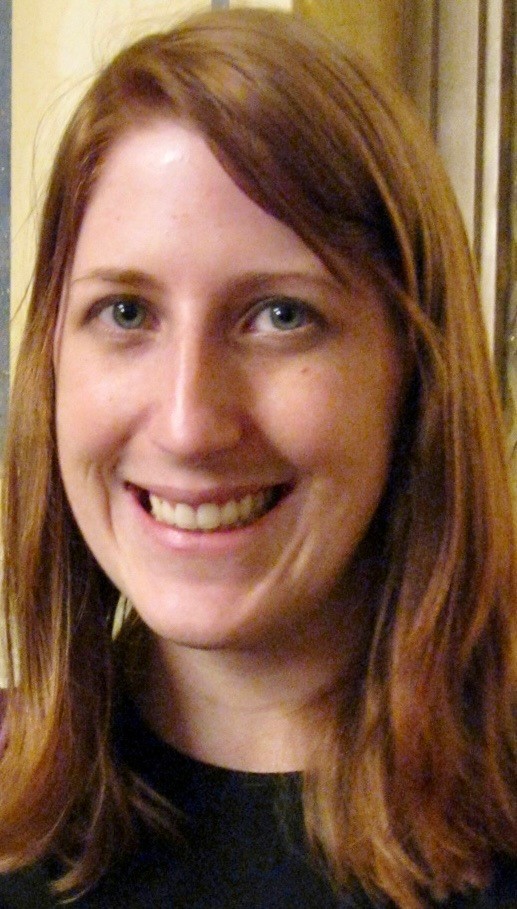
Elizabeth Gurian is a Charles A. Dana Professor of Criminology and Criminal Justice and Director of the School of Criminology & Criminal Justice at Norwich University. She teaches about criminal violence, capital punishment, and courts; her research focuses on multicide (serial and mass murder). Dr. Gurian holds a Ph.D. in criminology from the University of Cambridge, M.S. in criminal justice from Northeastern University, and B.S. in human physiology from Boston University.