
When the Blood Analyzer Cannot Report the CBC

When the Blood Analyzer Cannot Report the CBC
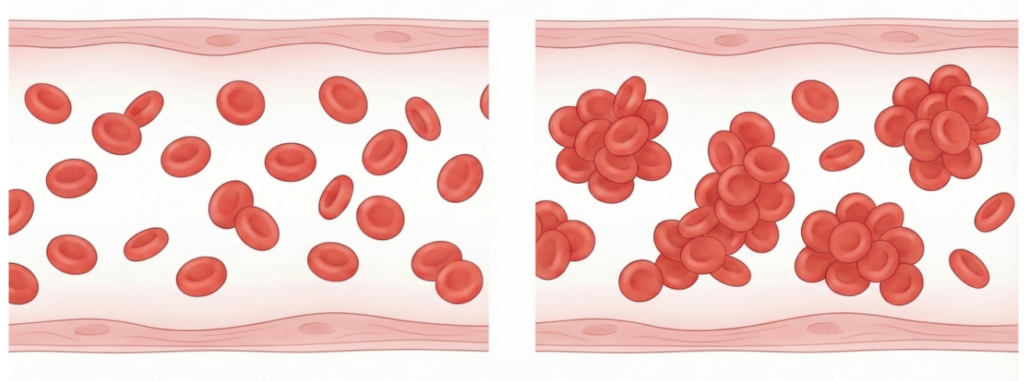
Cold agglutinin syndrome in lymphoma
By William C. Aird, MD
Case Presentation
A 64-year-old man with a history of:
- diabetes mellitus
- end-stage renal disease
- living donor renal transplant (2008)
presented with two weeks of nausea, vomiting, abdominal pain, and weight loss.
Imaging revealed extensive retroperitoneal lymphadenopathy causing gastric outlet obstruction, highly concerning for lymphoma.
Laboratory testing demonstrated:
- Hemoglobin: 9.0 g/dL
- LDH: markedly elevated
- Uric acid: 15.1 mg/dL
- Ferritin: 2760 ng/mL
Peripheral blood smear also showed red cell agglutination, raising suspicion for cold agglutinin hemolysis associated with lymphoma.
Biopsy confirmed:
Monomorphic post-transplant lymphoproliferative disorder (PTLD), diffuse large B-cell lymphoma.

Which hematologic complication is classically associated with lymphoid malignancies such as lymphoma?
Explanation
Cold agglutinin syndrome is often secondary to an underlying disorder, most commonly:
- lymphoproliferative disorders (especially lymphoma)
- certain infections (e.g., Mycoplasma pneumoniae, EBV)
In contrast, primary cold agglutinin disease typically reflects a small clonal B-cell population confined to the bone marrow without overt lymphoma.
In secondary disease, the malignant B-cell clone produces IgM antibodies that bind red blood cells at low temperatures and activate complement, leading to hemolysis.
A Diagnostic Clue
During hospitalization, the laboratory reported:
“Unable to report RBC indices.”
The automated analyzer could not calculate:
- MCV
- MCH
- MCHC
- Hematocrit

When automated analyzers cannot report RBC indices, clinicians should consider whether red cells are clumping rather than circulating as individual cells.
Reviewing the peripheral smear and repeating the CBC on a warmed sample can help confirm this possibility.

Which of the following best explains this laboratory finding?
Explanation
Cold agglutinins cause red cells to agglutinate at lower temperatures.
When blood samples cool during laboratory processing:
- red blood cells form clumps
- automated analyzers cannot distinguish individual cells
- RBC counts become inaccurate
- calculated indices (MCV, MCH, MCHC, hematocrit) cannot be reported
This pattern—unreportable RBC indices in the setting of red cell agglutination—is a classic laboratory clue to cold agglutinin–mediated hemolysis.
Warming the sample to 37 °C usually disperses the agglutinates and allows accurate reporting of the CBC.
Clinical Course
The patient’s lymphoma was complicated by several metabolic and hematologic abnormalities:
- tumor lysis syndrome
- hypercalcemia
- acute kidney injury
- cold agglutinin–mediated hemolysis
Because of the cold agglutinins, special precautions were required during transfusion and supportive care.
Which precaution is essential when transfusing blood in patients with severe cold agglutinin disease?
Explanation
Cold agglutinins bind red cells at lower temperatures and can activate complement when blood cools.
Therefore:
- blood products should be transfused through a blood warmer
- IV fluids should be warmed
- the patient should be kept warm during procedures
Failure to maintain warming can exacerbate hemolysis and worsen anemia.
Teaching Points
- Cold agglutinin syndrome is most often secondary to lymphoproliferative disorders.
Conditions such as lymphoma and post-transplant lymphoproliferative disorder can produce pathogenic cold agglutinins. - When the laboratory cannot report RBC indices, cold agglutinin–mediated red cell clumping should be considered.
Repeating the CBC on a warmed sample often resolves the artifact and reveals the true RBC indices. - Cold agglutinins can complicate transfusion and procedural care.
Blood products and intravenous fluids should be warmed to prevent cold-induced agglutination and hemolysis. - In secondary cold agglutinin syndrome, treatment of the underlying lymphoma is the key intervention.
Effective lymphoma-directed therapy often improves or resolves the hemolysis.
Why This Case Matters
Cold agglutinin disease is often taught as an isolated hemolytic disorder.
In hospitalized patients, however, it frequently appears as secondary cold agglutinin syndrome, most commonly in association with lymphoid malignancies.
In this case, the first clue was not hemolysis itself but a laboratory anomaly: an analyzer unable to report RBC indices.
Recognizing this pattern helps clinicians:
- interpret unusual laboratory findings
- avoid transfusion complications
- identify the underlying disease driving hemolysis
In secondary cold agglutinin syndrome, treating the lymphoma is the key step that ultimately resolves the hemolysis.