
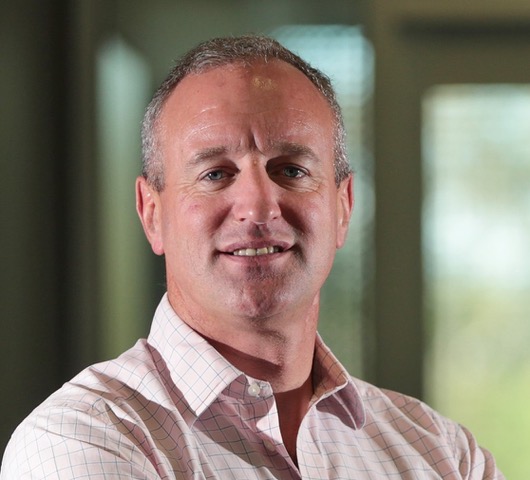
Professor Toby Richards is a practising surgeon, Professor of Surgery at University of East London and honorary professor of surgery at University College London and honorary professor of anaesthesia at Monash University. He has led a multiple clinical trials to investigate the problem of anaemia in surgical major surgery, and the effect of intravenous iron. These include the two largest global trials in Surgery: PREVENTT in abdominal surgery and ITACS in cardiac surgery. Post operative trials include; POSTvenTT and AMBLE as well as IRONNOF, IRONMAN, CAVIAR, and MITOhealth, all exploring intravenous iron
Over the last decade Professor Richards has focused on women’s health leading one of the largest screening programs exploring the problem of heavy periods in causing iron deficiency. Trials include IRON WOMAN, CAPRI and SHINE with outcomes showing links to ADHD, anxiety and depression in women. Prof Richards recently updated the Cochrane collaboration on Iron Therapy as well as the British Society of Haematology guidelines and international ‘Portland consensus’ guidelines on the management of iron deficiency in children adults and pregnancy.
He is a global leading figure on iron therapy in women’s health.
In this episode, Dr. Toby Richards talks with Helen Osborne about:
- The important distinction between iron deficiency and anemia, explaining why iron deficiency is the underlying disease process and anemia is often just one of its manifestations, and why this changes how clinicians should evaluate and treat patients.
- How identifying and correcting iron deficiency before major surgery can improve patient fitness, reduce complications, and decrease the need for blood transfusions, particularly with the use of modern intravenous iron therapy.
- The underrecognized impact of heavy menstrual bleeding on women’s health, including fatigue, shortness of breath, brain fog, anxiety, and restless legs, and why checking serum ferritin rather than relying only on a complete blood count is essential.
Producer and audio editor: Adam Weiss, Relativistic Media
Transcript
HELEN: Welcome to Talking About Blood. I’m Helen Osborne, host of this podcast series and a member of the advisory board for The Blood Project. I also produce and host my own podcast series about health communication, and that’s called Health Literacy Out Loud. Today, I’m talking with Professor Toby Richards, who is a practicing surgeon and professor of surgery in London in the UK. In addition to his clinical practice, Toby is a well-published author and researcher. He’s led numerous large-scale clinical trials that investigate the problem of anemia in patients who are having major surgery. Much of this research explores women’s heavy periods as a cause for their iron deficiency. Toby Richards is internationally recognized as a leading figure on iron therapy in women’s health. Toby, welcome to Talking About Blood.
TOBY: Thank you, Helen. I’m delighted to be here.
HELEN: So, your work has been focusing on iron deficiency and anemia. Let’s take it from the beginning. Are those two terms interchangeable? And if not, how do they differ?
TOBY: I think that’s a very good question that really gets to the core of the problem. I’m a practicing surgeon and anemia, i.e. having less blood in your body, is a common problem. And many people undergoing a major operation may require a blood transfusion. So it’s logical that if we help correct the anemia, we can reduce the need for blood transfusion in people undergoing surgery. There are different causes of anemia. The most common cause is iron deficiency.
HELEN: Oh, okay.
TOBY: That can arise from blood loss because iron is stored in the hemoglobin, the red stuff that makes up a red blood cell. So, if you lose blood from surgery, you’re losing iron. However, worldwide, the colonist cause is nutritional deficiency in low-income countries. But in people not having surgery, as you’ve alluded to, it’s a problem that affects women because women have periods and therefore, they’re losing blood. So that’s how anemia comes about.
HELEN: I just want to clarify this. Anemia is kind of that overall term. It’s a common problem and you said that you as a surgeon see that and that can often lead to the need for blood transfusions. Then underlying all that are the causes of that, and that can be the iron deficiency that often can relate to blood loss and nutrition. Then the blood loss, as you’re talking about, you’re also then talking about with women, because we do bleed and people can have more severe periods and have extreme blood loss. Am I getting the big picture correct?
TOBY: Absolutely. And the connection between the two in my research has come from trying to evaluate how anemia impacts people’s fitness undergoing surgery. And in doing that, whether or not the use of iron to correct anemia, i.e. providing the building blocks to make your red cells, can improve fitness. Now, obviously, if someone’s got cancer and undergoing surgery, it’s very difficult for us as researchers to put them on a treadmill and measure fitness.
HELEN: Toby, I just want to clarify another point. What do you mean about fitness for surgery? Everyone who has surgery already has something the matter with them. But what do you mean about being fit for surgery?
TOBY: So, I use that as a general term, but very much as a layman’s term. And any layman will be able to say that one person is perhaps fitter than the other person in terms of general health. Now, if you’re undergoing major surgery and you can’t walk up two flights of stairs because you might be short of breath or you get chest pain or you’ve got arthritis, then you’re not physically as fit as someone who can walk up eight flights of stairs. And so, the person who’s more unfit is less likely to recover as effectively and quickly after their major surgery compared to a fit person.
HELEN: I find that fascinating. I actually recently had surgery and happily I did great, but I also am pretty physically fit going into that. I didn’t understand that that was really one of the variables for success after surgery.
TOBY: It’s perhaps one of the most important things. It’s also really important as you cross into your 50s and 60s that fitness will determine your essential, your morbidity and your mortality over the remainder of your life. Active people are less likely to be unwell and if they have an illness such as diabetes or cardiac disease, the more active you are, the better that disease will be maintained and managed.
HELEN: I’m finding that fascinating because people ask me, how did you do so well after surgery? And I say, well, it was good luck. Uh, that’s part of it. But I went into it being pretty healthy. It was surgery for my back, so it wasn’t a systemic issue. It was a mechanical issue. But my lay perspective was, well, I was pretty healthy going into it. But you’re supporting that indeed. That’s, that’s very validating.
TOBY: Absolutely. And if you think about it, undergoing major surgery is a bit like running a marathon. After you’ve had major back surgery, you didn’t come out with a spring in your step three days later.
HELEN: No, no way.
TOBY: So wherever you are when you go into surgery, let’s say you are capable of running five kilometers, or you might be just able to walk around the house, or you walk with a stick, or you walk with a Zimmer frame, by the time you’ve had your major surgery, pain, lying in bed, you’ll be deconditioned and your level of fitness will deteriorate. So your recovery will be harder the least fit you are. Another way of looking at this is everyone’s had a cold. You always feel a bit rubbish for a couple of weeks after a cold.
HELEN: Of course, yeah.
TOBY: So having major surgery is a much greater insult.
HELEN: Thank you for all of that. Well, talk about the connection with blood in this one, please.
TOBY: So about 15 years ago, we looked at this issue of fitness for surgery. In my line of work as vascular surgery, I deal with some fairly unhealthy, unwell patients, often with complex cardiac disease and diabetes. And so, the question I’m asking is, how do I get someone as prepared as possible for their operation, i.e. as fit as possible, so that they can recover as quickly as possible after their surgery, have less complications, less problems, spend less time in hospital, and go home and recover faster? So how do I get someone healthier to do better? And we identified that about a third of people undergoing major surgery, this is big abdominal surgery or open-heart surgery, have anemia. And that can be as a consequence of them being unwell. They might have a cancer in which case they’re losing blood, or they might have an illness that causes chronic inflammation for which they are having the surgery. Or quite simply, if you’re unwell and you’re sick, you might not be eating properly. So, the illness for which you’re having the operation could be causing anemia and the commonest cause for anemia is iron deficiency.
HELEN: So now you’re making the connection between the two. How do you, as a physician and a scientist and a researcher, help people who may, whatever their level of fitness for surgery, how do you help increase the likelihood that they will do pretty well?
TOBY: In regards to anemia, the question was, if we correct the anemia, do we correct the risk? Let me take that a step back. If you’re anemic, you may be feeling tired and unwell. So, if I correct the anemia before your surgery, do I improve your fitness and do you do better after surgery? And this all came about because about 15 years ago, there was a breakthrough in the field of iron therapy. And that was the development of new ions that you could give as an intravenous infusion. So, an injection over 15 minutes can be done safely as an outpatient procedure and we can deliver now a large dose of iron equivalent to about one or two liters of blood.
HELEN: Okay, now you’re saying this only came about fairly recently?
TOBY: Yes, about 10 to 15 years ago, these new products came onto the market for general use.
HELEN: That’s opposed to someone taking iron on a regular basis. I know I, as a woman, I did that for many years, and there’s a lot of annoying properties to taking iron on a regular basis. Does this replace that daily iron, or is this something different? You just do it before surgery? Tell us more.
TOBY: In someone who’s iron deficient, which is the commonest cause of anemia, then the first-line treatment is to take iron tablets. Unfortunately, or fortunately, I should say, the body is so good at recycling the iron it has within the body, the absorption of iron from the gut is very poor. So even if you take a normal treatment-dose iron tablet that’s 200 to 300 milligrams, your absorption of the iron is only about four or five milligrams. Into perspective, a liter of blood is 500 milligrams. So, you would need to be on iron tablets for a minimum of three months, ideally six months, to correct anemia. So in the setting of someone waiting for surgery, we can’t delay their surgery by three to six months. So we give them instead an injection of iron, which is the equivalent of 500 to 1,000 milligrams of iron, i.e. six months of tablets. And the new preparations enabled us to do that safely with the same risk as if I was giving you an antibiotic in 15 to 20 minutes on an outpatient basis.
HELEN: Now, Toby, your research was a while ago on this. That sounds like a 15-minute fix to have such tremendous potential for great outcomes. Does everybody do this? Is this common knowledge? This is in your research. Is this well-known and well-practiced?
TOBY: It is becoming well known, I would say perhaps more so in Europe than in the United States. But if someone is anemic undergoing major surgery in the United Kingdom, the current guidelines are that they should receive intravenous iron if they’re iron deficient. And those guidelines have been adopted in the recent American guidelines and is filtering through. However, the availability in the US is slightly difficult due to the cost factors involved. So in the United Kingdom, we don’t pay for our health care and unfortunately, you have to pay for it in the United States.
HELEN: That’s a whole another topic, our United States system. Is this iron therapy? Is this a blood product?
TOBY: No, no. It’s actually the same as iron ore dug out of the ground but it’s purified and it’s combined with a carbohydrate. It’s actually brewed, I think, with a carbohydrate. So, it is elemental iron in a complex carbohydrate shell. So if you do it as an infusion to an individual, these modern preparations, which are a carbohydrate base as opposed to an old-fashioned dextran base, then metabolize them within your system within a couple of days.
HELEN: Thank you. Oh, you’re making this so clear, something that’s, you know, so comprehensive and large. You’re making it so clear. Now, Toby, I said in your bio, you are esteemed and internationally recognized as a leading figure in iron therapy in women’s health. Now you’ve been talking about surgery, kind of getting an inkling of what that’s all about. Talk about what you are learning about women’s health overall. Is it just about surgery or is it about other factors in our lives?
TOBY: It came about because of the research we were doing in surgical patients. And the fundamental question I wanted to ask was, okay, so we know that if someone’s anemic, the commonest cause is iron deficiency, we potentially have this magic bullet that we can give someone a big dose of iron safely and effectively in an outpatient 30-minute appointment. So. my question was, does it work? And that’s quite difficult in surgical patients because there’s so much going on. The patients are worried about their operation. They don’t want to be delayed for cancer surgery. So I was, well, how can I find a group of healthy individuals who happen to be iron deficient, give them the iron and see if they get fitter.
HELEN: Oh, okay.
TOBY: And so, as you can be well aware, most women between the ages of 15 and 50 who are menstruating are otherwise very fit and healthy. One in three women will experience iron deficiency anemia in their lifetime and it has a huge impact on them. So we started by doing some simple screening questionnaires to identify women who are more likely to suffer with anemia, i.e. heavy menstrual bleeding. Because the more blood you lose, the more iron you lose, the more likely you are to become iron deficient and anemic. So we came up, or rather from the literature, we developed a very simple questionnaire, which is whether a woman needs to double protect, get up at nighttime, worried about going outdoors one or two days of the week, or passes clots. Relatively simple questions, but about one in three women will have two or more of those symptoms. That is most likely to represent heavy periods. Now, a heavy period is medically defined as more than 80 mils of blood. And that you might think is not so much, but women have 12 periods a year. That’s a liter of blood. That’s a lot of blood. And quite simply, if you’re losing a liter of blood in addition to your normal natural losses, you will not be able to eat enough to keep up with that loss. Your iron, which has a big store in something called the ferritin, it will gradually deplete over years. And it’s insidious. And so many women don’t realize until they’re really quite unwell.
HELEN: Fascinating how you put that together. What is the world of science and medicine learning from all of this work that you’re doing? Are you one of the few people who actually knows this and puts all those pieces together? Is this now well-known and well-practiced? I want to look at the higher level of it, and then I want to ask you about recommendations you have for people at all levels of participating in this.
TOBY: One of the very interesting things we found out early on was the power of social media. Here we are on a podcast, for instance, but we use the Facebook groups back in the day, 10 years ago. And the average age on Facebook is between 30 and 50. So the same population of women we were interested in studying. And we put a poll out to women to try and find out if heavy menstrual bleeding was a problem. And, oh, yes, it was. We had 10,000 respondents. And then we asked women to tell us what their blood results were, if they knew them, but also to list all the symptoms that they were experiencing. And traditionally, people just said, if you’re anemic, you feel fatigued and tired.
HELEN: Right.
TOBY: Not what we came across. Yes, fatigue and tiredness is there. But physically, women could walk comfortably on the flat. But if they walked up two flights of stairs, they would suddenly feel short of breath. They’d feel dizziness, chest pain, and palpitations. They’d develop restless legs and in severe cases, itching or pica, which is a desire to eat non-foodstuffs like ice or clay. The really interesting thing and the novel thing we found was that women reported a brain fog, a forgetfulness, failure to process. And in many cases, many women had been managed and medicated for anxiety or depression. In far greater numbers than you would expect in the background. To point on that, 17% of women that we give an iron infusion to have been medicated for anxiety or depression. Many of them feel mentally far better once their iron deficiency has been corrected.
HELEN: Toby, you’re raising all these stories I’m going through and all these characteristics that I think women have often been poo-pooed by society. Oh, these symptoms have been minimized. You are finding a medical scientific reason for this. I don’t know how well known that this is, but I’m so glad you’re a guest on this podcast helping to spread the word about it.
TOBY: So the key point that we found as a result of that with these symptoms were related to the iron deficiency, not to the anemia, because iron is a core component of the enzymes involved in aerobic metabolism. So all of us know or are aware of aerobic metabolism, food plus oxygen is converted to energy within the cells. And all the enzymes in that process require iron. So that is why you get such a range of both mental and physical symptoms. Whereas if you’re a blood donor, you donate blood, you become anemic, you don’t have that range of symptoms, you feel a bit dizzy and short of breath for about 24-48 hours, but you don’t suffer with brain fog, forgetfulness, anxiety or depression. You don’t suffer with restless legs. Those are symptoms of iron deficiency ub terms of anemia. So, the key message that we have been promoting in the last decade is that iron deficiency is the disease that causes the problems. Anemia just happens to be one of those problems.
HELEN: Thank you for making that clear and for all your research. So as we’re putting a frame around this for this podcast, and all the listeners are interested in blood. That’s why they are here. This is Talking About Blood. But we can have listeners who are advanced practitioners, hematologists, well-experienced in practice for a long time. Our listeners can also include those newer in the sciences, perhaps considering the role of blood in whatever they choose for their life’s work. And we have people like me who are living these factors every day of our lives. What would you like to pass along to each of those groups?
TOBY: The message that iron deficiency is the disease and anemia is just a symptom. If someone does a blood test on a woman who is not feeling well and who is feeling fatigued and tired and suffering with anxiety, please do not just do a full blood count. Iron deficiency will affect one in three women in their lifetime and about one in six women at any point in time walking down the high street. There is a very good marker for it. Serum ferritin. So iron, Latin ferrum, is stored in the biscuit tin, the ferritin. It’s like your savings account. That’s your store of iron. And about two thirds of women can have almost unrecordable iron levels, i.e. a ferritin less than 15 with a completely normal blood count. Very, very symptomatic from that. And if you treat them, they will get better and they will be very grateful indeed.
HELEN: But that’s not a part of a routine blood test.
TOBY: No, it’s not. It’s a separate blood test, and there’s a common misnomer that people cannot have symptoms unless they’re anemic. And that is wrong.
HELEN: So, for all those in clinical practice, listen carefully. Go look at Toby’s research. Find out more about this. Any tips or heads up you’d like to pass along to someone newer in their career?
TOBY: Um, if you have an idea and you have something interests for you, stick with it. This is a project and something that I started in the last century. It’s almost 30 years ago and I’ve stuck with it and I’ve built my career on it. And now I’m hoping to leave a legacy by creating an iron deficiency charity designed to promote educational awareness and support for women with iron deficiency.
HELEN: Thank you. You’re putting all these different pieces together. And I, who might be representing the general public, and a woman, and a woman going through all these different changes you’re talking about, I’m so appreciative of what you’re talking about too. And as I acknowledged in the very beginning, you made clear why some people are more likely to do better after surgery than others, and that has to do with our full body fitness. Toby, thank you, thank you for all your amazing research, all the caring that you’re putting into this, all the science that you’re putting together, and for being a guest and Talking About Blood.
TOBY: My pleasure, Helen.
HELEN: As we just heard from Professor Toby Richards, it’s so important to look at the role of blood and fitness, the role of health, iron deficiency and anemia is just a symptom of that. To learn more about The Blood Project and learn more about topics like these and explore its many resources, please go to thebloodproject.com. I invite you to also listen to my other podcast series, and that’s about health communication at healthliteracyoutloud.com. Please help spread the word about this podcast series and The Blood Project. Thank you for listening. Until next time, I’m Helen Osborne.
Key references Toby highlights in this episode: